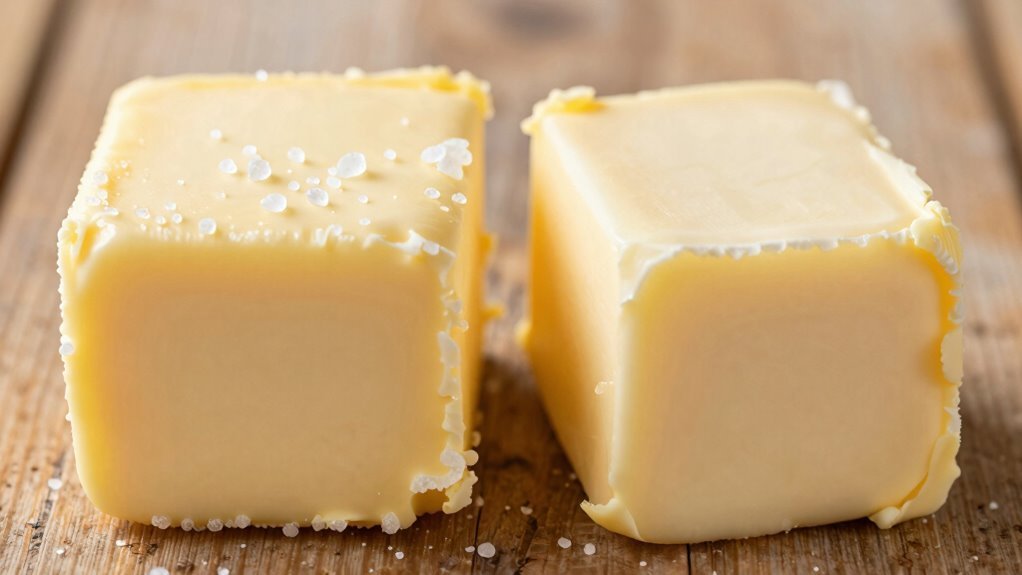
You’re halfway through a recipe when you realize: no butter. Or maybe you’re baking dairy-free, cutting saturated fat, or just curious. Whatever the reason, butter does a lot in baking — flavor, tenderness, moisture, structure, browning — and the best substitute depends on which job matters most in your recipe. Here’s an honest guide to the best substitutes for butter in baking, what each one does well, where each fails, and the exact swap ratios.
What Butter Does (So You Can Match the Job)
- Flavor: That rich, creamy taste — most noticeable in simple bakes like shortbread and sugar cookies.
- Tenderness: Fat coats flour proteins, inhibiting gluten — tender crumb.
- Moisture: Butter is ~80% fat, ~15% water — that water creates steam for lift.
- Structure: In creamed cakes and laminated doughs, butter’s solid-at-room-temp nature is structural.
- Browning: Milk solids in butter brown beautifully (the Maillard reaction).
No single substitute nails all five. Match the substitute to what the recipe needs most.
The Best All-Around Substitutes (1:1 Swaps)
Coconut oil — the closest 1:1 replacement
Solid at room temp like butter, similar fat content, works in almost everything at a 1:1 ratio. Use refined for neutral flavor, unrefined if you want a coconut note (great in tropical-flavored bakes). Slightly less browning than butter; slightly denser crumb in creamed cakes. My top pick for most recipes.
Vegan butter sticks — the engineered solution
Brands like Miyoko’s and Country Crock plant-based are formulated to behave like butter — they cream, melt, and brown similarly. 1:1 swap, the most foolproof option, especially for cookies and frostings. Pricier than oil, but purpose-built.
Vegetable shortening — the texture specialist
100% fat (vs. butter’s 80%), so it makes incredibly tender, soft baked goods — but zero butter flavor and less browning. Great for pie crusts (flaky!) and soft cookies. For flavor, use half shortening + half coconut oil.
Oil-Based Swaps (Best for Moist Cakes and Quick Breads)
- Neutral oils (canola, vegetable, light olive): 3/4 cup oil per 1 cup butter (oil is 100% fat vs. butter’s 80%). Makes cakes moister than butter — oil cakes stay soft for days. The trade-off: less flavor complexity and a slightly denser crumb in recipes designed for creaming. Perfect for our eggless cakes and muffins.
- Olive oil (fruity): Wonderful in Mediterranean-style cakes (olive oil cake, citrus cakes) where its flavor is a feature.
Note: oil doesn’t cream with sugar the way solid butter does — for recipes relying on creaming for lift (classic pound cake), add a bit of extra leavening and accept a slightly different texture. Check our leavening guide for the chemistry.
Fruit and Dairy Swaps (Lower Fat Options)
- Unsweetened applesauce: Replace up to half the butter (1:1 for the replaced portion). Cuts fat dramatically, adds moisture and mild sweetness — reduce sugar slightly. Best in muffins, quick breads, and spice cakes. Full replacement can get gummy; half is the sweet spot.
- Mashed banana: Same ratio as applesauce, adds banana flavor (use intentionally).
- Greek yogurt: 1:1 for up to half the butter. Adds protein, moisture, and tenderness with a slight tang — excellent in muffins and coffee cakes.
- Pumpkin purée: 1:1, same logic as applesauce, with warm flavor perfect for fall baking.
Nut Butters (Flavor-Forward Baking)
Peanut, almond, or cashew butter at 1:1 — best in recipes where nutty flavor belongs (peanut butter cookies obviously, but also chocolate cakes and brownies). They add protein and richness; the crumb is denser and more fudgy. A feature, not a bug, in the right recipe.
What NOT to Substitute (Know the Limits)
- Puff pastry, croissants, pie crusts requiring flakiness: These need solid fat with specific melting behavior. Vegan butter sticks work; oils and fruit purées don’t.
- Shortbread: It’s basically butter + flour + sugar — substituting changes its identity. Use vegan butter or embrace a different cookie.
- Buttercream frosting: Vegan butter sticks work 1:1; coconut oil makes greasy frosting; fruit purées are disasters here.
- Don’t use “light” or whipped spreads — their high water content ruins baking ratios.
Quick Reference Chart
- Cookies: Vegan butter sticks or coconut oil (1:1)
- Cakes: Neutral oil (3/4:1) or coconut oil (1:1)
- Muffins/quick breads: Oil, applesauce (half), or yogurt (half)
- Pie crust: Shortening or vegan butter sticks (1:1)
- Brownies: Coconut oil or nut butter (1:1) — fudgy is the goal anyway
- Frosting: Vegan butter sticks only (1:1)
Butter vs. Substitutes: The Health Perspective
Beyond baking performance, there’s the nutrition question. Butter is high in saturated fat (~7g per tablespoon) — the American Heart Association recommends limiting saturated fat, which is one reason many bakers explore alternatives. But “healthier” depends on the substitute: coconut oil is also high in saturated fat (even higher than butter), while canola oil, olive oil, and nut butters bring unsaturated fats. Applesauce and yogurt swaps cut fat and calories most dramatically.
The honest take: baked goods are treats, and no cookie is health food. But if you’re baking weekly, the cumulative difference matters — swapping half the butter for applesauce or yogurt in muffins, or using olive oil in cakes, meaningfully shifts the nutritional profile without sacrificing enjoyment. For dairy allergies or vegan baking, the motivation isn’t health but necessity — and the substitutes above mean no compromise on results.
Whatever you choose, bake with the same joy. The best substitute is the one that gets you baking — a homemade treat with olive oil beats a store-bought one with butter every time, on freshness alone.
The Bottom Line
The best substitutes for butter in baking: coconut oil or vegan butter sticks as all-purpose 1:1 swaps, neutral oil (3/4 cup per cup of butter) for moist cakes, applesauce or yogurt for half the butter in muffins and quick breads, and shortening for flaky pie crusts. Match the substitute to the recipe’s needs — solid fats for structure and creaming, oils for moisture, fruit purées for low-fat quick breads. Butter’s flavor is the hardest thing to replace, so in simple butter-forward recipes, the engineered vegan butters earn their price. For more baking science, see our guides to fluffy pancakes and eggless cake.