
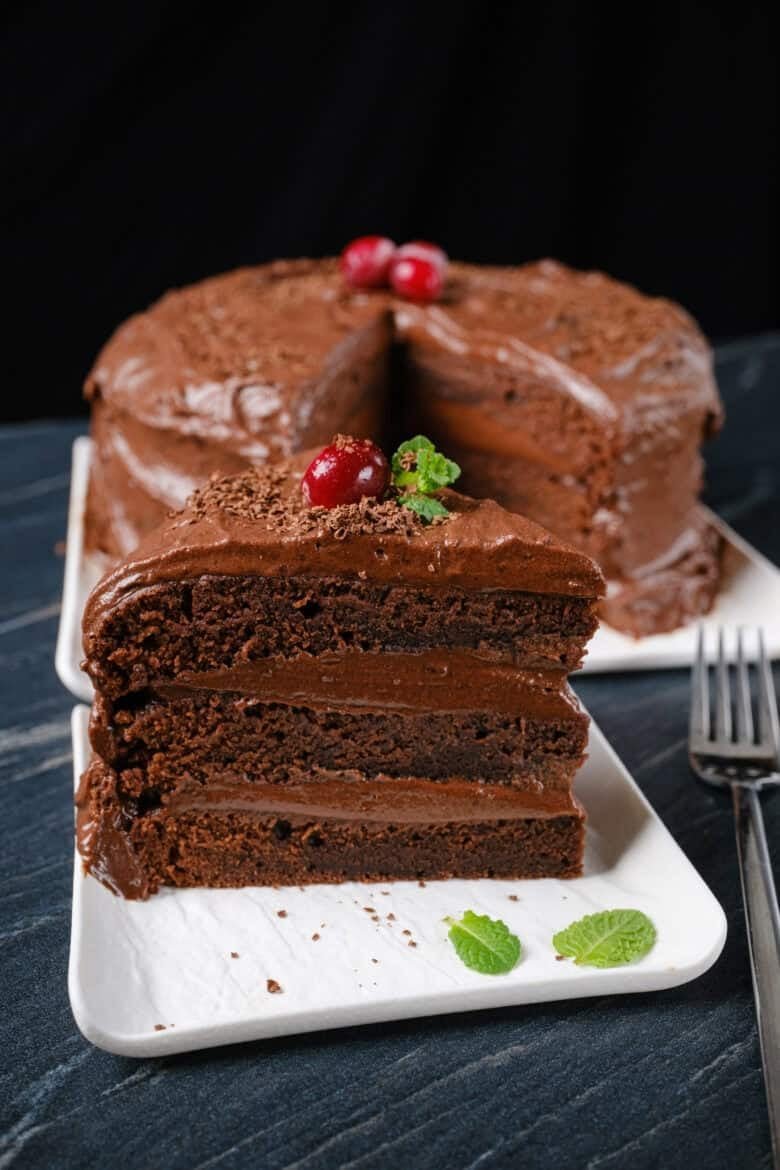
Whether it’s an egg allergy, a vegan household, or you just ran out of eggs mid-recipe — baking a cake without eggs sounds like a recipe for a sad, flat brick. But here’s the surprise: some of the best cakes I’ve ever made had no eggs at all. Eggs do three jobs in cake (bind, leaven, moisten), and each job has excellent substitutes. Once you understand the replacements, eggless cake isn’t a compromise — it’s just cake. Here’s how to bake a cake without eggs that still tastes good — genuinely good, not “good for eggless.”
What Eggs Do (So You Can Replace Them Right)
- Binding: Egg proteins glue the crumb together. Without a binder, cake crumbles apart.
- Leavening: Beaten eggs trap air; egg proteins help the rise.
- Moisture and richness: Yolks add fat and tenderness; whites add structure.
- Color and flavor: Yolks give that golden hue and rich taste.
No single substitute does all four — the trick is combining substitutes that cover each job, or choosing recipes designed eggless from the start (which is honestly the easier path).
The Best Egg Substitutes for Cake (Ranked)
Each replaces 1 egg:
- 1/4 cup unsweetened applesauce: The easiest, most reliable swap. Adds moisture and mild binding; works beautifully in spice cakes, carrot cakes, and chocolate cakes. Slightly denser crumb — a feature in fudgy cakes.
- 1/4 cup mashed ripe banana: Excellent binding and moisture; adds banana flavor (great in banana-friendly cakes, wrong in vanilla cake).
- 3 tablespoons aquafaba (chickpea liquid): The vegan miracle — whips like egg whites, binds like whole eggs. Neutral flavor. 3 Tbsp = 1 egg; whipped, it even makes meringue.
- 1 tablespoon ground flaxseed + 3 tablespoons water: Rest 5 minutes until gel-like. Great binder, adds subtle nuttiness. Best in hearty cakes (carrot, spice, chocolate).
- 1/4 cup yogurt or buttermilk + 1/4 teaspoon baking soda: The leavening powerhouse combo — the acid reacts with soda for extra lift. Fantastic in vanilla and white cakes.
- Commercial egg replacer (Bob’s Red Mill, etc.): Formulated for the job; follow package ratios. Reliable but pricier.
- 1/4 cup silken tofu, blended: Dense, moist crumb; best in rich chocolate cakes where density is welcome.
For leavening specifically, make sure your baking soda and powder are fresh and correctly used — eggless cakes lean harder on chemical leaveners, so they must be at full strength.
The Foolproof Method: Vinegar + Baking Soda Cakes
The most reliable eggless cakes use a clever chemistry trick — the “wacky cake” / Depression-era method:
- Mix dry ingredients including extra baking soda (1 teaspoon per ~1.5 cups flour).
- Add wet ingredients including 1 tablespoon vinegar or lemon juice.
- The acid-base reaction creates a powerful rise that replaces egg leavening entirely.
- Get it in the oven fast — the reaction starts immediately and the bubbles are temporary.
Wacky chocolate cake (flour, cocoa, sugar, soda, salt, water, oil, vinegar, vanilla) is the classic — it’s been made since the 1930s, it’s deeply chocolatey, moist for days, and nobody ever guesses. This isn’t a compromise recipe; it’s a great recipe that happens to be eggless.
Tips for Eggless Success
- Don’t overmix. Without egg structure, overmixed eggless batter gets gummy fast. Mix until just combined.
- Slightly lower temperature, slightly longer time: 325°F instead of 350°F gives the crumb time to set without over-browning.
- Don’t overbake. Eggless cakes dry out faster — test 5 minutes before the recipe says. Moist crumbs on the tester are fine; wet batter is not.
- Oil over butter (or use our butter substitutes) — oil cakes stay moister longer, which matters more without eggs.
- Room temperature ingredients mix more evenly — especially important when you’re relying on chemical leavening.
- Let it cool completely before slicing — eggless crumb sets as it cools; cutting warm = crumbling.
Best Cake Types for Going Eggless
- Chocolate cake: The easiest — cocoa’s richness and the vinegar-soda method make it foolproof.
- Spice/carrot cake: Dense, moist styles where egg structure matters least.
- Vanilla cake: Totally doable with the yogurt + soda method; use clear vanilla for the whitest crumb.
- Trickier: Angel food, chiffon, pound cake — these depend heavily on egg structure. Possible with aquafaba, but start with the easy wins.
Decorating Eggless Cakes (They Deserve It Too)
An eggless cake deserves the same finishing touches as any cake. Frosting: American buttercream, cream cheese frosting, ganache, and whipped cream all work identically on eggless cakes — the cake’s egg status doesn’t affect the frosting. Layering: eggless cakes layer beautifully; use a serrated knife to level, apply a crumb coat, chill 20 minutes, then finish. The slightly denser crumb actually layers better than airy egg cakes — less crumbling, cleaner slices.
Simple finishes, big impact: a dusting of cocoa or powdered sugar through a stencil, fresh berries arranged on top, a chocolate drip, or toasted nuts pressed into the frosting sides. Glazes (powdered sugar + liquid) are the easiest elegant finish — pour over a Bundt and you’re done. Serving: eggless cakes are often best at room temperature (cold mutes flavor) and keep 3–4 days covered at room temp, a week refrigerated.
For vegan celebrations, pair with dairy-free frosting using our Vegan Society’s baking guides for tested recipes — the combination of eggless cake + plant-based frosting fools everyone, every time.
High-Altitude and Humid-Climate Adjustments
Two environments need tweaks. High altitude (3,500+ feet): lower air pressure means leavening works harder — reduce baking powder/soda by about 20%, increase liquid slightly, and raise the oven temperature 15–25°F to set the structure before it over-rises and collapses. Humid climates: flour absorbs moisture from the air, making batters wetter than intended — reduce liquid by a tablespoon or two, and store flour airtight (humid flour also dulls leavening faster).
When in doubt, find a recipe developed for your conditions rather than fighting a sea-level recipe. Local extension services and regional baking communities have tested adjustments — a quick search for “[your state] high altitude baking” usually finds them.
The Bottom Line
To bake a cake without eggs that still tastes good: use the vinegar + baking soda method (or applesauce/yogurt/aquafaba as 1:1 swaps), keep leaveners fresh, don’t overmix or overbake, and favor oil-based chocolate or spice cakes while you’re learning. The Depression-era wacky cake proves the point — eggless cake isn’t a modern compromise, it’s a nearly century-old tradition of deliciousness. Once you’ve nailed it, try our fluffy pancake secrets — the same leavening science applies at breakfast.





One Comment