
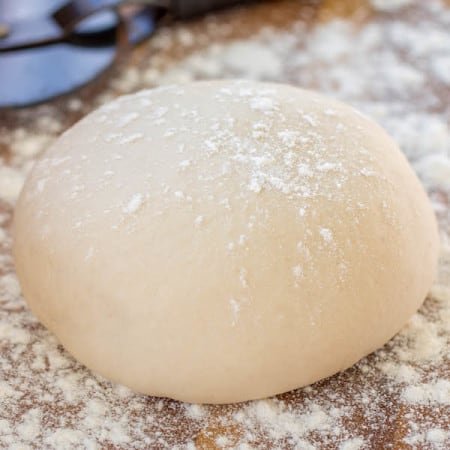
I’ve made pizza dough from scratch more times than I can count, and here’s what I want you to know first: it’s genuinely easy. People talk about it like it’s some artisan skill that takes years to learn, but the truth is, the whole thing takes about ten minutes of actual work. The yeast does the heavy lifting while you go watch TV.
Store-bought dough works in a pinch, but it never quite tastes right — it’s usually too gummy or too bland. Once you make your own pizza dough from scratch a couple of times, you’ll wonder why you ever paid $4 for a tube of the refrigerated stuff.
What You Need for Homemade Pizza Dough
The ingredient list is short, which is exactly why each one matters. Get these right and the dough basically makes itself:
- Bread flour (3 1/2 cups) — its higher protein makes a chewier crust. All-purpose works too, but bread flour is better.
- Instant yeast (1 packet, about 2 1/4 teaspoons) — no need to proof it separately.
- Warm water (1 1/3 cups, around 110°F) — warm like bathwater, not hot. Hot water kills yeast.
- Olive oil (2 tablespoons) — adds flavor and keeps the crumb tender.
- Sugar (1 tablespoon) — feeds the yeast and helps the crust brown.
- Salt (1 1/2 teaspoons) — don’t skip it. Unsalted dough tastes like cardboard.
How to Make Homemade Pizza Dough From Scratch, Step by Step
1. Mix the dry ingredients
Whisk the flour, yeast, sugar, and salt together in a big bowl. Seriously, just whisk them. This takes thirty seconds and keeps everything evenly distributed so you don’t get a pocket of raw salt in one bite.
2. Add the wet ingredients
Pour in the warm water and olive oil. Stir with a wooden spoon until it forms a shaggy, rough mass. It’ll look ugly. That’s fine — ugly is correct at this stage.
3. Knead for 8 to 10 minutes
Turn the dough onto a lightly floured counter and knead. Push it away with the heel of your hand, fold it back, give it a quarter turn, repeat. After about eight minutes it should feel smooth and slightly tacky — it should spring back slowly when you poke it. If it’s sticking to everything, add flour a tablespoon at a time, but go easy. Too much flour makes dense, dry crust.
Quick check: stretch a small piece thin between your fingers. If you can get it thin enough to see light through without tearing (bakers call this the windowpane test), you’re done.
4. Let it rise
Put the dough in an oiled bowl, cover it with a damp towel or plastic wrap, and leave it somewhere warm for 60 to 90 minutes, until doubled. Cold kitchen? Stick it in the oven with just the light on. I’ve also had good luck on top of the fridge where the motor keeps things cozy.
The Secret Step Most People Skip: The Cold Rise
Here’s where homemade pizza dough goes from good to genuinely great. After the first rise, punch the dough down, divide it into two balls, and stash them in the fridge overnight (or up to 3 days). This slow cold ferment develops way more flavor — that slightly tangy, complex taste you get at good pizzerias. According to the history of pizza-making, slow fermentation has always been the trick behind the best crusts, and it costs you nothing but patience.
Pull the dough out about an hour before you want to bake so it warms up and relaxes. Cold, stiff dough fights you when you try to stretch it.
Shaping and Baking Like a Pro
Crank your oven as hot as it goes — 500°F or 550°F — with a pizza stone or an upside-down sheet pan inside, heating for at least 45 minutes. Heat is the whole game. A screaming-hot surface is what gives you that puffy, blistered crust.
Stretch the dough on a floured surface using your knuckles, working from the center out. Never use a rolling pin — it crushes the air bubbles you spent all day building. Keep the edge slightly thicker for the crust rim.
Top it lightly. This is the number-one beginner mistake: piling on sauce and cheese. A soggy center is almost always too much sauce. Two to three tablespoons of sauce and a modest handful of cheese per 12-inch pizza is plenty. Bake 7 to 10 minutes until the crust is golden and the cheese is bubbly with a few browned spots.
Common Pizza Dough Problems (And Fixes)
- Dough won’t stretch, keeps snapping back: it’s too cold or overworked. Let it rest 15 minutes and try again.
- Dough is sticky and impossible to handle: lightly oil your hands instead of adding more flour.
- Crust came out pale and soft: your oven wasn’t hot enough, or you didn’t preheat the stone long enough.
- Bottom is soggy: too much sauce, or the pizza sat on the peel too long before baking.
Can You Freeze Homemade Pizza Dough?
Absolutely. Wrap each dough ball tightly in plastic wrap, then put them in a freezer bag. They keep for up to 3 months. Thaw overnight in the fridge, then let it sit at room temperature for an hour before shaping. This is also handy for freezing leftovers from pizza night — leftover baked slices freeze and reheat beautifully too.
If you’re planning a whole pizza party, check out the best way to reheat pizza so it stays crispy — because someone always wants seconds an hour later.
The Takeaway
Making homemade pizza dough from scratch is mostly waiting, not working. Mix, knead for ten minutes, let it rise, and if you can swing the overnight fridge rest, do it — it’s the single biggest flavor upgrade for zero effort. After two or three tries it’ll feel as routine as making toast, and your Friday pizza nights will never be the same.
Homemade Pizza Dough Variations Worth Trying
Once you’ve got the basic recipe down, it’s fun to play around. A few of my favorite tweaks:
- Whole wheat blend: swap in 1 cup of whole wheat flour for 1 cup of the bread flour. You’ll get a nuttier, heartier crust. Add an extra tablespoon of water since whole wheat absorbs more.
- Herb and garlic dough: mix 1 teaspoon each of dried oregano and garlic powder into the dry ingredients. It makes the crust itself taste seasoned — great for simple margherita pizzas.
- Thin and crispy: roll the dough thinner, skip the puffy rim, and bake it directly on the hot stone. Less dough per pizza means this recipe stretches to three thin-crust pies instead of two.
- Gluten-free option: use a 1-to-1 gluten-free flour blend and add an extra teaspoon of olive oil. The texture won’t be identical, but with a hot oven it still beats any frozen GF pizza I’ve tried.
Pizza Dough FAQ
Can I make pizza dough without yeast? You can, using baking powder as the leavener, but manage your expectations — it’ll be more like flatbread than real pizza crust. Fine in a pinch, not a replacement.
Why did my dough not rise? Almost always dead yeast (check the expiration date) or water that was too hot. Yeast dies above about 140°F. If your kitchen is cold, the rise just takes longer — give it time before declaring it dead.
How long does homemade pizza dough last in the fridge? Up to 3 days, and honestly day 2 and 3 taste better than day 1 thanks to the slow fermentation. After that, freeze it.
Can I use all-purpose flour instead of bread flour? Yes. The crust will be a little less chewy and a little more tender — still delicious. Bread flour is better, but don’t let a missing bag stop you from making pizza tonight.






2 Comments