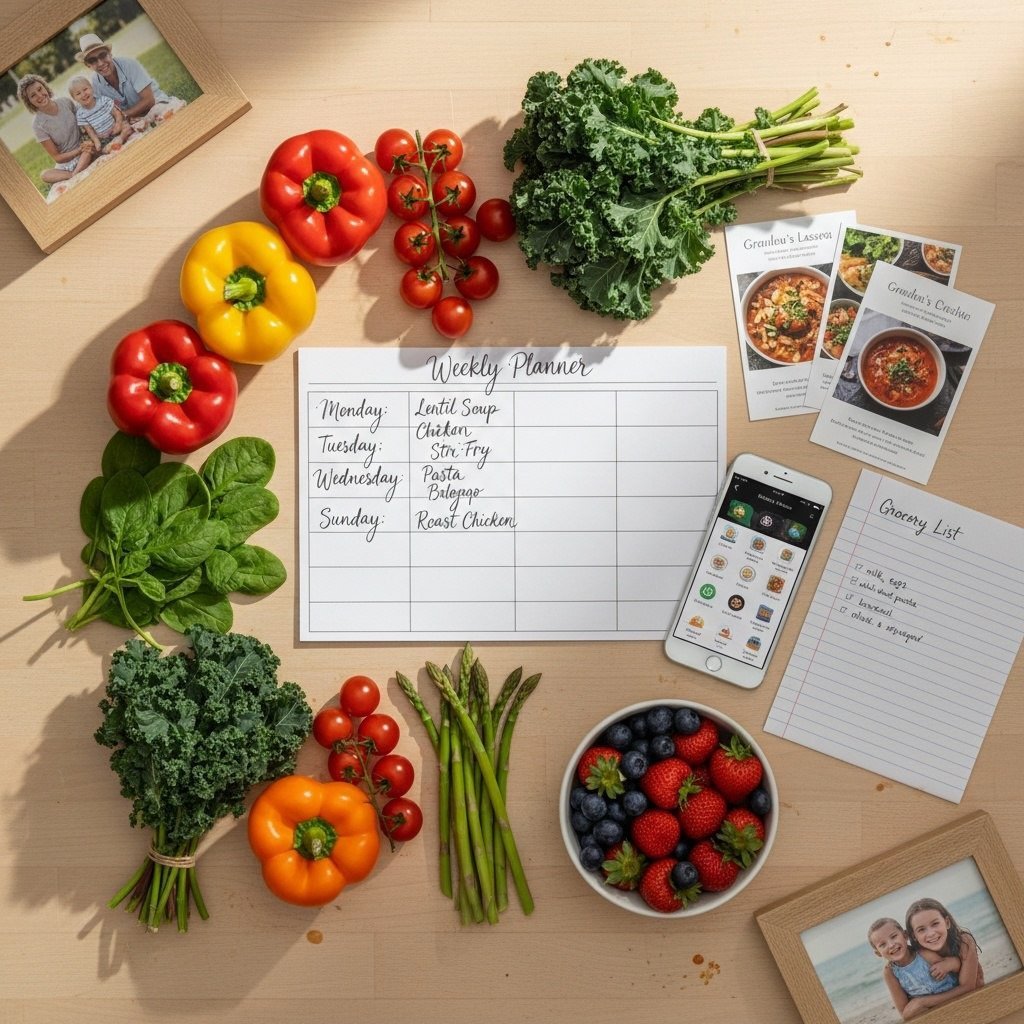
Meal planning sounds great in theory — then Sunday night arrives, you’re staring into the fridge, and somehow “planning” turns into ordering takeout. Again. The problem isn’t willpower; it’s not having a system. Here’s how to plan a weekly dinner menu your whole family will eat, in about 20 minutes a week, without turning into a spreadsheet person (unless you want to be).
Why Meal Planning Fails (And How to Fix It)
Most meal plans fail for three reasons: they’re too ambitious (seven brand-new recipes a week is a second job), they ignore what the family actually likes, and they don’t account for real life (late meetings, soccer practice, sheer exhaustion). The fix: plan for reality, not aspiration. A good weekly menu has easy nights, leftover nights, and exactly the right amount of ambition — which is less than you think.
The 20-Minute Weekly Planning System
Step 1: Check the calendar (5 minutes)
Look at the week ahead. Mark the hard nights — late work, activities, events. Those get 15-minute meals or leftovers, no exceptions. Mark any night you’ll eat out. You’re now planning 4-5 dinners, not 7. This single step prevents most meal-plan failures.
Step 2: Pick your anchors (5 minutes)
Choose 2-3 “anchor” meals — the main cooking efforts of the week. These should be family favorites, ideally ones that make great leftovers (chili, roast chicken, pasta bolognese). Then fill the remaining nights with easy wins: tacos, breakfast-for-dinner, sheet-pan meals, or one-pot meals.
Step 3: Theme your nights (2 minutes)
Themes eliminate decision fatigue. The classic rotation:
- Monday: easy/start-of-week (tacos, pasta, soup)
- Tuesday: one-pot or sheet-pan
- Wednesday: leftovers or breakfast-for-dinner
- Thursday: anchor meal #2
- Friday: fun night (homemade pizza, DIY bowls)
Themes aren’t rigid — they’re defaults that save you from the blank-page problem. Friday pizza night with homemade dough is a tradition kids genuinely look forward to.
Step 4: Write the grocery list from the menu (8 minutes)
Go meal by meal, list what you need, then check what you already have. Organize the list by store section (produce, meat, dairy, pantry) to shop faster. This is where meal planning saves real money — you buy what the menu needs, not what looks good in the aisle. Families typically save 20-30% on groceries with consistent planning.
Getting the Whole Family on Board
- Give everyone a pick: each family member chooses one dinner per week (within reason). Ownership kills complaints. Even a 5-year-old can pick taco night.
- Keep a family favorites list: maintain a running list of 15-20 meals everyone likes. Planning becomes “pick 5 from the list” instead of inventing from scratch. Update it when you discover new winners.
- Respect the veto: if someone genuinely hates a dish, don’t put it in rotation. There are thousands of recipes; no need to battle over one.
- Deconstruct for picky eaters: serve components separately (taco bars, pasta bars, grain bowls) so everyone assembles what they’ll eat. Full strategy in cooking for picky eaters.
The Leftover Strategy
Plan leftovers deliberately — they’re not failures, they’re features. Cook double of anchor meals and schedule “leftover night” midweek. Roast chicken Sunday becomes chicken tacos Tuesday and chicken soup Thursday. This is also where freezing leftovers extends the system: freeze half of every big batch and build a backup stash for chaotic weeks.
Sample Week (Real Family, Real Life)
- Monday: Tacos (ground turkey, toppings bar) — 20 min
- Tuesday: One-pot sausage and peppers with pasta — 30 min
- Wednesday: Leftovers / clean-out-the-fridge
- Thursday: Sheet-pan chicken and vegetables — 35 min
- Friday: Homemade pizza night — fun, kids help
- Saturday: Eat out or grill
- Sunday: Roast chicken (anchor — becomes 2 more meals)
Total active cooking: maybe 3 hours for the week. Total spent on takeout: $0.
Weekly Menu Planning FAQ
How far ahead should I plan? One week is the sweet spot. Two weeks gets complicated and food goes bad. One week matches grocery shopping rhythms.
What if my family hates meal planning? Don’t call it meal planning — call it “the dinner list.” Frame it as making sure everyone’s favorites show up, not as a rigid system. Flexibility keeps buy-in.
How do I handle different dietary needs? Build meals on a flexible base (grain bowls, tacos, pasta) with components served separately. One base, everyone customizes. It’s the deconstructed approach applied to the whole week.
What about lunches? Plan them too — or rather, let dinner plan them. Anchor meals that make great leftovers double as packable work lunches. Cook once, eat twice.
The Takeaway
Planning a weekly dinner menu your whole family will eat takes 20 minutes and five steps: check the calendar, pick anchors, theme the nights, shop from the menu, and build in leftovers. Start with your family’s 15 favorite meals, keep it flexible, and watch weeknight stress (and takeout spending) drop. The goal isn’t perfection — it’s never staring into the fridge at 6 PM wondering what’s for dinner again.
Meal Planning Tools: Paper vs. Apps
You don’t need an app, but some people love them. Honest breakdown:
- Paper/note on fridge: free, visible to the whole family, zero learning curve. The menu on the fridge also answers “what’s for dinner?” before it’s asked. My recommendation for most families.
- Phone notes app: always with you at the store, easy to share with a partner. Good middle ground.
- Meal planning apps: nice recipe integration and auto grocery lists, but most lock the best features behind subscriptions. Worth it only if you’ll actually use the recipe discovery.
Whatever you choose, keep the family favorites list somewhere permanent — that’s the real asset. A year’s worth of “what should we eat” answers, built from your own family’s actual preferences, beats any app’s algorithm.
Handling the Weeks When Planning Falls Apart
Some weeks, life wins. The plan goes out the window by Tuesday. That’s fine — have a backup tier: the emergency meals. Keep ingredients for 2-3 dead-simple dinners always on hand: pasta + jarred sauce, frozen stir-fry bags + rice, eggs + tortillas + cheese (breakfast tacos save the day), or a frozen lasagna. Emergency meals aren’t failure; they’re the safety net that keeps one chaotic week from becoming a month of takeout. The system works because it’s resilient, not because it’s perfect.
Meal Planning Has History Too
Planned weekly menus go back to institutional cooking — hospitals, schools, and the military have used them for over a century to feed crowds efficiently. Modern meal preparation just applies those logistics to home kitchens. You’re running a small, loving institution: your family. The menu plan is your operations manual.