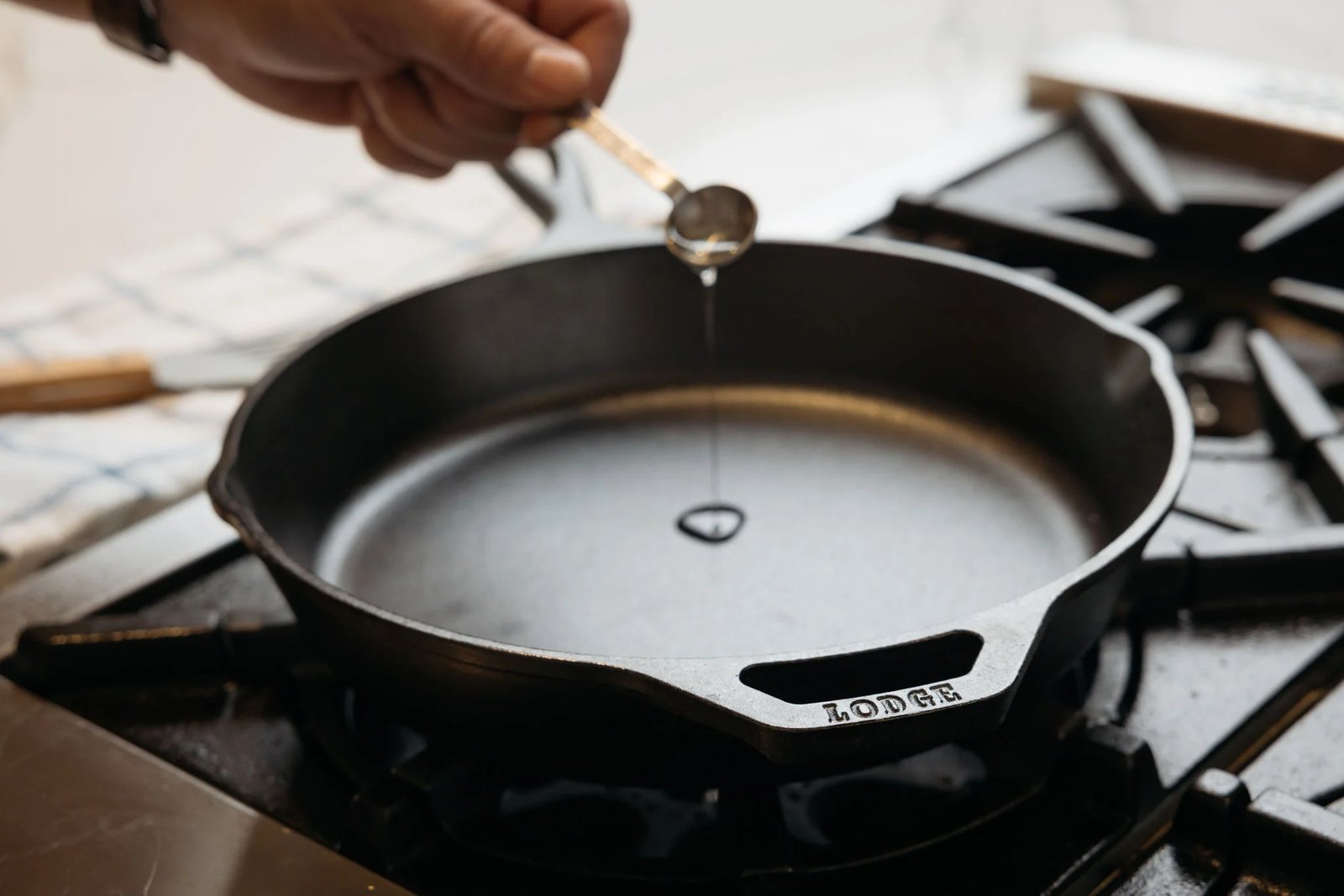
You just got a cast iron skillet — maybe new, maybe a rusty treasure from a flea market or grandma’s attic. Either way, it needs seasoning: the baked-on oil coating that makes cast iron non-stick, rust-proof, and better with every use. Factory “pre-seasoned” skillets have a starter coat, but adding your own layers makes a dramatic difference. And that rusty vintage find? Totally salvageable. Here’s how to season a cast iron skillet for the first time, properly.
What Seasoning Actually Is (The 30-Second Science)
Seasoning isn’t just “oil on metal.” When oil is heated past its smoke point on iron, it polymerizes — the oil molecules cross-link into a hard, plastic-like coating bonded to the metal. This is the same chemistry as seasoning a wok. Multiple thin polymerized layers build the slick, black, rust-proof surface that makes vintage cast iron so prized. Understanding this tells you the two rules: thin coats (thick coats get sticky instead of polymerizing) and real heat past the smoke point (warm oil just sits there).
Step 1: Start Clean (Strip If Needed)
For a new skillet: Wash with hot water and a little dish soap (yes, soap is fine for this initial wash — the “never use soap” rule applies to maintained seasoning, and even then it’s overstated), scrub with a stiff brush, rinse, and dry completely — towel dry, then heat on the stove for 2–3 minutes to evaporate every drop. Water is the enemy; the skillet must be bone dry before oiling.
For a rusty/used skillet: Scrub off rust with steel wool or a chain mail scrubber. For heavy rust, soak in a 50/50 white vinegar-water bath for 1–2 hours (no longer — vinegar etches iron), then scrub, wash, and dry thoroughly. For gunky buildup, oven cleaner (lye-based) in a garbage bag overnight strips it effectively. Get down to bare gray iron — that’s your canvas. The Lodge Cast Iron care guides (Lodge has made cast iron since 1896) cover restoration in detail.
Step 2: Choose the Right Oil
You want a neutral oil with a high smoke point that polymerizes well:
- Best choices: Refined canola, grapeseed, vegetable shortening (Crisco — the traditional favorite), refined avocado oil
- Fine: Vegetable oil, corn oil
- Avoid: Extra virgin olive oil (low smoke point, sticky residue), butter (milk solids burn), flaxseed oil (much-hyped online, but the coating is brittle and flakes — the internet’s favorite seasoning oil is actually problematic)
Honestly, plain Crisco or canola oil works as well as anything. Don’t overthink the oil; the technique matters more.
Step 3: Apply Thin, Bake Hot, Repeat
- Oil the entire skillet — inside, outside, handle — with a thin coat. Then wipe it almost all off with a clean cloth. This is the critical step: it should look nearly dry, like you changed your mind. Too much oil = sticky, gummy finish. “Wipe it like you made a mistake” is the pro mantra.
- Bake upside down at 450–500°F (above your oil’s smoke point) for 1 hour. Upside down lets excess oil drip away instead of pooling. Put foil on the lower rack to catch drips.
- Let it cool in the oven. Don’t quench hot iron — thermal shock can crack it.
- Repeat 3–4 times. Each cycle adds a layer. The skillet won’t be jet black after 3 coats — it darkens with cooking over weeks. That’s normal and correct.
Total time: an afternoon, mostly waiting. The oven does the work.
Step 4: Cook Your Way to Greatness
Oven seasoning gives you the foundation; cooking builds the real seasoning. The best seasoning foods:
- Frying (shallow-fry anything — the hot oil polymerizes beautifully)
- Cornbread, Dutch babies, roasted vegetables with oil
- Bacon and fatty meats (though the salt/sugar can be harsh on brand-new seasoning — wait a few cooks)
Go easy on highly acidic foods (tomato sauce, wine reductions) for the first dozen cooks — acid strips young seasoning. After a month of regular cooking, the skillet handles anything.
Daily Maintenance (Keep the Seasoning Alive)
- Clean while warm: Hot water, stiff brush or chain mail scrubber. A little dish soap is fine — it doesn’t strip polymerized seasoning (that’s chemistry, not opinion).
- Dry immediately and completely: Towel dry, then 2 minutes on a warm burner. This is the #1 rust prevention step.
- Light oil after drying: A micro-thin wipe of oil while warm, buffed nearly dry. Maintains the coating between cooks.
- Never soak it. Never dishwasher. Ever.
- Stuck food? Boil water in it for a few minutes, scrub, re-dry, re-oil. Don’t chisel at it.
Cast Iron Cooking Techniques Worth Learning
A well-seasoned skillet rewards specific techniques. Preheating: cast iron heats slowly and unevenly at first — give it 5–8 minutes on medium-low before cooking, then adjust. The payoff is incredible heat retention: once hot, it stays hot, giving the best sears of any pan you own. Searing meat: ripping-hot skillet, dry meat surface, don’t touch it for 2–3 minutes — the crust that forms is why steakhouses use cast iron.
Cornbread and baking: preheat the skillet in the oven, add batter to the screaming-hot pan — the sizzle creates an unbeatable crispy crust. Frittatas and Dutch babies: stovetop-to-oven in one pan, no transferring. Smash burgers: the flat, heavy surface is ideal.
What to avoid long-term: boiling plain water (strips seasoning over time — always salt/oil it), dishwasher (never), and thermal shock (don’t plunge a hot skillet into cold water — it can crack). Treat it with basic respect and it genuinely improves for decades. That’s not marketing; it’s a century of user evidence.
The Bottom Line
To season a cast iron skillet for the first time: strip to clean dry iron, wipe on the thinnest coat of canola oil or Crisco (“wipe it like a mistake”), bake upside down at 450–500°F for an hour, cool in the oven, and repeat 3–4 times. Then cook with it constantly — frying and roasting build seasoning faster than anything. Maintain with warm-water cleaning, thorough drying, and a whisper of oil. Do this and your $25 skillet becomes a family heirloom that outlives you — the original non-stick, no chemicals required. Put it to work on our crispy fries (stovetop version), perfect chicken, and fluffy pancakes.