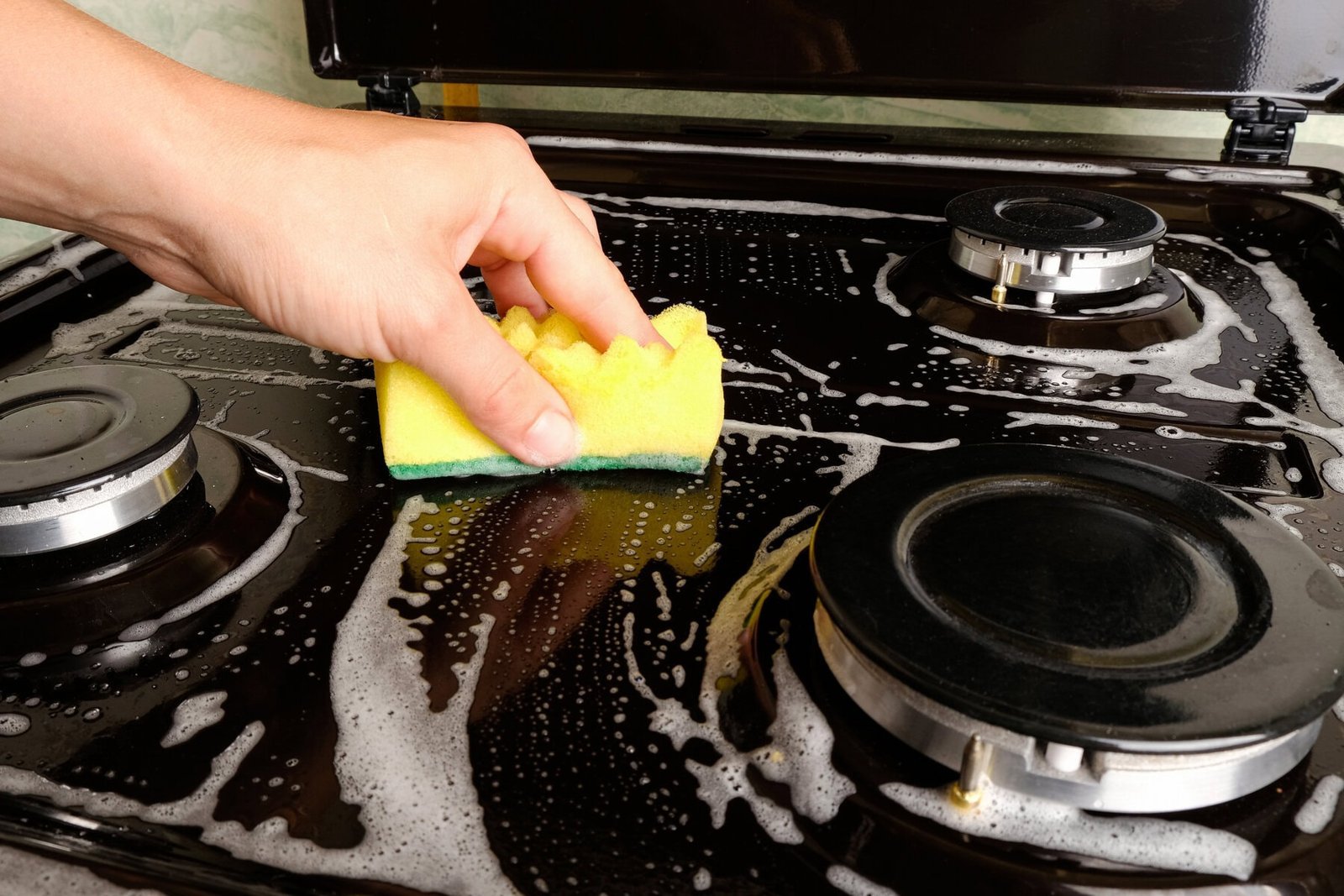
A greasy stovetop is the badge of a well-used kitchen — but eventually the splatter builds up into a sticky, grimy layer that regular wiping won’t touch. Before you reach for harsh chemical degreasers, know this: the best way to clean a greasy stovetop naturally uses stuff already under your sink. These methods work on gas, electric, and glass-top stoves, and they don’t fill your kitchen with fumes.
Why Natural Works on Grease
Grease is just oil that’s polymerized and bonded to the surface through heat. To remove it you need to either dissolve it (alkaline cleaners like baking soda saponify grease — literally turn it into soap) or cut through it (acids like vinegar dissolve mineral bonds). Baking soda + vinegar isn’t just a volcano science project — it’s genuinely effective chemistry. Dish soap cuts fresh grease because surfactants surround oil molecules and lift them away. All natural, all effective.
Method 1: Baking Soda Paste (Best All-Around)
- Remove grates and burner caps (gas) or just clear the surface (electric/glass).
- Sprinkle baking soda generously over the greasy areas, or make a paste: 3 parts baking soda to 1 part water.
- Spread the paste over the grease and let it sit 15-30 minutes. For heavy buildup, lay a hot damp towel over the paste — the heat and steam supercharge it.
- Scrub with a non-scratch sponge or old toothbrush for crevices. The mild abrasion of baking soda lifts grease without scratching.
- Wipe clean with a damp cloth, then buff dry with a microfiber cloth for a streak-free finish.
This handles 90% of stovetop grease situations. The dwell time is the key — don’t scrub immediately; let the chemistry work first.
Method 2: Vinegar Steam Clean
For glass-top and electric coil stoves: fill a spray bottle with equal parts white vinegar and water. Spray the cooled stovetop generously, lay damp paper towels or a thin cloth over it, and wait 15 minutes. The vinegar loosens grease and dissolves the mineral haze that makes glass tops look cloudy. Wipe, then polish with a dry microfiber cloth. For stubborn spots on glass, sprinkle baking soda over the vinegar spray — the fizzing action lifts stuck-on grime.
Method 3: Dish Soap Deep Clean (Gas Grates)
Gas grates and burner caps collect the worst buildup. Remove them and soak in hot water with a good squirt of dish soap for 30-60 minutes. Scrub with a stiff brush, rinse, and dry completely before replacing (wet burner parts cause uneven flames). For truly caked-on grates, seal them in a bag with 1/4 cup ammonia overnight — the fumes (not liquid contact) loosen everything. Rinse thoroughly. Do this outside or in a ventilated area.
Method 4: Lemon Power
Cut a lemon in half, dip the cut side in coarse salt, and scrub greasy spots directly. The citric acid cuts grease, the salt provides gentle abrasion, and your stovetop smells amazing. This is my favorite for quick touch-ups between deep cleans — fast, pleasant, and surprisingly effective on fresh splatter.
Stovetop-Specific Cautions
- Glass/ceramic tops: no abrasive powders scrubbed hard, no razor blades at angles, no cast iron dragged across. Baking soda is fine (it’s very mild), but use light pressure. Wipe up sugary spills immediately — burnt sugar can pit glass.
- Gas stoves: make sure burner ports are clear — a toothpick clears clogged holes. Don’t soak igniters.
- Electric coils: don’t submerge them in water. Wipe with a damp cloth only, and never turn on a wet coil.
- Stainless steel: always wipe with the grain to avoid visible scratches.
The Prevention Habit (2 Minutes a Day)
Here’s the real secret: a quick wipe-down after cooking — while the stovetop is still slightly warm — prevents 90% of buildup. Keep a spray bottle of vinegar-water and a microfiber cloth under the sink. Thirty seconds of wiping after dinner means you never face the archaeological dig of baked-on grease again. It’s the same principle as keeping good tools handy — the right setup makes the habit effortless.
Natural Stovetop Cleaning FAQ
Can I use vinegar on all stovetops? Yes for glass, electric, and sealed gas burners. Avoid prolonged vinegar contact with natural stone countertops adjacent to the stove (it etches stone), and don’t use it on cast iron grates you want to keep seasoned.
What’s the best natural degreaser? Baking soda paste for stuck-on grease, dish soap for fresh grease, vinegar for film and haze. Combined (paste first, vinegar rinse after), they handle almost anything.
How do I clean burnt-on food from a glass stovetop? Baking soda paste + 20 minutes + a plastic scraper or old credit card at a low angle. Patience beats pressure — let the paste soften the carbon first.
Are natural cleaners as effective as chemical degreasers? For routine and moderate buildup, yes — genuinely. For extreme, years-of-neglect grease, a heavy-duty degreaser may be faster. But natural methods get you 95% of the way with zero fumes.
The Takeaway
The best way to clean a greasy stovetop naturally: baking soda paste with dwell time for heavy grease, vinegar spray for film and glass tops, dish soap soaks for grates, and lemon-salt for quick touch-ups. Follow with the 30-second daily wipe habit and you’ll never face a grimy stovetop again — no harsh chemicals required.
Deep-Clean Schedule: How Often?
Not every clean needs to be a deep clean. Here’s a realistic rhythm:
- Daily (30 seconds): wipe with a damp microfiber cloth while still warm after cooking.
- Weekly (10 minutes): baking soda paste treatment on buildup spots, vinegar spray and polish for glass tops.
- Monthly (30 minutes): remove grates and burner caps for a soak, detail crevices with a toothbrush, check and clear gas ports.
- Seasonally: pull out the drip pans (electric coil stoves), deep-clean the oven while you’re at it, replace worn burner parts.
The daily wipe is the whole game — everything else stays easy if you never let grease accumulate. It’s the lowest-effort, highest-return cleaning habit in the kitchen.
One more tip: keep a dedicated stovetop microfiber cloth — not the one you use for counters. Grease transfers, and wiping a just-cleaned stovetop with a greasy rag undoes your work. Toss stovetop cloths in the laundry weekly; they accumulate more grime than you’d expect.
Why Baking Soda Cleans So Well
Baking soda (sodium bicarbonate) is a mild alkali — which is exactly why it cuts grease: alkalis saponify fats, turning them into soap that rinses away. The chemistry of sodium bicarbonate explains its hundred household uses. It’s not folk wisdom; it’s chemistry your grandmother understood intuitively.
Less mess starts with less cookware — another reason to love one-pot weeknight meals, which keep the stovetop (and the sink) far more manageable.