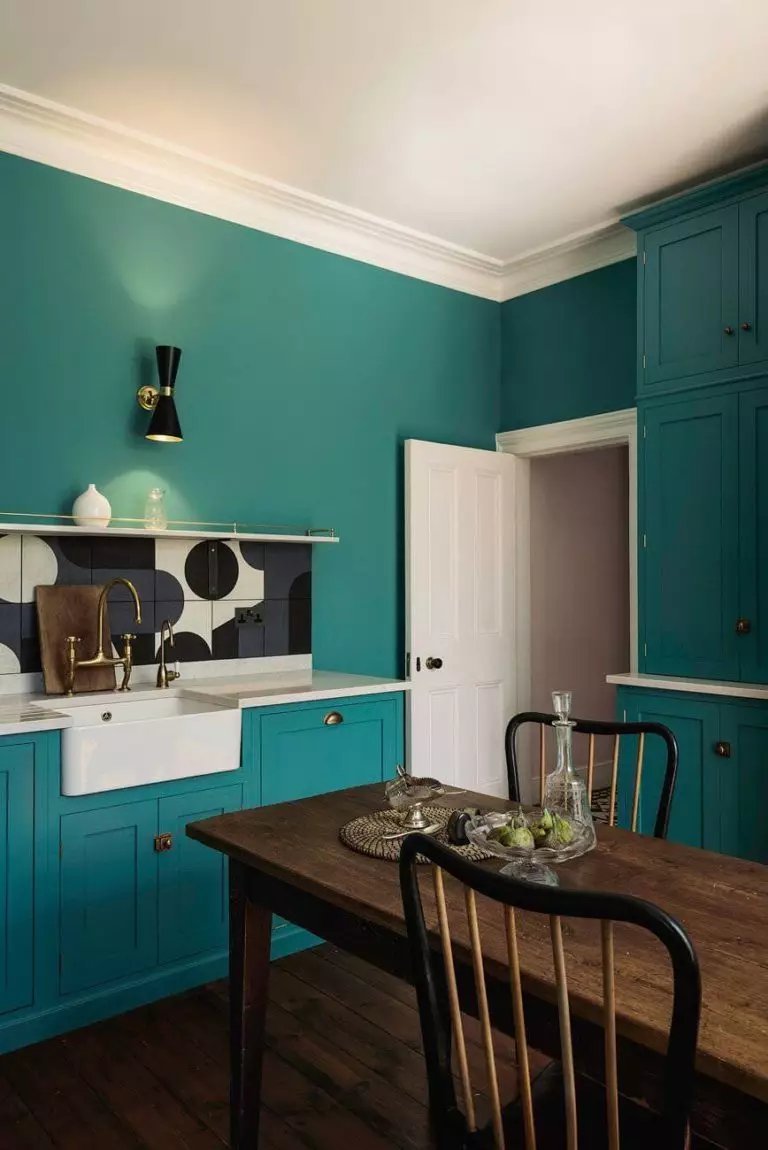
Walk into any paint store and you’ll face a wall of finishes — flat, eggshell, satin, semi-gloss, high-gloss — and picking wrong means either scrubbing stains off a finish that can’t handle it or staring at every imperfection a shiny paint highlights. Kitchens are uniquely demanding: grease, steam, splatters, and constant wiping. So what is the best paint finish for kitchen walls? The short answer: satin or eggshell for most kitchens, with semi-gloss for trim and high-splash zones. Here’s why, and when to break the rule.
What Paint Finish Actually Means
“Finish” (or “sheen”) is just how much light the dried paint reflects. More sheen = more durable and washable, but also more revealing of wall flaws. Less sheen = better at hiding imperfections, but harder to clean. The kitchen forces a compromise because it needs both washability and forgiveness.
Quick ranking from least to most shiny:
- Flat/matte: zero shine, hides flaws beautifully, nearly impossible to scrub clean
- Eggshell: soft, velvety glow; scrubbable with care
- Satin: smooth, pearl-like finish; stands up to regular washing
- Semi-gloss: noticeable shine; very washable, shows every bump
- High-gloss: mirror-like; toughest finish, highlights everything
The Winner for Kitchen Walls: Satin (With Eggshell as Runner-Up)
Satin is the best paint finish for kitchen walls for most homes. It hits the sweet spot: washable enough to handle grease splatter and tomato sauce flicked from the stove, but not so shiny that it spotlights every drywall seam. Modern satin paints (especially quality acrylics) scrub well without burnishing — that shiny rubbed spot you get from over-scrubbing cheaper paints.
Eggshell is the right call if your kitchen walls are older or imperfect and you cook lightly — think reheating more than frying. It hides flaws better than satin and handles occasional wiping, but it won’t survive aggressive scrubbing near the stove.
My practical take: use satin on the walls around the cooking zone and eggshell elsewhere in an open-plan kitchen/dining area if you want a softer look. Nobody says the whole room needs one finish.
Where to Use Semi-Gloss in the Kitchen
Semi-gloss earns its place on:
- Trim, baseboards, and door frames — these take abuse and need maximum washability
- Cabinets if you’re painting them (use a dedicated cabinet paint, not wall paint)
- The wall behind the stove if you don’t have a full backsplash — grease central
- Window sills where condensation collects
Skip high-gloss on walls unless you’re going for a deliberate dramatic look on perfectly smooth walls — in a real kitchen with real drywall, it will show every flaw and drive you quietly insane.
What About the Ceiling?
Kitchen ceilings collect grease and steam too. Use a flat or matte ceiling paint — it hides imperfections and ceilings don’t get touched. If your kitchen has no range hood and heavy cooking happens, consider a washable matte or eggshell on the ceiling for easier cleaning. And yes, This Old House’s kitchen painting guide confirms: dedicated ceiling paint, applied with a roller on an extension pole, is the pro move.
Application Tips That Matter More Than the Finish
Honestly, prep and application affect the result as much as sheen choice:
- Degrease first. Kitchen walls have an invisible film of cooking grease. Wash with TSP substitute or a degreasing cleaner, then rinse. Paint won’t bond properly over grease.
- Use quality paint. Premium lines have better resins — meaning better washability at the same sheen level. A top-tier eggshell often outperforms a cheap satin.
- Two coats minimum. One coat of anything looks patchy in kitchen lighting.
- Caulk the gaps where backsplash meets wall and trim meets wall before painting for a crisp, professional edge.
If you’re refreshing the whole kitchen on a budget, see our guides to cheap kitchen updates and budget countertop materials — paint is just the beginning.
Dealing With Kitchen-Specific Paint Challenges
Kitchens throw problems at paint that other rooms don’t. Grease film: even walls that look clean have a microscopic grease layer from cooking. Wash with a degreasing cleaner (TSP substitute works well), rinse, and let dry completely before priming or painting. Paint applied over grease peels within months — this is the most common cause of kitchen paint failure.
Steam and moisture: if your kitchen lacks a good range hood, steam condenses on walls constantly. In that case, step up one sheen level from what you’d otherwise choose (satin instead of eggshell) and make sure the paint is a quality acrylic with good moisture resistance. And consider whether the real fix is ventilation — a $150 range hood upgrade protects your paint, your cabinets, and your air quality.
Touch-ups: keep the leftover paint sealed and labeled. Kitchen walls need touch-ups more than any other room — a dab on a scuffed corner every few months keeps the whole paint job looking fresh for years. Store the can upside down (creates an airtight seal under the lid) in a climate-controlled spot, not the garage.
Repainting timeline: even the best kitchen paint job needs refreshing every 5–7 years in a heavily used kitchen, versus 8–10 for bedrooms. The grease, steam, and cleaning wear it down. Budget for it as maintenance, not a surprise.
Painting Kitchens With Kids and Pets Around
Real-life kitchens have occupants. Ventilation matters more with little lungs: use low-VOC or zero-VOC paint (most major brands offer it now at minimal premium), ventilate well during and 48 hours after painting, and keep kids and pets out of the room until it’s fully dry — not just dry to the touch. Timing: start early morning so the bulk of drying happens during the day with windows open.
Protect the chaos zones: pet food areas, trash pull-outs, and the wall behind the stove take the most abuse — consider a scrubbable satin there even if you use eggshell elsewhere. Keep touch-up paint accessible (labeled, with the room name and date) because kitchen walls with kids need touch-ups quarterly, not yearly. A 10-minute touch-up session every few months keeps the paint job looking fresh for its full lifespan.
The Bottom Line
The best paint finish for kitchen walls is satin for most households — washable, attractive, and forgiving. Choose eggshell if your walls are imperfect and your cooking is light; reserve semi-gloss for trim and high-abuse zones. Whatever you pick, degrease thoroughly and buy quality paint — those two decisions matter more than agonizing between sheens. And if you’re painting other rooms too, our guide to colors for small rooms will help you pick shades as confidently as finishes.