A rug that’s too small makes the whole room look off — like a postage stamp floating in an ocean of floor. It’s one of the most common decorating mistakes, and it’s completely avoidable with a few simple rules. The right rug anchors your furniture, defines the space, and makes the room feel intentional. The wrong one makes everything look disconnected. Here’s how to choose the right size rug for your living room, with the specific measurements designers actually use.
The Golden Rule: Bigger Than You Think
The #1 rug mistake is buying too small. When in doubt, size up — a slightly-too-large rug looks intentional; a too-small rug looks like a mistake. For most living rooms, that means 8×10 feet as the standard, with 9×12 for larger rooms. The tiny 5×7 rugs that seem like a good deal? They rarely work in living rooms unless the seating area is genuinely compact.
The Three Layout Rules (Pick One)
There are three accepted furniture-on-rug arrangements. Choose based on your room and rug:
- All legs on (the ideal): The rug is large enough that all furniture — sofa, chairs, coffee table — sits fully on it. This unifies the space completely. Requires the biggest rug (usually 9×12 for a standard living room).
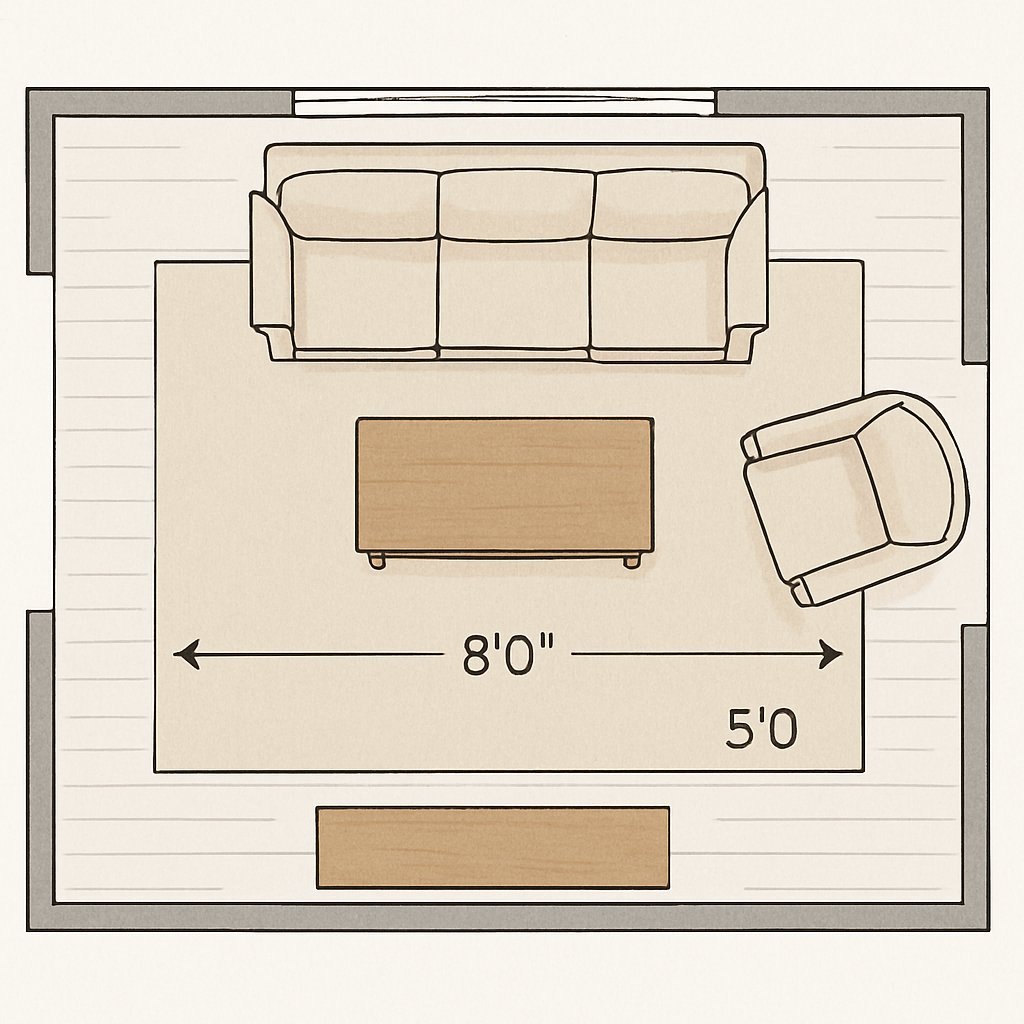
- Front legs on (the standard): Sofa and chairs sit with front legs on the rug, back legs off. The rug extends 12–18 inches beyond the furniture on the sides. This is the most common professional look and works with 8×10 rugs in average rooms.
- Coffee table only (the minimum): Just the coffee table sits on the rug, centered in the seating arrangement. Acceptable in small rooms or with statement rugs, but the least grounding of the three.
Never do: the “floating island” — a small rug under just the coffee table with all furniture legs off it, marooned in the middle of the floor. This is the postage-stamp look.
Measure Before You Shop
Don’t guess. Do this:
- Arrange (or plan) your furniture layout first — rug follows furniture, not the reverse.
- Measure the seating area’s footprint, then add 12–24 inches on each side beyond the furniture.
- Use painter’s tape to outline the rug size on the floor and live with it for a day. This 5-minute step prevents the most common rug regret.
- Leave 12–18 inches of bare floor between the rug edge and the walls (in smaller rooms, 8 inches minimum). Wall-to-wall rug looks like carpet and defeats the purpose.
Standard living room rug sizes and when they work:
- 5×7: Only for apartment-size seating areas or under a small loveseat grouping
- 6×9: Small living rooms, tight seating arrangements
- 8×10: The standard — works for most living rooms with a sofa + 1–2 chairs
- 9×12: Large living rooms, sectionals, or the all-legs-on look
- 10×14+: Great rooms and open-plan spaces
Special Cases
- Sectional sofas: The rug must extend beyond the chaise/longest section — measure the full L footprint. Usually 9×12 minimum.
- Open-plan spaces: The rug defines the living zone — all furniture for that zone follows the rules above, and the rug’s edges mark the boundary. This is where rugs do their most important work.
- Fireplace as focal point: Center the rug on the fireplace, arrange seating around it.
- Round rugs: Work under round coffee tables in small or awkward spaces; size so the table plus chairs’ front legs fit.
- Layering: A large natural-fiber rug (jute, sisal) as a base with a smaller patterned rug on top — designer trick for texture and correct scale on a budget.
Material and Practical Notes
- Always use a rug pad. It prevents slipping (safety), adds cushion, protects floors, and makes even thin rugs feel luxurious. $30–$80, non-negotiable.
- Low-pile or flatweave for high-traffic living rooms and homes with pets — easier to clean, chairs slide easier. See our pet-friendly flooring guide for the full picture.
- Pattern hides everything — kids, pets, real life. Solid light rugs in living rooms are beautiful and brave.
- Wool is the premium choice (durable, naturally stain-resistant, ages beautifully); polypropylene is the practical budget pick (nearly indestructible, hose-cleanable).
Rug Pads and Maintenance: Protecting Your Investment
The rug is only half the purchase — the pad underneath determines how it performs. Felt pads (1/4–1/2 inch) add luxurious cushion and are best for living rooms where comfort matters. Rubber/natural latex pads grip hard floors and prevent slipping — essential on wood, tile, or LVP. Combination felt+rubber pads give you both. Never use PVC/vinyl pads on hardwood — they can discolor the finish. Budget $1–$2 per square foot for a quality pad; it’s the best money in the rug equation.
Maintenance by material: vacuum weekly (no beater bar on delicate rugs), rotate 180° yearly for even wear and sun fading, blot spills immediately (never rub — rubbing spreads the stain and damages fibers), and get wool rugs professionally cleaned every 12–18 months. Pet owners: enzyme cleaner for accidents (regular cleaners mask odor; enzymes eliminate it), and keep nails trimmed — the #1 rug killer is untrimmed claws snagging fibers.
A quality rug with a good pad lasts 10–20 years; a cheap rug without a pad lasts 2–3. The pad is the difference. For more sizing and style guidance, The Spruce’s rug guides cover everything from placement diagrams to material comparisons.
Rugs in Open-Plan Spaces
Open-plan living makes rug sizing more important, not less — the rug is the room divider. Each zone gets its own rug, sized by the rules above for that zone’s furniture. Leave 12–18 inches of bare floor between rugs so the zones read as distinct. Coordinate, don’t match: rugs in the same color family but different patterns look designed; identical rugs look like a hotel.
The dining zone: the rug must extend 24 inches beyond the table on all sides so chairs stay on it when pulled out — usually 8×10 minimum under a 6-person table. Too-small dining rugs are the #2 rug mistake after living room postage stamps.
The Bottom Line
To choose the right size rug for your living room: measure your seating area, add 12–24 inches per side, tape it out on the floor, and buy the 8×10 (or 9×12 for larger rooms) — bigger than your instinct says. Get front legs of all seating on the rug at minimum, always use a pad, and let the rug define the space. It’s a $200–$600 purchase that changes how the entire room feels — especially combined with the light and color strategies in our dark living room guide and the noise reduction tips (rugs absorb sound beautifully).