Countertops are the visual anchor of a kitchen — and the price tag anchor of a remodel, with stone running $50–$150+ per square foot installed. But you don’t need quartz or granite to get a kitchen that looks great and works hard. Several budget materials deliver 90% of the look and function for a fraction of the cost. Here are the best budget countertop materials for a kitchen, honestly ranked by cost, durability, and how they actually live day to day.
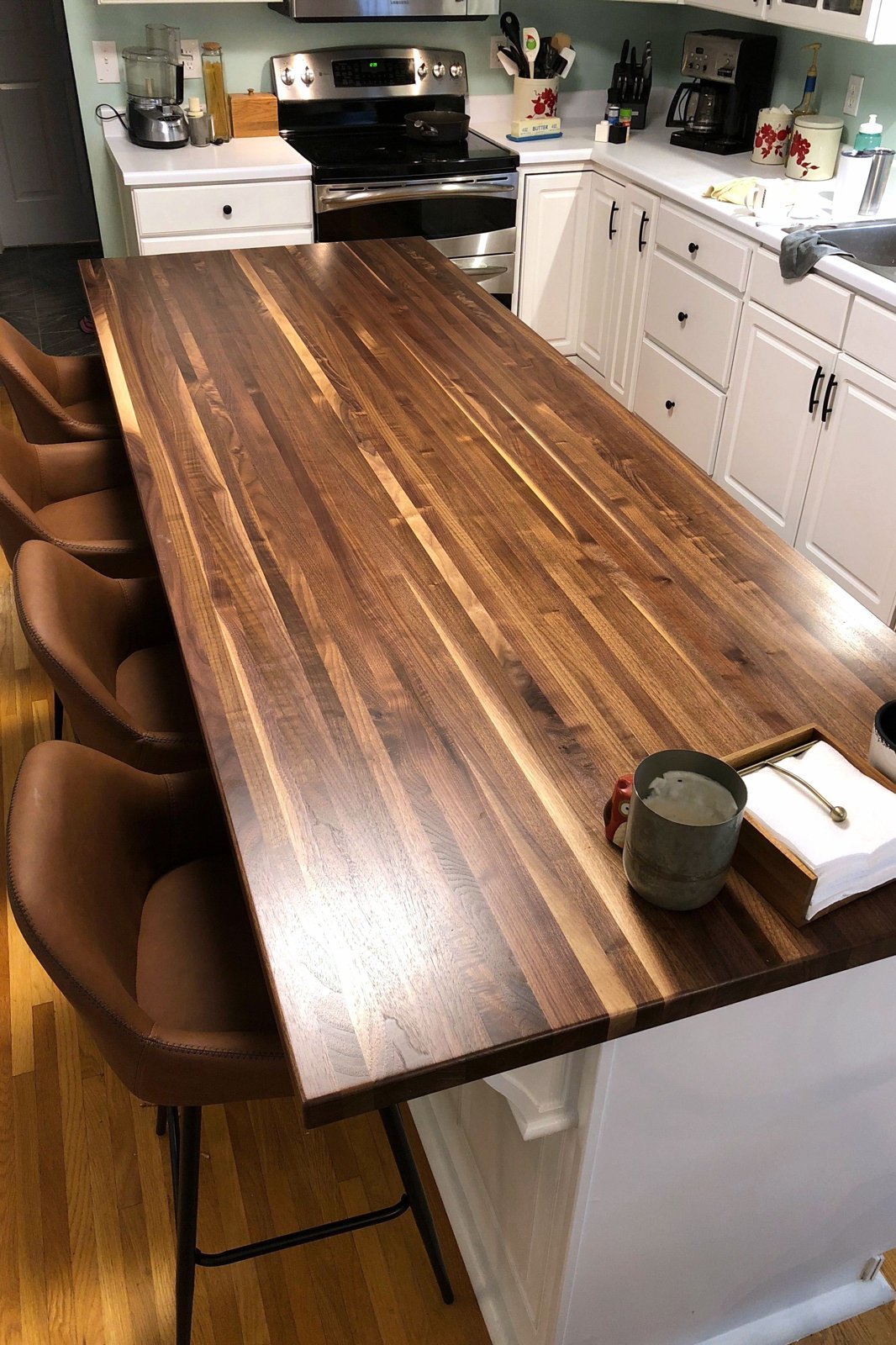
1. Butcher Block / Wood ($20–$50/sq ft installed)
The budget champion for warmth and character. Butcher block brings a warmth that stone can’t match, it’s DIY-friendly (you can cut and install it with basic woodworking tools), and scratches sand out — it actually gets better-looking with age if you maintain it. A 10-foot run from a home center costs $200–$500.
The honest downsides: it needs regular oiling (monthly with mineral oil), it’s not heat-proof (always use trivets), and standing water around the sink will darken it over time. Best for: people who cook and don’t mind a little maintenance ritual. Seal the sink cutout meticulously — that’s where problems start.
2. Laminate ($15–$40/sq ft installed)
The undisputed price king, and better than you remember. Modern laminate (think Wilsonart, Formica’s premium lines) convincingly mimics stone, wood, and concrete at a tenth of the price. It’s stain-resistant, easy to clean, and a full kitchen can be done for $500–$1,500.
Downsides: it can’t be repaired if gouged or burned — damage is permanent. Hot pans will scorch it, and the seams show on longer runs. But for rental-grade durability at the lowest price, nothing touches it. Today’s patterns are genuinely convincing from a few feet away.
3. Tile ($10–$30/sq ft DIY, $30–$60 installed)
The DIYer’s playground. Tile counters are heat-proof, come in endless styles, and a handy homeowner can install them for the cost of materials. Large-format tiles minimize grout lines (the main drawback — grout needs sealing and scrubbing).
Best approach: large porcelain tiles (12×24 or bigger) with narrow grout joints and epoxy grout (stain-proof, worth the premium). Avoid small mosaic tiles unless you love scrubbing grout — the maintenance adds up fast.
4. Concrete ($40–$70/sq ft — DIY much cheaper)
Industrial-chic on a budget, if you’re handy. Poured concrete counters look stunning and cost little in materials — but professional installation approaches stone prices because the labor is skilled. The DIY route (forms, pour, polish, seal) is very doable for experienced DIYers and costs a few hundred dollars total.
Caveats: concrete must be sealed properly (and resealed periodically) or it stains. It’s heavy — verify your cabinets can support it. And it’s unforgiving of sloppy DIY; practice on a small piece first.
5. Stainless Steel ($40–$80/sq ft)
The pro-kitchen look. Heat-proof, stain-proof, hygienic, and nearly indestructible. Shows fingerprints and scratches (which develop a patina some love, others hate). Best as an accent — a steel island or section near the range — paired with a warmer material elsewhere.
What About “Budget Quartz” and Granite Remnants?
Worth mentioning: granite remnants (leftover slabs from larger jobs) can be 40–60% off at stone yards — enough for a small kitchen or bathroom. And prefabricated quartz/granite (pre-cut standard sizes) runs $35–$60/sq ft, splitting the difference between laminate and custom stone. If your kitchen is a standard size, always price prefab before assuming stone is out of reach.
Also consider countertop refinishing kits ($100–$200): heavy-duty coatings that go over existing laminate. They buy you 3–5 years and look surprisingly decent — a legitimate bridge solution.
Choosing: Match the Material to Your Life
- Heavy cooks who want low maintenance: laminate or tile
- Design lovers on a budget: butcher block (warmth) or DIY concrete (edge)
- Families with kids: laminate — when it eventually gets destroyed, replacement is cheap
- Best long-term value: granite remnants or prefab quartz if you can stretch slightly
Whatever you choose, pair it with the other high-impact cheap upgrades in our budget kitchen update guide — counters plus new cabinet hardware and fresh kitchen wall paint transform the whole room for under $1,500.
Measuring and Ordering: Avoiding the Classic Mistakes
Countertop ordering goes wrong in predictable ways. Measure twice, order once: measure each run’s length and depth, note the backsplash height, and mark sink and cooktop cutout locations precisely. For L-shaped kitchens, measure both legs independently — walls are never perfectly square, and assuming they are is how counters arrive 2 inches too long.
Order 10% extra material for site-cut adjustments and future repairs. Confirm the template process: for stone and solid surfaces, the fabricator templates your actual cabinets after they’re installed and level — never let anyone cut stone from your measurements alone. Check lead times before demolition: custom stone runs 2–4 weeks; butcher block and laminate are often in stock. Schedule the install after cabinets are set but before the backsplash goes in — the order matters.
The sink question: undermount vs. drop-in affects the counter decision. Undermount needs a solid, non-porous edge (stone, solid surface, concrete — not laminate or tile without special edging). Decide the sink before ordering the counter, not after. And for step-by-step project guidance, Family Handyman’s countertop project guides walk through measuring, ordering, and installation for each material type.
Edge Profiles: The Detail That Changes Everything
The countertop edge is the part you touch and see most — and it dramatically affects the look. Eased/straight: clean modern line, safest with kids, cheapest. Beveled: slight angle, classic, hides small chips. Bullnose (full or half): rounded, traditional, very forgiving — no sharp corners. Ogee: decorative S-curve, formal, pricier to fabricate.
For budget materials, simpler edges look better — an elaborate ogee on laminate looks wrong, while a clean eased edge on butcher block looks intentional and modern. Match the edge to the material’s honesty: simple materials, simple edges. It’s a small decision with outsized visual impact.
The Bottom Line
The best budget countertop materials for a kitchen: butcher block for warmth and DIY-friendliness, laminate for the lowest cost, tile for custom style on a DIY budget, and granite remnants if you can stretch a bit. Skip the idea that only stone is “real” — a well-chosen budget counter with great lighting and hardware looks better than cheap stone done badly. Spend the savings on the faucet and lighting, where you’ll notice the difference every single day.