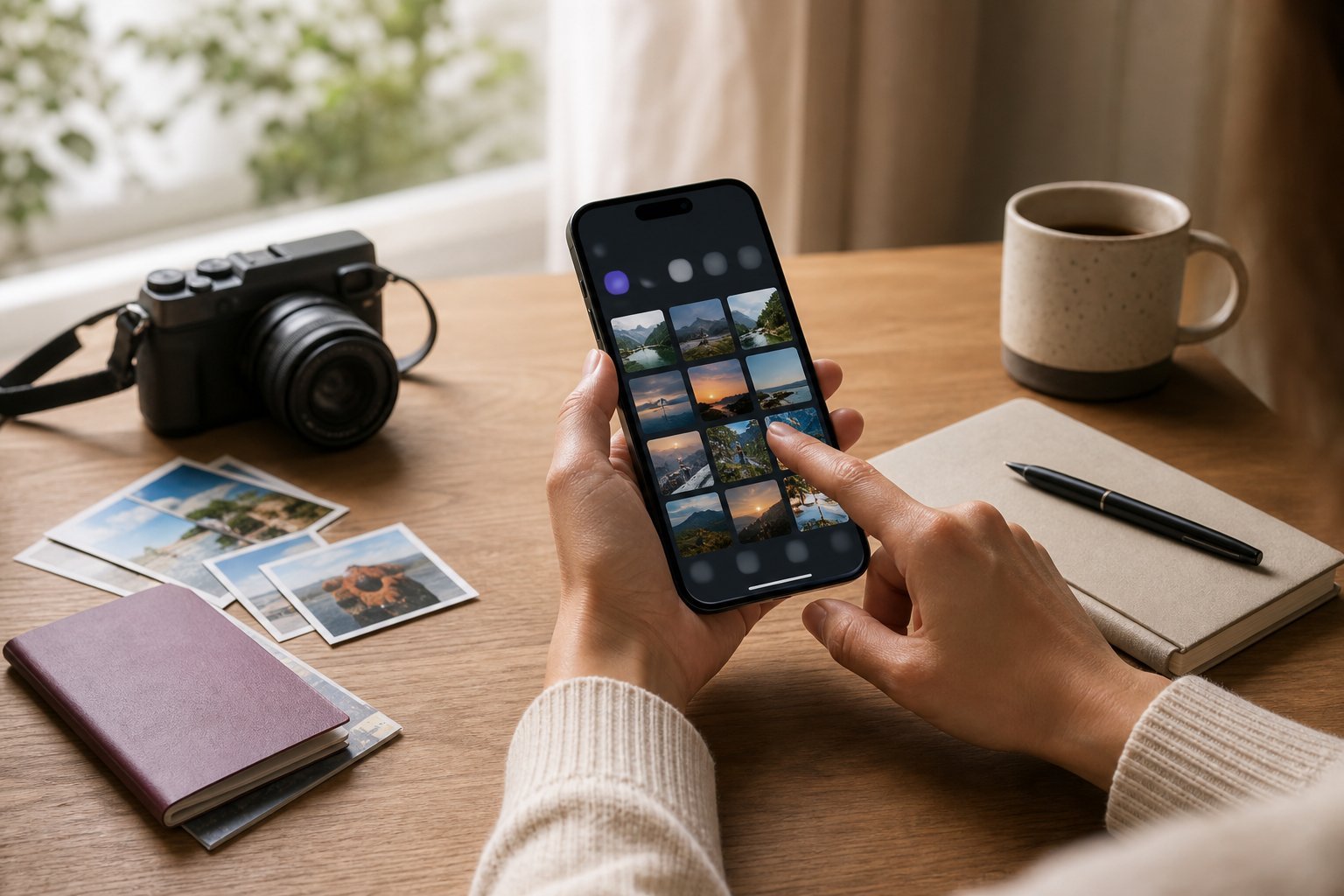
Here’s a secret the camera industry doesn’t want you to hear: some of the most evocative travel documentation I’ve ever seen was shot on phones and scribbled in cheap notebooks. You don’t need a $2,000 mirrorless camera to capture a trip beautifully — you need intention. The best way to document a trip without a fancy camera is to use the tools already in your pocket, plus a few analog tricks that expensive gear can’t replicate. Here’s how to do it well.
Your Phone Is Already a Great Camera (Use It Like One)
Modern smartphones take genuinely excellent photos in good light — which is when most travel photos happen anyway. The difference between forgettable phone snaps and frame-worthy shots isn’t the lens; it’s technique:
- Clean the lens. Seriously. A shirt-wipe removes the haze that ruins half of all phone photos.
- Tap to focus and expose. Tap your subject, then slide the exposure down slightly — underexposed phone photos look richer and more professional than blown-out ones.
- Shoot in the golden hours. The hour after sunrise and before sunset makes everything look better, no skill required.
- Get close, then closer. The most common phone photography mistake is standing too far away. Fill the frame.
- Capture details, not just landmarks. The coffee cup, the textured door, the market vendor’s hands — these age better than your 47th cathedral photo.
- Learn one editing app. Snapseed (free) or Lightroom Mobile can rescue and elevate ordinary shots in minutes.
Shoot a mix of wide scenes, details, and people. Future you will thank present you for the variety.
Keep a Travel Journal (The Underrated Superpower)
Photos show what a place looked like; a journal captures what it felt like. I’m not talking about Dear-Diary prose — just a few lines a day:
- Where you went and one thing that surprised you
- What you ate and whether it was worth it
- A conversation, overheard or otherwise, worth remembering
- How you felt — tired, exhilarated, homesick, amazed
A pocket notebook and a pen that works. That’s it. Five minutes over morning coffee or before sleep. Years later, these fragments will transport you back more vividly than any photo. If writing isn’t your thing, voice memos on your phone work just as well — record a two-minute audio diary while walking. The sound of the street behind your voice is pure time travel.
Collect, Don’t Just Capture
Some of the best trip documentation is physical. Start a trip envelope or small pouch and toss in:
- Ticket stubs, boarding passes, and transit cards
- Restaurant business cards and wine labels
- Postcards (buy them, write one line on the back about that day, mail a few to yourself)
- Pressed flowers, interesting coins, small maps
When you get home, these become a collage, a scrapbook page, or just a memory box. It costs nothing and takes seconds in the moment. This habit pairs beautifully with slow travel days — the kind you get when you’re exploring a new city on foot rather than rushing between sights.
Make Short Videos (Even If You Never “Make Videos”)
You don’t need to be a YouTuber. Thirty-second clips — the market noise, waves hitting the pier, your friend’s laugh at dinner — capture atmosphere that photos can’t. Tips:
- Hold the phone horizontally and steady. Brace against something; shaky vertical video is unwatchable later.
- Capture 10 seconds before and after the “moment.” The lead-in and the aftermath are often the best parts.
- Narrate occasionally. Say where you are and the date. You’ll forget otherwise.
- Back up nightly. Cloud backup or a laptop transfer — losing a trip’s documentation to a stolen phone is heartbreaking and preventable.
At the end of the trip, string the best clips together in your phone’s free editor. A three-minute montage set to nothing at all beats a thousand unsorted camera-roll photos.
Sketch, Even Badly
Hear me out. Drawing — even terrible drawing — forces you to actually look at a place in a way photography doesn’t. A five-minute sketch of a plaza teaches you more about it than fifty photos. You notice the proportions, the light, the details. Nobody has to see it. A small sketchbook and a pencil weigh nothing and change how you experience places. Try it once on your next trip; I bet it becomes a habit.
Organizing It All When You Get Home
Documentation you never look at again is just digital hoarding. The trip isn’t truly documented until it’s organized into something you’ll revisit. Within a week of returning — while memories are fresh — do a 30-minute curation session: pick your 30–50 best photos (not 500), write captions while you still remember the details, and assemble them into one place.
Good options: a shared cloud album for the group, a simple photo book (the printing services make this nearly automatic now — upload, auto-layout, done), or a short trip video from your clips. The photo book is the underrated winner — physical books get opened; cloud folders get forgotten. One book per big trip, shelved where you’ll see it.
For the journal: transcribe or photograph the key pages into a digital note so they’re searchable and backed up. Future you, planning a return trip or just reminiscing, will be grateful. The techniques of travel photography matter less than this final step — curation is what turns a pile of files into actual memories.
Back Up Everything (Twice)
All this documentation is worthless if it lives only on your phone. The 3-2-1 rule: three copies, two different media, one off-site. In practice: phone + cloud backup (automatic) + a laptop or external drive copy when you return. Back up during the trip, not after — nightly cloud uploads over hotel Wi-Fi mean a lost or stolen phone costs you the device, not the memories. It takes 30 seconds to confirm the backup ran; do it while brushing your teeth.
The Bottom Line
The best way to document a trip without a fancy camera is to diversify: phone photos with intention, a few journal lines a day, collected ephemera, short video clips, and maybe a bad sketch or two. Together they capture a trip the way it actually felt — something no single expensive camera does on its own. The gear doesn’t make the memories; the attention does. And if your adventures take you outdoors, these same techniques work perfectly for your first camping trip too.