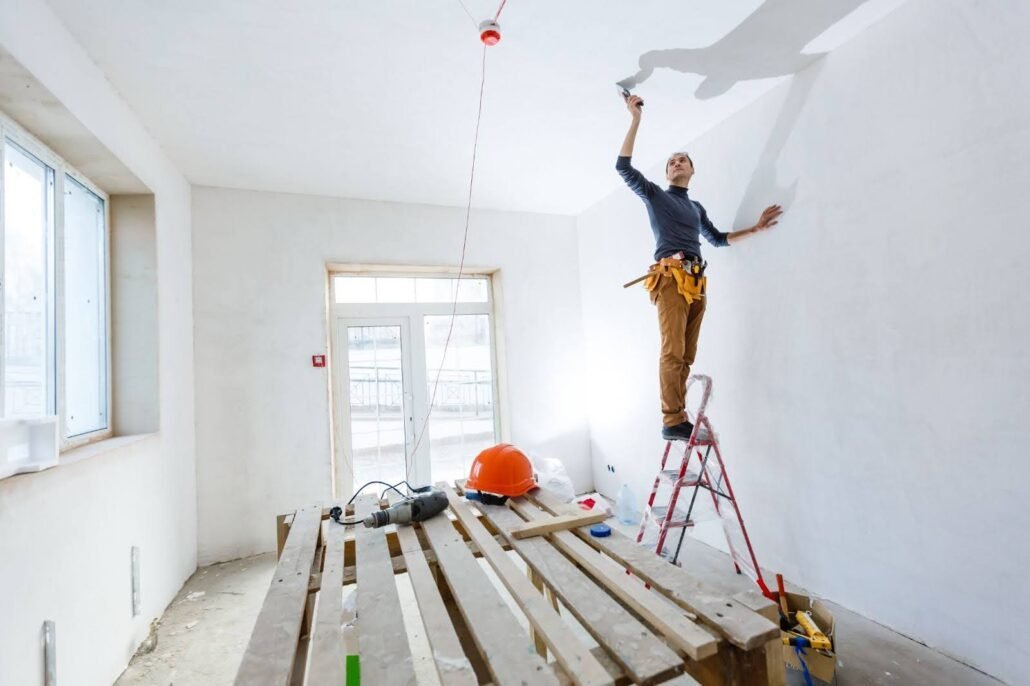
Painting a room with 10-foot (or higher) ceilings means working where a misstep has real consequences. Ladder falls send hundreds of thousands of Americans to the ER every year, and ceiling work — reaching overhead, often on stairs or uneven floors — is prime ladder-accident territory. The right ladder doesn’t just make the job easier; it makes it survivable. Here are the safest ladders for painting high ceilings at home, and how to use them without becoming a statistic.
The Safest Choice: A Quality Fiberglass Step Ladder
For most high-ceiling painting, a fiberglass step ladder (Type IA, 300-lb rating) is the safest option. Why fiberglass over aluminum? It’s non-conductive (matters around light fixtures and wiring), sturdier-feeling, and more stable. Why Type IA? The 300-pound rating covers you plus paint, tools, and supplies with margin — the rating includes everything on the ladder, not just your body weight.
Height math: for a 10-foot ceiling, you need a 8-foot step ladder (which gives ~10.5 feet of reach for an average person). For 12-foot ceilings, a 10-foot step ladder. The rule: your working height should put the ceiling at chest-to-eye level — never work with the ceiling above your head, which is how you lose balance. OSHA’s ladder safety guidance, while written for workplaces, has the fundamentals every homeowner should know.
When You Need More: Extension Ladders and Multi-Position Ladders
- Extension ladders for very high ceilings (14ft+) or stairwells: lean at the correct 75° angle (1 foot out for every 4 feet up), extend 3 feet above the landing surface, and secure the top. They’re less stable for lateral work than step ladders — reposition often rather than overreaching.
- Multi-position ladders (the articulating kind): brilliant for stairs — configure as a step ladder with uneven leg lengths for stairwell walls. They’re heavy, but the versatility for tricky spots is unmatched.
- Platform/step stools with rails: for 9-foot ceilings in small rooms, a sturdy 3–4 step platform ladder with a handrail is more stable than a small step ladder.
- Scaffolding: for whole rooms with very high ceilings, a rented baker scaffold ($50–$75/day) beats any ladder — a real platform with rails, room for paint and tools, no climbing up and down. Honestly the safest option for big high-ceiling jobs.
Non-Negotiable Safety Rules
- 3 points of contact always — two feet and one hand, or two hands and one foot. Never carry paint up in your hand; use a bucket hook or hoist it with a rope.
- Face the ladder when climbing and working. No twisting around.
- Keep your belt buckle between the rails — the classic overreach test. If you have to lean, move the ladder instead.
- Never stand on the top cap or top rung of a step ladder. The “do not stand above this rung” label is there because people died ignoring it.
- Set up on firm, level ground. Use leg levelers on uneven floors — never shim with books or blocks.
- Lock the spreaders fully open on step ladders, every time.
- Keep the area clear: drop cloths are slippery — secure them, wear non-slip shoes, and keep cords out of the climbing path.
- Don’t work tired. Ladder + fatigue + overhead reaching is the accident trifecta. Take breaks.
Painting-Specific Tips for High Ceilings
- Use an extension pole (4–8 feet) for rolling — it keeps you lower on the ladder and covers more area per position. This single tool does more for safety than anything else.
- Cut in with a brush on the pole or from a stable position — freehanding edges while overreaching is how paint (and people) end up on the floor.
- Work in sections and move the ladder frequently — small moves beat big reaches.
- Have a spotter for tall ladders — someone to foot the ladder and hand up supplies.
- Consider hiring out just the high parts — a pro with the right equipment for the 12-foot foyer, DIY for the 8-foot bedrooms. No shame in it.
Pair safe ladder work with good technique — our painting mistakes guide covers the rest, and our bedroom repaint costs help you budget. If the project involves a fan up there too, see ceiling fan installation safety.
Ladder Maintenance and When to Replace
A good ladder lasts decades — if you maintain it and know when to retire it. Inspect before every use: check rungs for cracks or bends, feet for worn rubber (replaceable on most quality ladders — worn feet are a top cause of slips), spreaders and locks for proper function, and rails for damage. For fiberglass ladders, check for cracks or fraying — damaged fiberglass loses strength unpredictably.
Store properly: indoors or under cover, out of direct sun (UV degrades fiberglass and plastic parts over years), hanging horizontally or standing secured — never left where it can fall on someone or be backed into. Clean after messy jobs: paint-spattered rungs are slippery rungs.
Retire a ladder when: any rail is cracked or bent, locks don’t engage positively, feet can’t be replaced and are worn smooth, or it’s been in a fall/impact — internal damage isn’t always visible. A $200 ladder is not worth a $20,000 ER visit. When in doubt, replace it. Ladders don’t have expiration dates, but they do have injury histories — respect both.
Transporting Ladders Safely
Getting the ladder home (or to the job) has its own risks. Roof racks and truck beds: secure both ends with ratchet straps or rope — a ladder sliding off at 40 mph is a lethal projectile. Red flag the rear overhang if it extends past the vehicle. Inside vehicles: never transport a ladder loose in an SUV or van where it can slide forward in a sudden stop — secure it or don’t carry it.
Carrying: for step ladders, carry vertically at your side (not horizontally at shoulder height through doorways — the classic wall-dinger). For extension ladders, two people for anything over 20 feet. And watch for power lines when carrying or raising any ladder outdoors — aluminum ladders and electricity are a fatal combination; fiberglass is non-conductive but wet wood and grime conduct, so maintain distance regardless.
The Bottom Line
The safest ladders for painting high ceilings at home: a fiberglass Type IA step ladder sized so the work is at chest height (8-ft ladder for 10-ft ceilings), with an extension pole doing most of the reaching. For very high or stairwell work, consider a multi-position ladder or rented scaffold. Follow the 3-points-of-contact rule, never overreach, and use the pole. The paint job will look the same — but you’ll finish it on your feet instead of in the ER.