
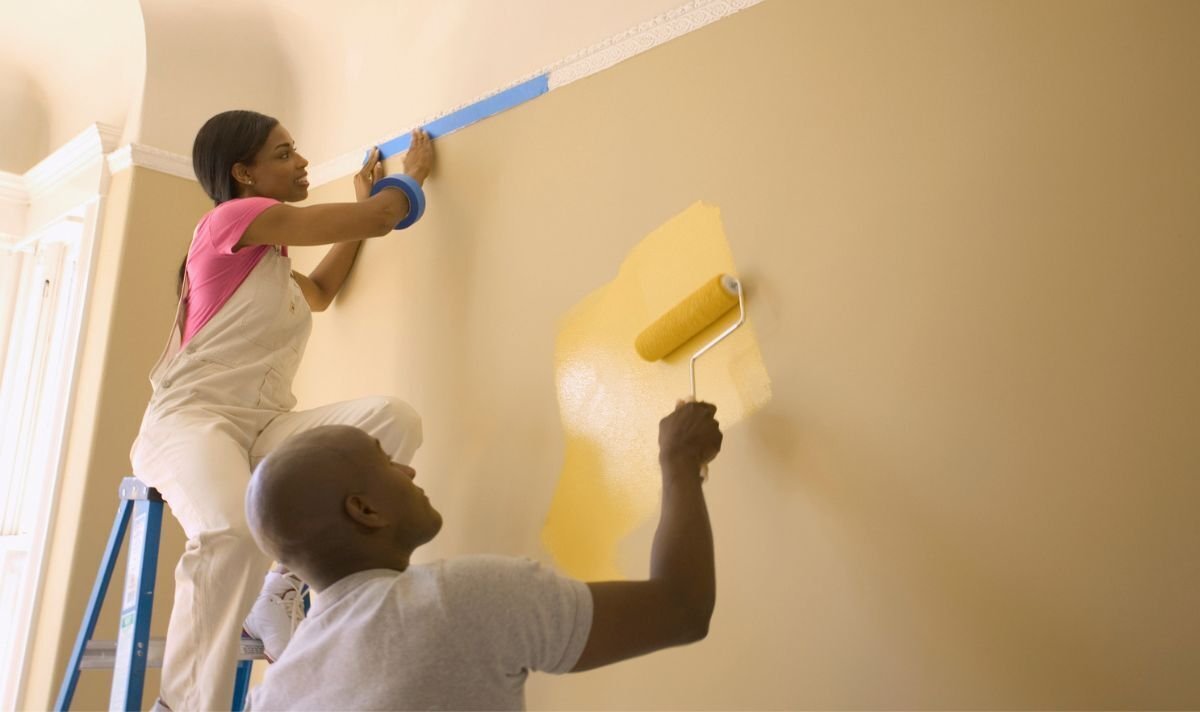
Painting a room seems foolproof — until you’re staring at streaky walls, visible roller marks, and paint on the ceiling wondering where it all went wrong. I’ve painted enough rooms to make most of these mistakes personally, so consider this the guide I wish I’d had. Here are the common mistakes to avoid when painting a room, and what to do instead. Avoid these and your DIY paint job will look genuinely professional.
Mistake #1: Skipping the Prep Work
This is the big one — responsible for maybe 70% of bad paint jobs. Paint doesn’t hide problems; it highlights them. Proper prep means:
- Clean the walls. Kitchen grease, bathroom moisture film, and general grime prevent adhesion. A quick wipe with TSP substitute makes paint bond properly.
- Fill holes and cracks. Every nail hole, ding, and crack will show through new paint. Spackle, sand, repeat — see our drywall patching guide.
- Sand glossy surfaces lightly so the new paint can grip.
- Tape properly. Press painter’s tape down firmly with a putty knife — paint bleeds under loose tape. Remove tape while the paint is slightly tacky, pulling at 45 degrees.
- Prime where needed. Bare patches, dark-to-light changes, stains — see when primer is required.
Prep is boring and takes longer than painting. It’s also what separates amateur from professional results. There’s no shortcut.
Mistake #2: Buying Cheap Paint (and Cheap Brushes)
Bargain paint has less pigment and weaker resins — it needs three coats to do what quality paint does in two, which costs more in the end and looks worse. Mid-tier paint from major brands is the value sweet spot. Same logic for tools: a $3 brush sheds bristles into your finish; a $12–$15 quality brush gives clean lines and lasts for years. Same for rollers — cheap roller covers leave lint and stipple texture in the paint. Good tools aren’t expensive; bad tools are expensive in wasted paint and rework.
Mistake #3: Not Buying Enough Paint
Running out mid-wall is a disaster — the second batch might not match exactly, and the overlap line will show forever. Calculate properly: measure wall square footage (length × height, minus large windows/doors), divide by 350 sq ft per gallon, and round up, then add 10%. For a standard 12×12 room with 8-foot ceilings, that’s roughly 2 gallons for two coats of walls. Running the numbers is part of our bedroom repaint cost guide. Keep the leftover for touch-ups — label the can with the room and date.
Mistake #4: Painting in the Wrong Conditions
Paint is chemistry, and chemistry cares about environment:
- Too humid: slows drying, causes sagging and poor adhesion. Avoid painting bathrooms right after showers; check the can’s humidity guidance.
- Too cold: most latex paints need 50°F minimum (check the label — some newer formulas go to 35°F). Cold paint won’t cure properly.
- Too hot/direct sun: paint dries too fast, leaving lap marks where wet meets dry.
- Poor ventilation: fumes aside, airflow helps paint cure. Open windows (weather permitting) or run a fan.
Mistake #5: Bad Technique — Roller Marks, Drips, and Lap Lines
- Overloading the roller causes drips and thick texture. Load moderately, roll off excess on the tray’s ridges.
- Rolling in random directions leaves visible texture differences. Use overlapping W or M strokes, then finish each section with light vertical strokes in one direction (“laying off”).
- Letting edges dry before rolling (“cutting in” too far ahead) creates lap lines. Work in sections: cut in one wall, roll it while the cut-in is wet, move on.
- Pressing too hard squeezes paint out unevenly and flattens the roller’s nap. Let the roller’s weight do the work.
- Skipping the second coat. One coat almost always looks patchy once dry, even with “one-coat” marketing. Two coats is the professional standard.
Mistake #6: Choosing the Color From a Tiny Swatch
The #1 regret in room painting: the color looks wrong once it’s on all four walls. Paint looks dramatically different at scale and in your specific light. Always:
- Buy sample quarts ($5–$8) and paint large test patches — at least 2×2 feet
- Live with them 48 hours, viewing in morning, afternoon, and artificial light
- Test on multiple walls — the same color reads differently facing north versus south
This $15 precaution prevents a $300 repaint. For small rooms especially, testing light, warm colors helps narrow choices first.
Mistake #7: Neglecting the Ceiling and Trim Order
Paint in the right sequence: ceiling first, then walls, then trim. This way drips and splatter land on surfaces you haven’t finished yet. And don’t skip the ceiling if it’s dingy — a fresh white ceiling makes wall color pop and the whole room feel cleaner. It adds an hour and half a gallon; worth it.
Fixing Paint Mistakes After the Fact
Already made some of these mistakes? Most are fixable without starting over. Drips and runs: let them dry completely, sand flush with fine-grit paper, then touch up with a small roller. Don’t try to fix wet drips — you’ll make it worse. Roller marks / flashing: usually a second coat applied with proper technique (maintaining a wet edge) evens them out. Paint on trim or ceiling: a damp rag handles fresh mistakes; dried paint needs careful scraping with a plastic putty knife or a touch-up of the trim color.
Wrong color: the most painful mistake, but repainting is just paint + a weekend. Before committing to the redo, try living with it for a week — colors grow on people, and lighting changes everything. If you still hate it, the second paint job goes faster because all the prep is done. Bleed-through stains: spot-prime with stain-blocking primer, then topcoat — regular paint alone won’t hold them back.
The comforting truth: paint is the most forgiving home improvement material. Almost every mistake is fixable with sandpaper, primer, and another coat. That’s why painters stay calm — they’ve fixed everything before. For product-specific guidance, Behr’s how-to guides cover common fixes with brand-matched advice.
The Bottom Line
The common mistakes to avoid when painting a room — skipping prep, cheap materials, wrong conditions, bad technique, untested colors, wrong order — are all avoidable with a little patience. The through-line: prep is 70% of a good paint job, quality paint and tools pay for themselves, and two coats applied with proper technique beat any shortcut. Slow down, do it right once, and you’ll walk into that room smiling for years instead of noticing the flaws every day.





One Comment