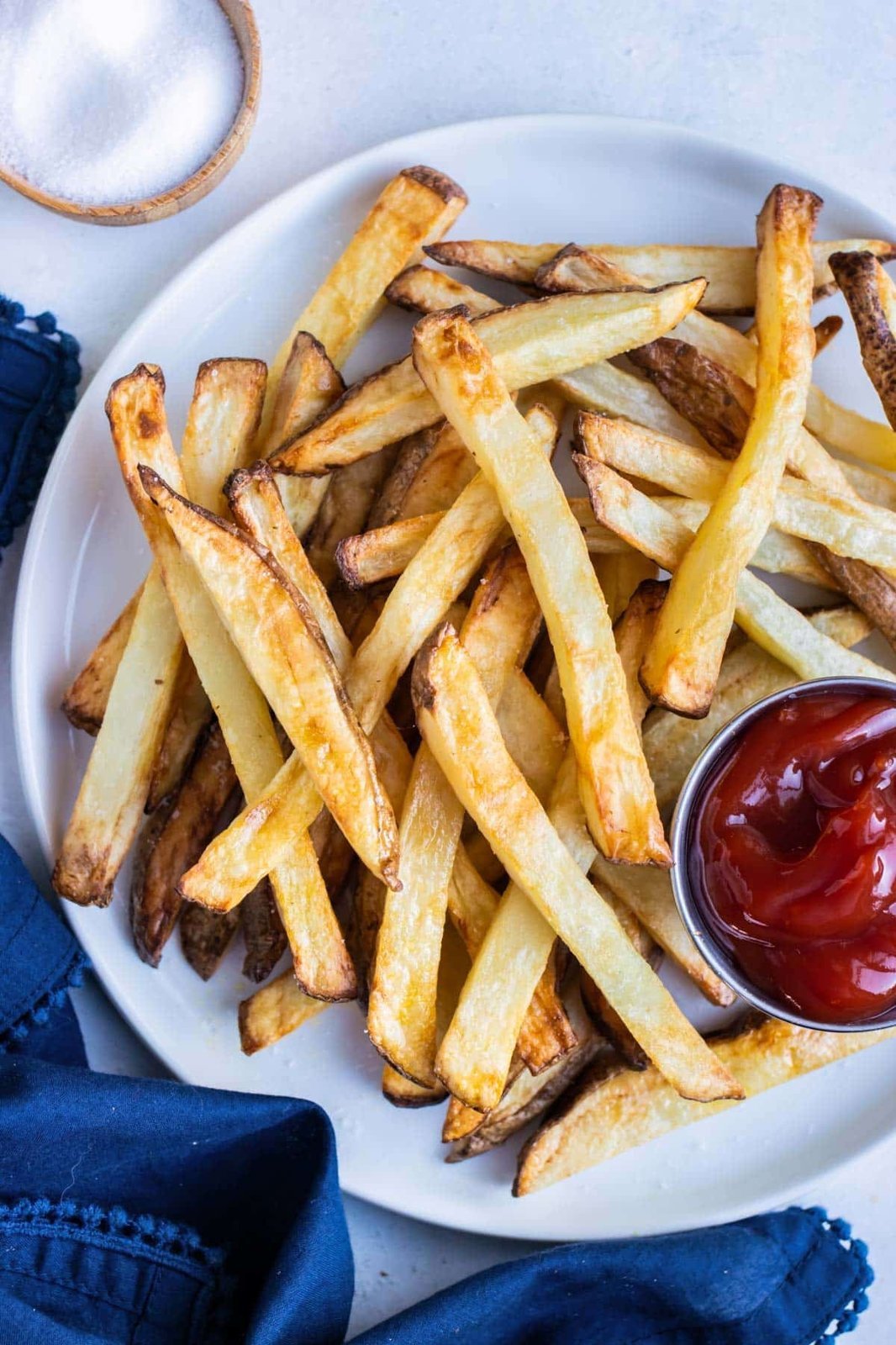
Air fryer french fries promise the impossible: crispy, golden fries with a fraction of the oil. And unlike many kitchen-gadget promises, this one actually delivers — if you know the techniques. Most people’s first batch comes out sad: pale, soggy, unevenly cooked. The difference between disappointing and spectacular air fryer fries comes down to five specific things. Here’s how to make crispy french fries in an air fryer that rival deep-fried.
Start With the Right Potato and Cut
- Russets are king. High starch, low moisture — the ideal frying potato. They crisp outside and stay fluffy inside. Yukon Golds work (creamier interior, slightly less crisp); waxy reds don’t crisp well — skip them.
- Cut evenly, ~1/4 to 1/3 inch thick. Evenness matters more than exact size — uneven fries mean burnt thin ones and raw thick ones in the same batch. A sharp knife and 2 minutes of care, or a $15 fry cutter if you’re committed.
- Consistent shape also means consistent cooking — the classic fry shape exists for engineering reasons, not just looks.
The Steps Everyone Skips (That Make All the Difference)
1. Soak the cut potatoes (30 minutes minimum)
Submerge cut fries in cold water for 30 minutes (up to a few hours in the fridge). This pulls excess surface starch off — starch is what makes fries stick together and cook up gummy instead of crisp. You’ll see the water turn cloudy; that’s the starch leaving. This is the #1 difference-maker. Skip it and you’ll wonder why yours never crisp.
2. Dry them completely
Drain, then dry thoroughly — salad spinner, then towels, then air dry a few minutes. Water is the enemy of crispiness; it steams the fries instead of letting them fry. Damp fries = soggy fries, every time.
3. Oil lightly but evenly
Toss with 1–2 teaspoons of high-smoke-point oil (avocado, peanut, or light olive oil) per pound of potatoes. You want the thinnest even coating — too much oil makes them greasy-soggy in the air fryer’s enclosed space. A spray bottle gives the most even coverage.
4. Season at the right time
Salt after cooking, not before — salt draws moisture out during cooking, working against crispiness. Seasonings (garlic powder, paprika, etc.) can go on with the oil, but salt waits until they’re done and hot.
The Cooking Method: Hot, Uncrowded, Shaken
- Preheat the air fryer to 400°F for 3–5 minutes. Starting cold is a crispiness killer.
- Cook in a single layer with space. This is the rule people break most. Overcrowded fries steam each other. Work in batches — two small batches beat one big sad batch every time. For most air fryers, that’s ~1/2 pound per batch.
- Cook 15–20 minutes at 380–400°F, shaking the basket vigorously every 5 minutes. The shaking exposes all sides to the hot circulating air — non-negotiable for even crisping.
- The double-cook trick (for ultimate crispiness): Cook at 360°F for 12 minutes, remove and rest 10 minutes, then blast at 400°F for 5–8 minutes until deeply golden. This mimics the Belgian double-fry method and produces shatteringly crisp fries.
- Salt immediately while hot and glistening — the oil helps it stick.
Troubleshooting Common Failures
- Soggy/steamy: Overcrowded basket (most common), fries not dried enough, or skipped the soak. Fix all three.
- Burnt outside, raw inside: Cut too thick, temperature too high. Go thinner or drop to 375°F with longer time.
- Uneven browning: Not shaking enough, or uneven cuts. Shake every 5 minutes, no exceptions.
- Sticking together: Skipped the soak (starch glue) or overcrowded.
- Blah flavor: Under-seasoned. Be generous with salt post-cook; try garlic-parmesan, Cajun seasoning, or truffle salt for upgrades.
Variations Worth Trying
- Sweet potato fries: Soak longer (they’re starchier), cut thinner, cook at 375°F — they burn faster due to sugar content. Toss with a little cornstarch before oiling for extra crisp.
- Waffle/crinkle cuts: More surface area = more crisp. Same method, watch closely — the thin ridges brown fast.
- Loaded fries: The air fryer nails the base; load with cheese, bacon, and scallions after. A crowd-pleaser that fits budget family dinner night perfectly.
Pair with a protein for a complete lazy dinner — our high-protein easy meals and meal prep guide both welcome a batch of these on the side.
Choosing an Air Fryer (If You’re Shopping)
Not all air fryers are equal for fries. Basket-style (the pull-out drawer kind) is best for fries — the compact space circulates heat aggressively, and shaking is easy. Oven-style (with racks and a door) works but fries cook less evenly; use the middle rack and rotate trays. Size matters enormously: a 3-quart fryer makes fries for one; a 5–6 quart handles family batches. Undersized fryers force the overcrowding that ruins crispiness — when in doubt, go bigger.
Features that actually matter: accurate temperature control (cheap models run hot or cold — an oven thermometer test is worth doing), a nonstick basket in good condition (flaking coating makes everything stick), and dishwasher-safe parts (you’ll use it more if cleanup is easy). Features that don’t: 47 preset buttons (you’ll use manual 400°F for everything), “smart” app connectivity, and dehydrate modes you’ll try once.
For potato selection specifically, the Idaho Potato Commission’s variety guide explains which potatoes crisp best and why — Russets dominate for good reason, but it’s worth knowing the alternatives.
Seasoning Blends Worth Trying
Once the basic method is dialed in, seasoning is where fries get personal. Classic: fine sea salt, applied hot. Garlic-parmesan: garlic powder + grated parmesan tossed with hot fries — the residual heat melts the cheese slightly. Cajun: paprika, garlic powder, onion powder, cayenne, thyme, oregano. Salt and vinegar: a light spritz of malt vinegar before salting — the British chip-shop classic.
Pro tip: season in a large bowl, not on the tray — tossing coats evenly, and the bowl catches what misses. And grind your salt fine (or use popcorn salt) — fine salt sticks to hot fries far better than coarse kosher salt, which bounces off.
The Bottom Line
Crispy air fryer french fries: russet potatoes, even cuts, 30-minute soak, dried completely, light oil, single uncrowded layer at 400°F, shaken every 5 minutes, salted hot at the end. The soak and the not-crowding are the two things that separate great from mediocre — everything else is refinement. Nail those and you’ll make fries that convert deep-fry skeptics, with a teaspoon of oil instead of a quart.