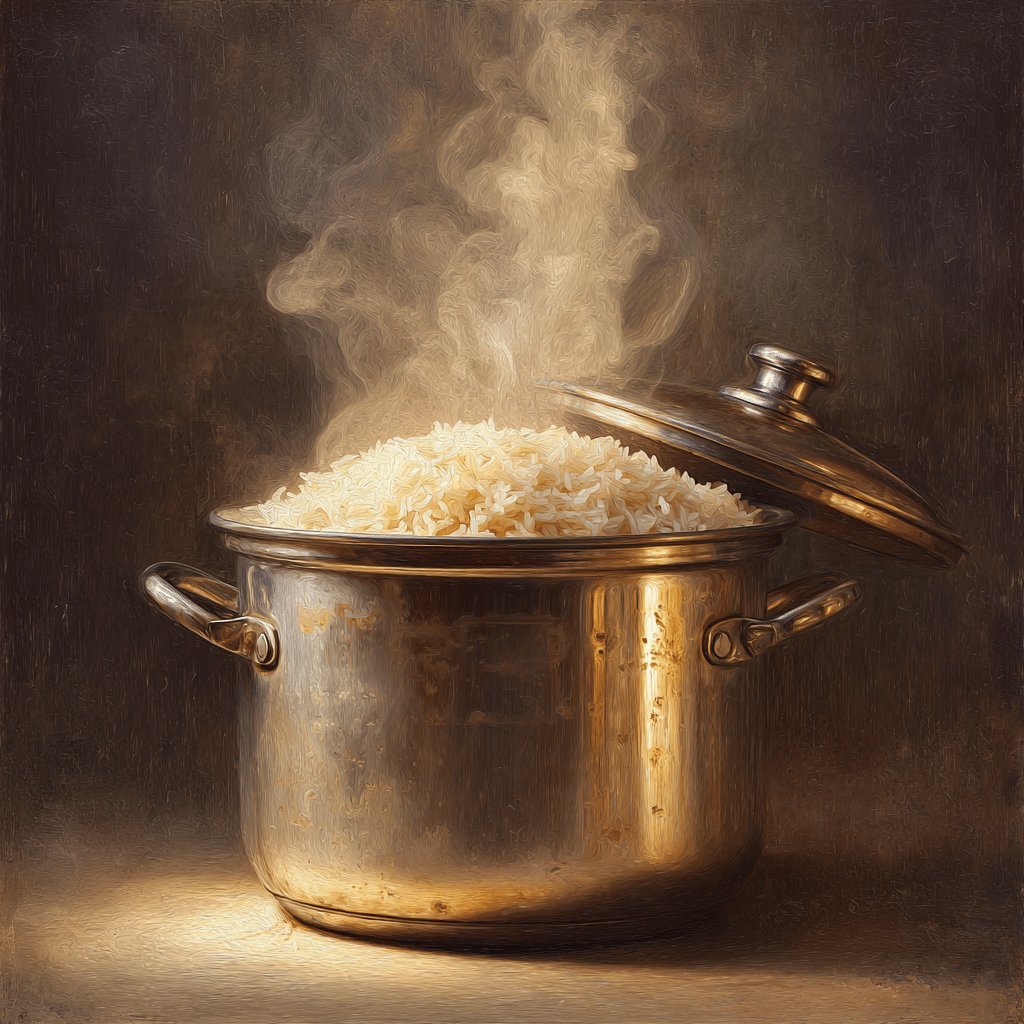
Mushy. Crunchy. Burnt on the bottom, watery on top. Stovetop rice seems like it should be foolproof — it’s just rice and water, right? — but it’s one of the most commonly botched basics in home cooking. I’ve cooked rice thousands of times, on equipment ranging from a camp stove to a fancy range, and the method below works every single time. Here’s how to cook perfect rice on the stove every time, plus how to fix it when things go sideways.
The Foolproof Method (White Rice)
This works for standard long-grain white rice, jasmine, and basmati. Memorize the ratio and the technique:
- Rinse the rice. Put it in the pot, cover with water, swish, drain. Repeat 2–3 times until the water runs mostly clear. This removes surface starch — the #1 cause of gummy rice. (Enriched rice in the U.S. loses some nutrients when rinsed, but the texture improvement is worth it.)
- Use the right ratio: 1 cup rice to 1.5 cups water for long-grain/jasmine; 1:1.5 for basmati (some prefer 1:1.25). Measure — don’t eyeball until you’ve done it fifty times.
- Add salt (1/2 teaspoon per cup of rice) and a teaspoon of butter or oil (optional, but it keeps grains separate).
- Bring to a boil over medium-high heat, uncovered.
- The moment it boils, stir once (prevents sticking), then cover with a tight lid and drop to the lowest heat. Low means low — the barest simmer. If your burner runs hot, use a diffuser or offset the pot slightly.
- Do not lift the lid for 15 minutes. Not to peek, not to stir. The steam is doing the work; every peek releases it and adds minutes.
- After 15 minutes, turn off the heat and let it rest, still covered, for 10 minutes. This is the step everyone skips and the secret to perfect rice — the rest lets moisture distribute evenly.
- Fluff with a fork (not a spoon — forks separate without mashing) and serve.
Total: ~25 minutes, 5 minutes of actual work. The method is consistent because it’s based on absorption physics, not vibes.
Adjusting for Other Rice Types
- Brown rice: 1:2 ratio (rice to water), 40–45 minutes on low, 10-minute rest. Chewier, nuttier, more forgiving of timing.
- Basmati: Soak 20–30 minutes before cooking for extra-long grains; 1:1.5 ratio, 12–15 minutes.
- Jasmine: 1:1.5, 15 minutes — slightly sticky is correct and desirable.
- Sushi rice: 1:1.2, then season with rice vinegar mixture while warm, fanning to cool.
- Wild rice blend: Follow package directions — it needs 45–60 minutes and more water; it’s a different grain entirely.
How to Cook Perfect Rice on the Stove Every Time: The Variables That Matter
- Tight-fitting lid. If your lid is loose, steam escapes and the ratio breaks. Put a clean kitchen towel between pot and lid as a ghetto seal if needed (keep the towel from touching the burner).
- Low heat discipline. Too-high heat = scorched bottom, raw top. When in doubt, go lower.
- Don’t stir during cooking. Stirring releases starch and makes gumminess. One stir at the boil, then hands off.
- Altitude: Above ~3,000 feet, add a bit more water and time — water boils cooler, so absorption takes longer.
- Old rice needs more water than fresh rice (it dries out in storage). If your usual ratio suddenly undercooks, the rice aged, not you.
Rescue Missions: Fixing Rice Gone Wrong
- Mushy/overcooked: Spread on a sheet pan and bake at 350°F for 5–10 minutes, or make fried rice tomorrow (day-old mushy rice actually fries up fine — the fridge firms it).
- Undercooked/crunchy: Sprinkle 2–3 tablespoons of water over it, cover, and return to low heat for 5–10 minutes.
- Burnt bottom: Don’t scrape — scoop the good rice off the top. The burnt layer is a loss; stirring it in ruins everything.
- Bland: Cook in broth instead of water, add a bay leaf or cardamom pods, or finish with butter and salt. Rice is a canvas.
Beyond Plain Rice
Once the basic method is automatic, rice becomes a meal-prep weapon — a big batch on Sunday anchors a week of bowls, stir-fries, and burritos. It pairs with everything in our meal prep plans and budget dinners, and it’s the perfect base for the pasta sauces and curries you’ll make next. For food safety, cool leftover rice quickly and refrigerate within an hour — rice is one of the foods the USDA flags for proper cooling, since warm rice can harbor bacteria.
Rice Cooker vs. Stovetop: An Honest Comparison
The obvious question: if the stovetop method works, why do rice cookers exist? Rice cookers win on convenience and consistency — set it, walk away, perfect rice every time with zero attention. For $25–$40, they’re the best value in kitchen appliances for anyone who eats rice weekly. The keep-warm function holds rice safely for hours, which the stovetop can’t do.
Stovetop wins on control and versatility — pilafs, risottos, and flavored rices where you sauté aromatics first are stovetop territory. No special equipment, no counter space sacrificed. And honestly, once the method above is muscle memory, stovetop rice takes no more active effort than a rice cooker — 5 minutes of work either way.
My take: if you eat rice 3+ times a week, buy the cooker — the convenience compounds. If rice is occasional, master the stovetop method and skip the gadget. Either way, learn the stovetop technique first; it’s the foundation that makes you a better cook even with the machine. (And for the record, the “pasta method” — boiling rice in excess water like pasta, then draining — works fine too, though you lose some nutrients to the drain water.)
Rice Cooker vs. Stovetop: Honest Comparison
Do you even need a rice cooker? Stovetop pros: no extra appliance, works for any quantity, full control. Rice cooker pros: set-and-forget, keeps rice warm for hours, more consistent results — especially for beginners. A basic rice cooker costs $25–$35 and lasts years. My take: if you cook rice weekly, the cooker earns its counter space; if it’s monthly, the stovetop method above is perfectly good. Either way, the water ratio and resting matter far more than the vessel.
The Bottom Line
Perfect stovetop rice: rinse, 1:1.5 ratio, boil, stir once, lid on, lowest heat, 15 minutes untouched, 10-minute rest, fluff with a fork. The rest period and the no-peeking rule are the entire secret — everything else is details. Master this once and you’ll never buy minute rice again, and every grain-based meal you cook gets better.