
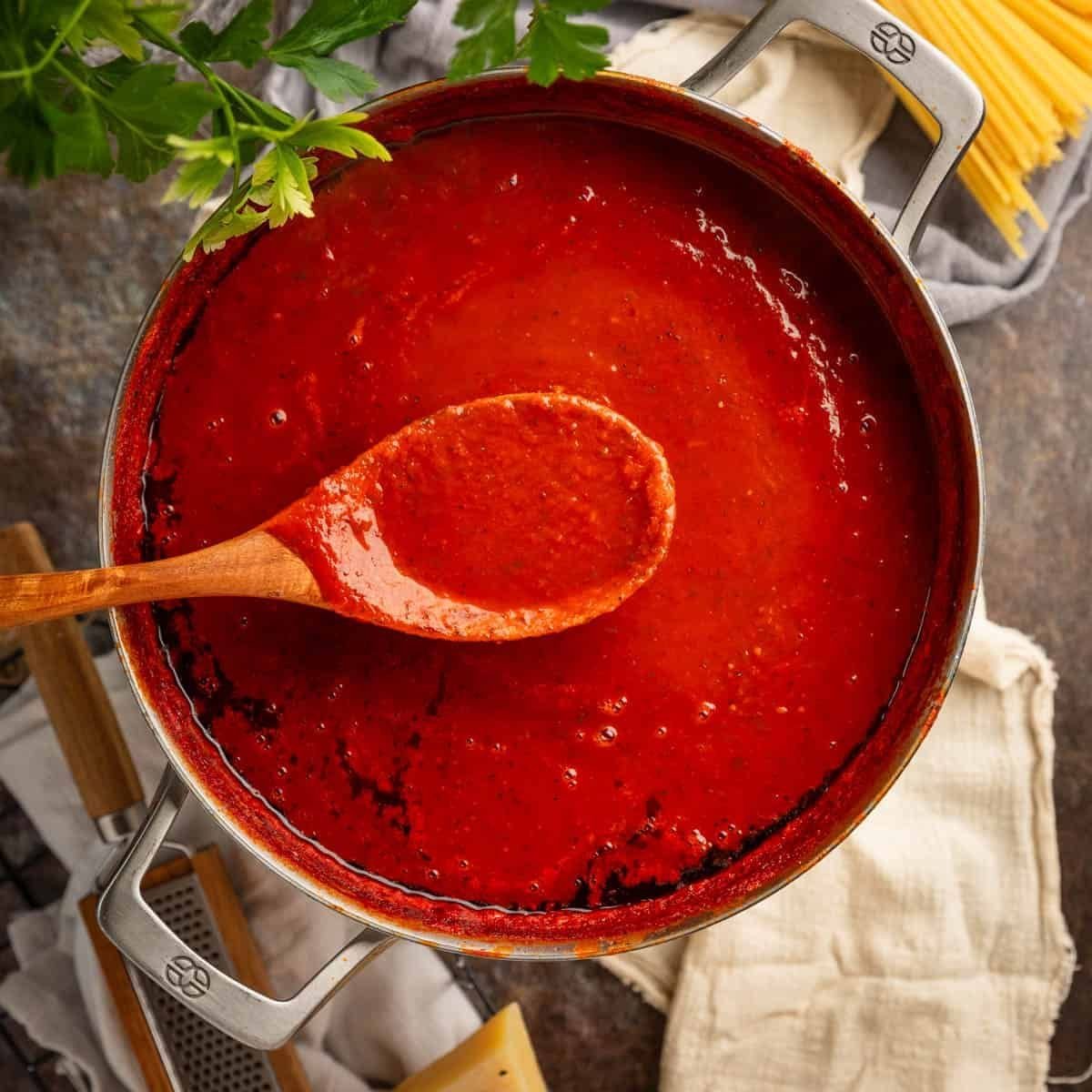
You know that pasta sauce at your favorite Italian restaurant — the one that’s rich, silky, deeply tomatoey, and somehow nothing like the jarred stuff? It’s not magic, and it’s not a secret family recipe guarded for generations. It’s technique: the right tomatoes, proper browning, enough time, and a few professional tricks. Here’s how to make restaurant-style pasta sauce at home that genuinely rivals the restaurant — for a fraction of the price.
Start With the Right Tomatoes (This Is 70% of It)
The single biggest difference between mediocre and great sauce is the tomatoes. Restaurants use quality canned tomatoes — and you should too:
- Buy whole peeled San Marzano-style tomatoes (DOP certified if you can find them, but good domestic “San Marzano style” work fine). Whole tomatoes are packed riper and with less processing than pre-crushed.
- Crush them yourself — by hand for rustic texture, or with an immersion blender for smooth. Hand-crushing gives you control over texture that pre-crushed never does.
- Taste the can. Seriously — eat a spoonful. If the raw tomatoes taste flat or metallic, no technique saves the sauce. Good canned tomatoes taste sweet and bright right from the can.
- Tomato paste is a flavor bomb. A tablespoon or two, browned in the pot before adding tomatoes, adds incredible depth. This is a restaurant trick hiding in plain sight.
Fresh tomatoes are wonderful in summer for light, fresh sauces — but for rich, cooked red sauce, quality canned beats mediocre fresh every time. Off-season fresh tomatoes are the worst of both worlds.
The Foundation: Build Flavor in Layers
Restaurant sauce tastes complex because flavor is built in stages, not dumped in at once:
- Sweat the aromatics properly. Olive oil, diced onion, a pinch of salt — cook 8–10 minutes until soft and sweet, not just translucent. Then garlic for 60 seconds (garlic burns fast and bitter garlic ruins sauce).
- Brown the tomato paste. Add 2 tablespoons, stir constantly 2–3 minutes until it darkens to brick red. This caramelization is pure umami.
- Deglaze with wine. Half a cup of dry red wine, scraped up from the bottom, simmered until mostly evaporated. The alcohol cooks off; the depth stays. (No wine? A splash of balsamic vinegar approximates the acidity.)
- Add the crushed tomatoes plus a pinch of sugar only if needed (taste first — good tomatoes often don’t need it), salt, pepper, and a parmesan rind if you have one (free flavor — save your rinds in the freezer).
- Simmer low and slow, 45 minutes minimum. This is non-negotiable. Time melds flavors, thickens naturally, and tames acidity. Stir occasionally. The sauce is done when a spoon dragged across the pot bottom leaves a trail that slowly fills in.
- Finish with fresh basil (torn, added off heat — cooking destroys its flavor), a knob of butter or glug of good olive oil for silkiness, and freshly grated parmesan.
The Restaurant Tricks That Matter Most
- Pasta water is liquid gold. Before draining, save a cup of the starchy pasta water. Toss the pasta with the sauce in the pan for 1–2 minutes, adding splashes of pasta water — the starch emulsifies the sauce into a glossy coating that clings to every strand. This single technique separates restaurant pasta from home pasta more than anything else.
- Sauce the pasta, don’t pasta the sauce. The pasta finishes cooking IN the sauce for the last minute or two, absorbing flavor. Never just ladle sauce over naked pasta.
- Undercook the pasta by 1–2 minutes (very al dente) since it finishes in the sauce.
- Serve in warm bowls. Cold bowls kill temperature and the sauce seizes. Thirty seconds under hot water, dried — restaurant standard.
- Freshly grated cheese only. Pre-grated parmesan contains anti-caking cellulose that prevents proper melting. A $20 wedge and a microplane change everything.
Variations on the Theme
Once the base marinara is dialed in:
- Vodka sauce: Add 1/2 cup vodka with the tomatoes (cooks off, enhances tomato flavor perception), finish with 1/2 cup heavy cream.
- Arrabbiata: Red pepper flakes with the garlic — as much heat as you dare.
- Bolognese-ish weeknight: Brown Italian sausage or ground beef with the aromatics, splash of milk at the end (the traditional softening trick).
- Puttanesca: Olives, capers, anchovies — the flavor-bomb pantry sauce.
Batch-cook the base sauce and freeze in portions — it freezes beautifully for 3 months. That’s the backbone of cheap, fast weeknight dinners; see our budget dinner ideas and meal prep cost guide for the economics. And nothing goes to waste — leftover sauce transforms with the strategies in our food waste guide.
Storing and Reheating Sauce Like a Pro
Homemade sauce keeps 5–7 days refrigerated in airtight containers, and 3–4 months frozen — and it freezes better than almost any other food. Freeze in portion-sized containers or zip-top bags laid flat (they stack like files and thaw fast). Leave headspace for expansion. A thin layer of olive oil on top before sealing prevents freezer burn and oxidation.
Reheating rules: thaw overnight in the fridge (not on the counter), reheat gently on the stovetop with a splash of water to loosen — never blast it in the microwave on high, which breaks the emulsion and makes it greasy. Refresh, don’t just reheat: a reheated sauce benefits from a fresh basil leaf, a knob of butter, or a sprinkle of parmesan stirred in at the end — it wakes the flavors back up and tastes freshly made.
Sauce never goes to waste: thin leftovers become soup base (add broth and vegetables), pizza sauce, shakshuka base (poach eggs right in it), or sloppy Joe filling. A batch of sauce is really 3–4 different meals wearing a disguise. The marinara tradition this builds on was peasant food precisely because it was flexible, cheap, and endlessly reusable — some things don’t need improving.
The Bottom Line
Restaurant-style pasta sauce at home: quality canned tomatoes crushed by hand, layered flavor (browned paste, wine, slow simmer), finished with basil/butter/parmesan, and — the real secret — pasta finished in the sauce with starchy pasta water. It costs ~$5 for a batch that serves six and tastes better than most restaurant sauce, because most restaurants are cutting corners you won’t. Make it Sunday, eat like royalty all week.






One Comment