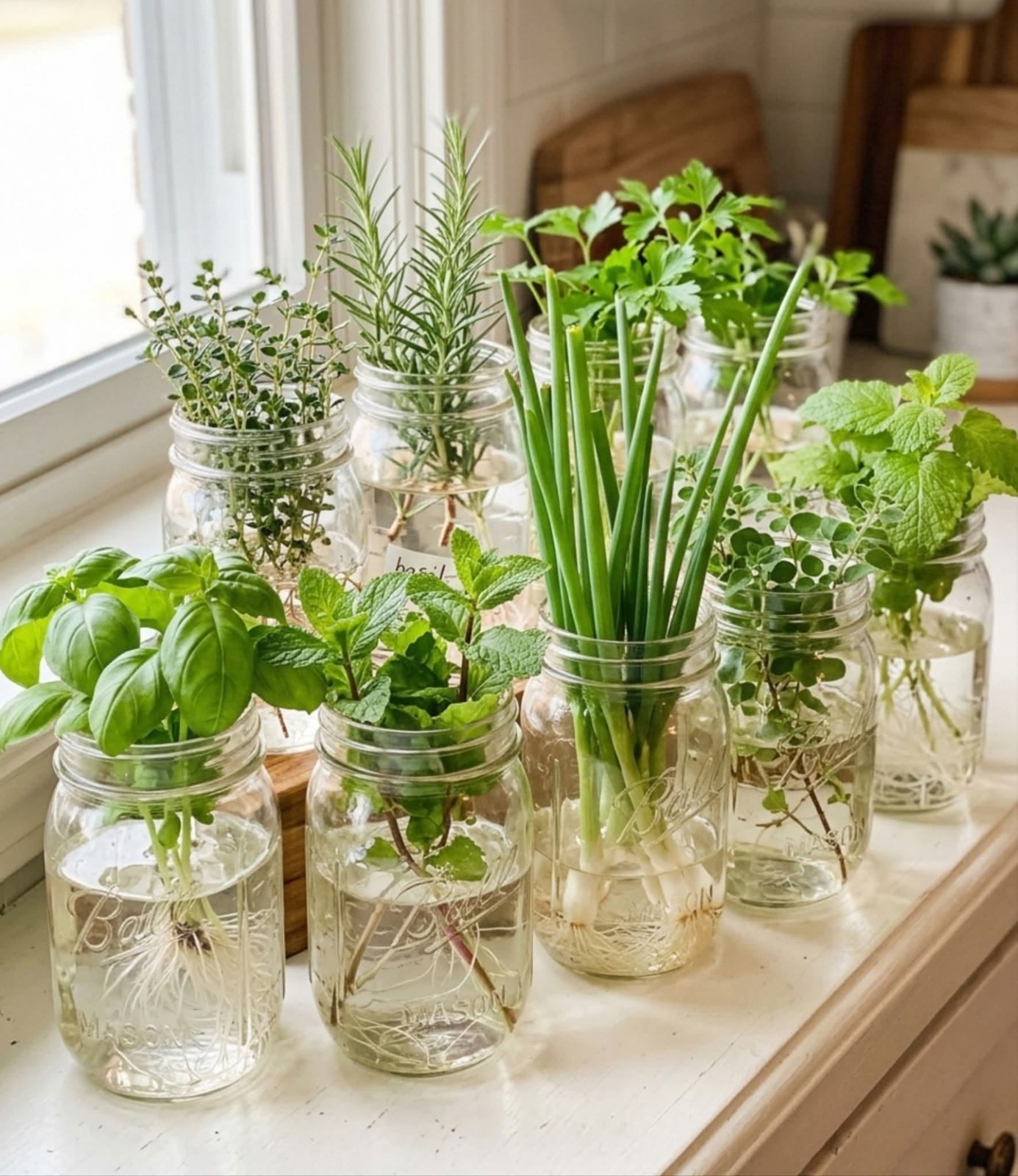
Fresh herbs are the fastest way to make home cooking taste like restaurant cooking — and the fastest thing to die in your fridge. You buy cilantro on Sunday; by Wednesday it’s black slime. The tragedy is that herbs aren’t fragile — they’re just stored wrong by almost everyone. Different herbs need different treatment, and the right method keeps them fresh for 2–3 weeks instead of 3 days. Here’s the best way to store fresh herbs so they last.
The Two Families: Treat Them Differently
Herbs split into two groups with opposite needs:
- Soft, tender herbs (parsley, cilantro, dill, mint, tarragon, chives): Love cold + moisture. Store like flowers in the fridge.
- Woody herbs (rosemary, thyme, oregano, sage, marjoram): Hate excess moisture. Store dry in the fridge.
- Basil: the exception. Basil hates cold — refrigeration turns it black. Store at room temperature like flowers, always.
Getting this classification right is 80% of herb storage. Most people treat all herbs the same, which is why most herbs die.
Method 1: The Jar Method (Tender Herbs — 2–3 Weeks)
This is the gold standard for parsley, cilantro, dill, and mint:
- Don’t wash yet (or wash and dry thoroughly — moisture on leaves + enclosed bag = slime; the jar method manages moisture differently, but starting dry is safer).
- Trim 1/2 inch off the stems at an angle (like flowers — more surface area for water uptake).
- Stand the bunch upright in a jar or glass with 1–2 inches of water, stems submerged.
- Cover loosely with a plastic bag or produce bag over the top — this creates a mini greenhouse that prevents wilting.
- Refrigerate (except basil). Change the water every 2–3 days.
I’ve kept cilantro crisp for nearly three weeks this way. It feels like a magic trick the first time. The bag-over-top step is what most people skip — without it, the fridge’s dry air wilts the leaves even with wet stems.
Method 2: The Dry Roll (Woody Herbs — 2–3 Weeks)
For rosemary, thyme, oregano, sage:
- Wash if needed, then dry completely — salad spinner, then air dry or pat with towels. Any surface moisture causes rot.
- Lay the herbs on a slightly damp (not wet) paper towel.
- Roll it up loosely, place in a zip-top bag or airtight container.
- Refrigerate. Check every few days; replace the towel if it’s soggy.
Woody herbs are naturally hardier — their low moisture content and robust structure mean they forgive more. This method easily gets 2+ weeks.
Method 3: Basil at Room Temperature (7–10 Days)
Basil gets its own method because cold is its enemy:
- Trim stems, place in a jar of water on the counter — like a little basil bouquet.
- Cover loosely with a bag (keeps humidity up without refrigeration).
- Keep away from direct sunlight and heat sources.
- Change water every couple of days. Pinch off any blackening leaves immediately — they spread.
Never refrigerate basil unless you enjoy black, sad leaves. This is the most common herb storage mistake in existence.
When Fresh Is Fading: The Rescue Ladder
Herbs declining? Work down this list before composting:
- Use them now — pesto, chimichurri, herb butter, or just a garnish-heavy meal. Our pasta sauce guide welcomes handfuls of fresh basil and parsley.
- Freeze in oil: Chop, pack into ice cube trays, cover with olive oil, freeze. Pop out cubes directly into hot pans — instant flavor bombs for months.
- Freeze in water: For herbs destined for soups and stews (texture doesn’t matter there).
- Dry them: Tie woody herbs in bundles and hang, or use the oven’s lowest setting. Dried beats dead.
- Make herb salt or compound butter: Chop finely, mix with soft butter or coarse salt — refrigerates for weeks, freezes for months.
Freezing is the most underused herb preservation — it retains flavor far better than drying for tender herbs. This is a core tactic in our food waste reduction system.
Buying and Growing Smarter
- Buy small quantities frequently rather than big bunches that overwhelm you.
- The $3 basil plant from the grocery store, repotted and kept on a sunny windowsill, outperforms every storage method — snip what you need, it regrows. Same for mint (which grows like a weed — keep it in a pot, never in the ground).
- Farmers’ market herbs are often fresher (cut that morning) and last longer than supermarket bunches that traveled for a week.
Growing Your Own: The Ultimate Freshness Hack
No storage method beats not storing at all. A windowsill herb garden — basil, mint, chives, parsley in small pots — gives you cut-as-you-need freshness for the price of a few grocery bunches. Basil and mint are the easiest starters; they thrive on sunny sills with minimal care. Snip from the top to encourage bushy growth, never take more than a third at once.
Regrowing from scraps is the free version: green onion roots, celery bases, and lettuce hearts regrow in water on the windowsill — it’s not a full supply, but it’s genuinely productive and weirdly satisfying. Outdoor pots (rosemary, thyme, oregano, sage) are nearly indestructible perennials in most climates — plant once, harvest for years.
The economics are compelling: a $3 basil plant produces what would cost $30+ in grocery bunches over a season. And the flavor of just-cut herbs versus week-old refrigerated ones isn’t close. For growing guidance by zone, the Old Farmer’s Almanac herb guides cover planting times, care, and harvest techniques.
Drying Herbs: The Backup Plan
When the freezer’s full and fresh herbs are fading, drying is the classic preservation. Best candidates: woody herbs (rosemary, thyme, oregano, sage, marjoram) — they retain flavor beautifully dried. Skip drying: basil, cilantro, parsley, chives — they lose most of their character; freeze these instead.
Air-drying: tie small bundles, hang upside down in a dark, airy spot for 1–2 weeks until crumbly. Oven: lowest setting with the door cracked, 1–2 hours. Dehydrator: 95°F for 2–4 hours, the most consistent method. Store in airtight jars away from light; properly dried herbs keep 6–12 months. Crumble just before using — whole dried leaves hold flavor longer than pre-crumbled.
The Bottom Line
The best way to store fresh herbs: tender herbs (parsley, cilantro) upright in water with a bag over top in the fridge; woody herbs (rosemary, thyme) rolled in a barely-damp towel in the fridge; basil in water on the counter, never refrigerated. Two to three weeks of freshness instead of three days — from methods that take two minutes. Pair this with our vegetable storage guide and you’ll stop throwing away produce almost entirely.