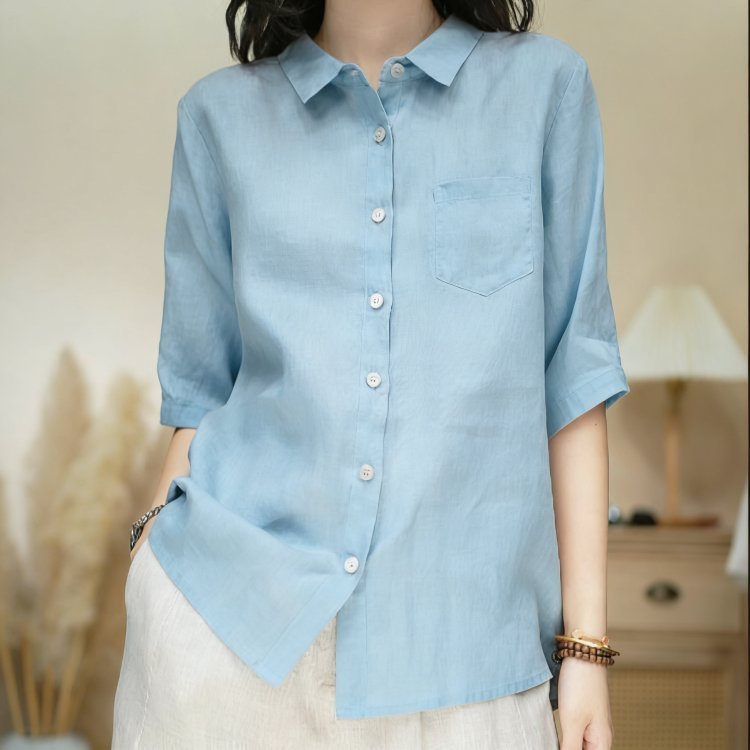
When it’s 95 degrees with 90% humidity, your clothes can either help or torture you. The wrong fabric turns into a clingy, sweaty second skin within minutes; the right one feels like air conditioning you can wear. Fabric choice matters more than style in brutal summers — and most people are wearing the worst options without knowing it. If you’re wondering what are the best fabrics for hot and humid summers, this guide gives you the straight, no-fluff answer.
Here’s the honest ranking of summer fabrics, from genuinely cooling to secretly miserable.
The Champions: Linen, Cotton, and Their Cousins
Linen is the undisputed king of hot weather. Made from flax, it’s highly breathable, absorbs moisture without feeling damp, and its loose weave lets air circulate against your skin. Yes, it wrinkles — that’s the deal, and in summer nobody cares. A linen shirt in brutal heat feels 10 degrees cooler than cotton. If you buy one summer fabric upgrade, make it linen.
Lightweight cotton (not heavy denim or thick jersey) is the reliable runner-up: breathable, absorbent, affordable, and easy to find. Look for terms like ‘voile,’ ‘lawn,’ or ‘seersucker’ — these are cotton weaves engineered for heat. Seersucker deserves special mention: its puckered texture holds fabric off the skin, creating airflow. That’s why it’s the traditional fabric of Southern summers. Cotton Incorporated fabric resources
- Linen: the hot-weather king — breathable, moisture-absorbing, airy weave. Embrace the wrinkles.
- Cotton voile/lawn: featherweight cotton weaves made for heat.
- Seersucker: puckered texture holds fabric off skin; the Southern summer classic.
- Chambray: looks like denim, breathes like a light cotton — the summer jean alternative.
- Ramie: linen-like, even more absorbent; common in Asian summer clothing.
The Modern Options: Technical and Blended Fabrics
Performance fabrics have earned their place: moisture-wicking synthetics (labeled as such, not just ‘polyester’) genuinely pull sweat off skin and dry fast, which matters in humidity where cotton stays soggy. They’re the best choice for active summer days. Bamboo/rayon fabrics (often labeled bamboo viscose) are soft, breathable, and drape well — a great casual option, though they wrinkle and aren’t as durable as cotton.
Merino wool sounds insane for summer, but lightweight merino (150gsm or less) is a legitimate hot-weather fabric — it regulates temperature, resists odor for days, and handles moisture brilliantly. It’s pricey, but one merino tee replaces three cotton ones on a trip. The key with all synthetics: they must be labeled moisture-wicking or breathable; generic polyester is a sweat trap. REI fabric and clothing guides
- Moisture-wicking synthetics: pull sweat off skin; best for active/humid days.
- Bamboo viscose: soft, breathable, drapes well — great casual summer fabric.
- Lightweight merino: counterintuitive but excellent — temperature-regulating, odor-proof.
- Linen-cotton blends: linen’s coolness with cotton’s softness and lower price.
- Check the label: ‘moisture-wicking’ good; generic ‘polyester’ usually bad.
Fabrics to Avoid (and Fit Tips)
The avoid list: heavy polyester and nylon without wicking treatment (plastic bags with sleeves), thick denim, leather and pleather, and heavy jersey. These trap heat and sweat against your body. Silk looks luxurious but shows every drop of sweat and water-spots — beautiful, impractical. If you love the look, save it for air-conditioned evenings.
Fit matters as much as fabric in heat: loose and flowing beats tight and clingy, always. Air circulation between fabric and skin is cooling; fabric glued to you by sweat is miserable. Light colors reflect heat; dark colors absorb it — the white-shirt-in-summer rule is physics, not fashion. And go sleeveless or short-sleeved when you can; every inch of airflow counts.
- Avoid non-wicking polyester: traps heat and sweat — the worst summer offender.
- Skip heavy denim and leather: ovens you can wear.
- Silk: evenings only: gorgeous but shows sweat; save for air conditioning.
- Loose beats tight: airflow between fabric and skin is the real cooling mechanism.
- Light colors reflect heat: white and pastels are physics, not just fashion.
Common Mistakes to Avoid
Success here is as much about avoidance as action. These are the pitfalls that quietly sabotage good intentions — run through them once and you’ll recognize (and dodge) every one.
- Wearing heavy polyester: non-wicking synthetics are wearable plastic bags in humidity. Check for ‘moisture-wicking’ on the label or avoid.
- Dark colors head-to-toe: dark fabrics absorb heat. Physics doesn’t care about your aesthetic — lighten up in extreme heat.
- Tight, clingy fits: airflow between fabric and skin cools you; fabric glued on by sweat does the opposite. Loose wins in heat.
- Skipping the fabric check: ‘summer collection’ marketing means nothing. Read the content label — linen, light cotton, wicking synthetics.
- Forgetting sun protection: breathable doesn’t mean protective. UPF-rated clothing or sunscreen — pick one; heat doesn’t block UV.
Frequently Asked Questions
Is linen really cooler than cotton?
Yes, noticeably — linen’s loose weave and moisture-handling make it feel several degrees cooler than equivalent cotton in heat and humidity. The wrinkle tradeoff is real, but in brutal heat, comfort wins. Linen-cotton blends split the difference.
Why do I sweat more in polyester?
Standard polyester doesn’t absorb moisture — sweat sits on your skin instead of being pulled away. Moisture-wicking polyester is engineered differently (treated fibers, knit structure) and performs well. The label distinction matters enormously.
What should I wear for humid vs. dry heat?
Humid heat: prioritize moisture management (wicking synthetics, linen) since sweat can’t evaporate. Dry heat: prioritize breathability and sun coverage (loose linen, light cotton) — evaporation works, so shade and airflow matter most.
Does color really affect how hot I feel?
Measurably — white reflects most solar radiation; black absorbs it. In direct sun the difference is significant. In shade or indoors it matters less. The white-shirt-in-summer rule is thermodynamics, not fashion lore.
Pro tip: Schedule the maintenance, not just the start. Whatever habit or purchase this guide inspired, put its upkeep on your calendar now — future you is busy and will skip it otherwise.
What are the best fabrics for hot and humid summers: The Bottom Line
For hot, humid summers: linen first (the undisputed champion), lightweight cottons like voile and seersucker second, moisture-wicking synthetics for active days, and lightweight merino as the premium surprise. Avoid non-wicking polyester, heavy denim, and leather. Wear it loose, wear it light-colored, and let air circulate. Dressing for heat is applied physics — the right fabric genuinely feels like a different climate.