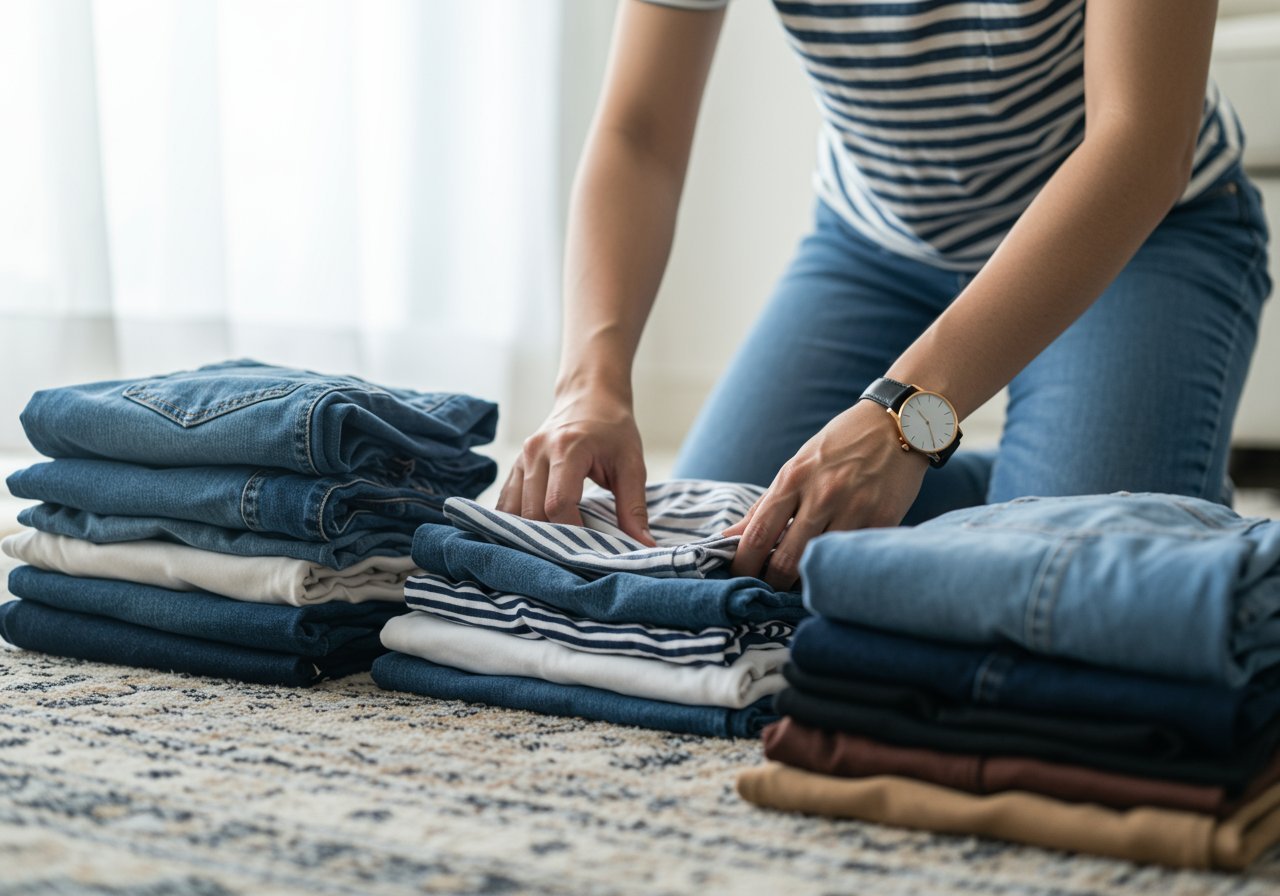
Before you donate that bag of ‘tired’ clothes, consider: most garments don’t die, they just get dull. Pilling, fading, stretched collars, dingy whites — these are surface problems with real fixes. I’ve revived clothes I was sure were done, and the before-and-after is genuinely satisfying. The question of how can I make old clothes look new again comes up constantly — here’s what actually works.
Here’s the complete revival toolkit, from 5-minute fixes to weekend projects. Your closet (and wallet) will thank you.
Quick Fixes: De-Pilling, De-Fuzzing, and Brightening
Pilling is the #1 ager of clothes, and it’s completely reversible. A fabric shaver ($10-15) or even a sweater comb removes pills in minutes, transforming a nubby sweater into a smooth one. It feels like magic the first time. For pet hair and lint, a good lint roller is obvious, but a damp rubber glove wiped across fabric grabs hair rollers miss.
Dingy whites come back with the right treatment: soak in oxygen bleach (not chlorine — it yellows over time), add white vinegar to the rinse cycle to dissolve detergent buildup, and dry whites in sunlight when possible — UV is a natural brightener. For graying whites, bluing agents (old-school but effective) restore the optical brightness. Colors get a refresh from a cup of white vinegar in the wash, which strips the detergent residue dulling them. The Spruce clothing care and repair guides
- Fabric shaver: $10-15, removes pilling in minutes — the highest-impact revival tool.
- Oxygen bleach soak: revives dingy whites without the yellowing of chlorine bleach.
- Vinegar rinse: a cup in the rinse cycle strips dulling detergent residue from colors.
- Sun-dry whites: UV light naturally brightens white fabrics.
- Damp rubber glove: grabs pet hair and lint that rollers miss.
Reshaping and Repairing: Collars, Hems, and Seams
Stretched-out collars and necklines can often be rescued: soak the ribbed area in hot water, then reshape and let dry flat — the heat resets the elastic memory. For wavy t-shirt hems, a quick press with an iron (or steamer) while gently stretching flat restores the line. Shrunken wool? Soak in lukewarm water with hair conditioner for 30 minutes, then gently stretch back to shape — the conditioner relaxes the fibers.
Learn three basic repairs and you’ll save hundreds: sewing on buttons (15 minutes to learn), fixing hems with iron-on tape (no sewing required), and closing small seam splits with a few hand stitches. A $5 sewing kit handles 90% of clothing repairs. Shoes get new life from cleaning, conditioning, and new laces — a $4 lace swap makes old sneakers look surprisingly fresh. iFixit clothing repair guides
- Reset stretched collars: hot water soak + reshape + dry flat restores elasticity.
- Un-shrink wool: conditioner soak + gentle stretching recovers shrunken knits.
- Learn 3 repairs: buttons, hems (iron-on tape works), seam splits — 90% of fixes.
- New laces: $4 transforms old sneakers more than you’d expect.
- Press hems flat: iron wavy hems while gently stretching for a crisp line.
Restyling: Making Old Clothes Feel New
Sometimes clothes don’t need repair — they need reimagining. That dress you never wear? Belt it, layer a turtleneck under it, or knot the hem for a new silhouette. Jeans with worn knees become intentional with a few more strategic distress marks (or get cropped into shorts). An oversized button-down becomes a beach cover-up, a jacket layer, or a tied-front top.
Dyeing is the nuclear option for faded darks: black clothes that’ve gone gray come back dramatically with a $4 bottle of fabric dye. Navy, too. It works best on natural fibers and is genuinely easy — washing machine method, 30 minutes. And tailoring transforms ‘old’ into ‘custom’: taking in a baggy dress or hemming wide pants to a modern crop makes them look like new purchases. A $15 alteration beats a $60 replacement.
- Restyle silhouettes: belt it, layer under it, knot it — new outfit from the same piece.
- Dye faded blacks: $4 fabric dye dramatically revives grayed-out dark clothes.
- Crop and distress: worn jeans become shorts; long sleeves become 3/4 with a cuff.
- Tailor key pieces: $15 alterations make old clothes look custom-made.
- Swap buttons: new buttons modernize a dated coat or cardigan instantly.
Common Mistakes to Avoid
Let me save you some trial and error. These five mistakes are the reason most people’s efforts in this area stall out — and each one is completely avoidable with a minute of awareness.
- Tossing clothes with fixable problems: pilling, fading, and loose buttons are 15-minute fixes. The landfill doesn’t need your laziness.
- Pulling pills by hand: yanks fibers out and creates more pilling later. A $10 fabric shaver does it right.
- Using chlorine bleach on whites: it yellows over time and weakens fibers. Oxygen bleach brightens without the damage.
- Dyeing without checking fabric: synthetics barely take dye; natural fibers do. Check content labels before the $4 dye gamble.
- Hoarding the ‘to fix’ pile: a mending pile that sits for a year is clutter with guilt. Schedule a fixing afternoon or donate it.
Frequently Asked Questions
Can I really un-shrink clothes?
Sometimes — wool and knits soaked in lukewarm water with hair conditioner for 30 minutes can often be gently stretched back. Cotton shrunk in hot dryers is harder. Prevention (cold wash, hang dry) beats cure every time.
How do I remove pilling without a fabric shaver?
A sweater comb ($8) for delicates, a disposable razor with a very light touch on sturdy knits, or a pumice sweater stone. Never pull by hand. But honestly, the $10-15 electric shaver is worth it — you’ll use it for years.
Does dyeing clothes actually work?
Yes, dramatically for faded blacks and navys on natural fibers — a $4 bottle of fabric dye in the washing machine, 30 minutes. Results on synthetics and stain-covered areas are uneven. It’s the highest-impact revival for dark clothes gone gray.
When is a garment beyond saving?
Stretched-out elastic that won’t recover, large holes in visible areas, permanent stains on light fabrics, and worn-through thin spots. If the fabric itself is structurally done, let it go — revival has limits, and that’s okay.
Pro tip: Revisit this guide in 30 days. You’ll catch details you missed the first time, and the second read tends to stick because you’ve got real experience to attach it to.
How can I make old clothes look new again: The Bottom Line
Most ‘old’ clothes need revival, not replacement: de-pill with a fabric shaver, brighten whites with oxygen bleach and sun, reset stretched collars with hot water, learn three basic repairs, and restyle pieces into new silhouettes. Dye faded blacks, tailor the good bones, swap the laces and buttons. You’ll be shocked how many ‘done’ garments come back — and how much money stays in your pocket.