
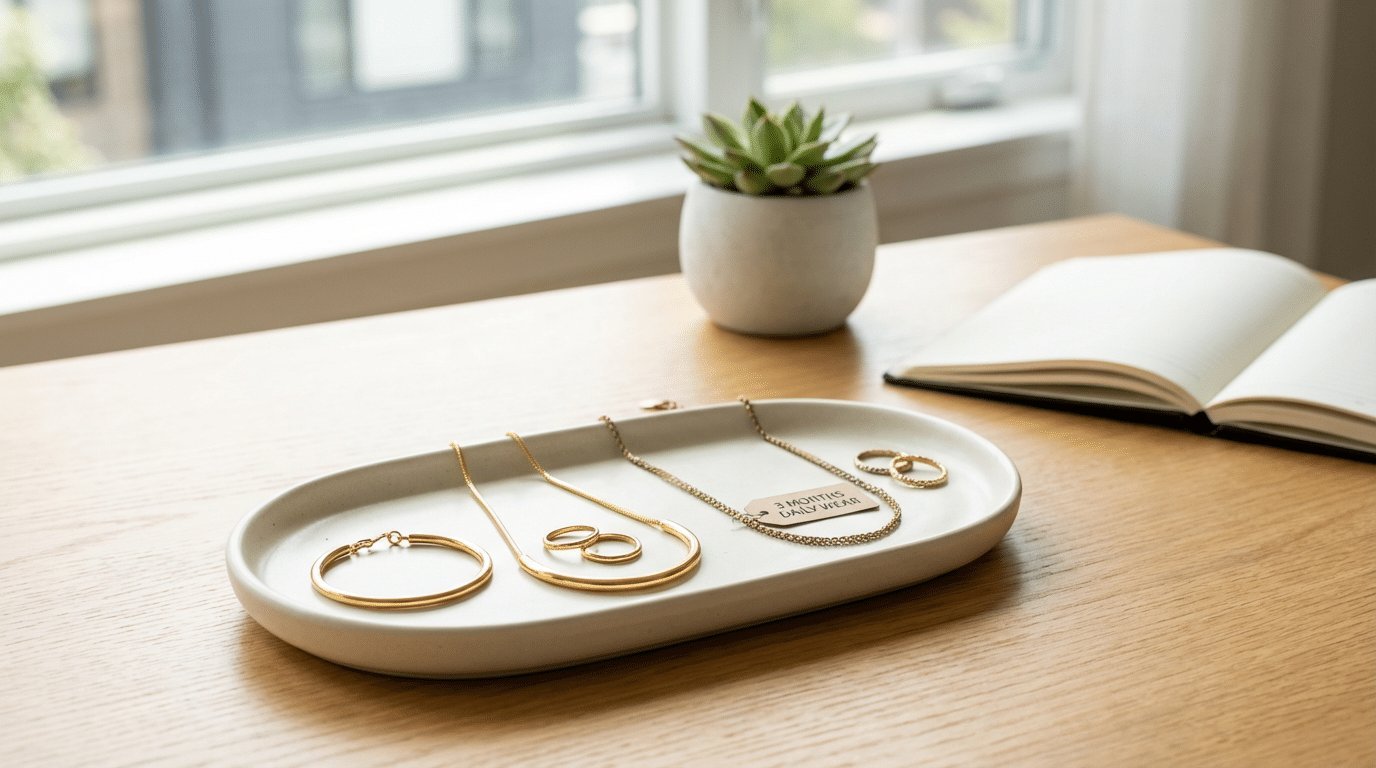
Office jewelry walks a fine line: too little and you look unfinished, too much and you’re jingling through meetings like a wind chime. The goal is polished and intentional — pieces that look like part of your professional presentation, not afterthoughts or distractions. If you’re wondering what jewelry works best for everyday office wear, this guide gives you the straight, no-fluff answer.
Here’s the everyday office jewelry formula that works across industries, plus where the lines are.
The Core Pieces: Your Daily Uniform
Build around a small set of versatile pieces. Stud earrings or small hoops (under an inch) in gold or silver — they frame the face, never distract, and work with everything. A delicate necklace (16-18 inch chain with a small pendant, or a simple chain) that sits above most necklines. A classic watch — the hardest-working jewelry in any office. And one ring or simple band per hand max.
The metals question: matching metals (all gold or all silver) looks most cohesive, but mixed metals are fine if intentional — the key word is intentional, not accidental. Stick to pieces that don’t make noise: no jangling bangle stacks in open offices, no rings that clack on keyboards during calls. Your jewelry shouldn’t announce you before you speak. Who What Wear jewelry styling guides
- Studs or small hoops: frame the face, never distract — the everyday earring.
- Delicate necklace: 16-18″, small pendant or plain chain — sits above necklines.
- Classic watch: the hardest-working piece in office jewelry.
- One ring per hand max: restraint reads professional.
- Silent jewelry: no jangling in open offices — sound matters.
What to Avoid (the Lines)
The lines are mostly about distraction and noise. Oversized statement pieces have their place — just not daily office wear (save them for occasions). Anything noisy: charm bracelets, stacked bangles, rings that clatter. Anything that interferes with work: long dangling earrings near machinery or food, huge rings that snag or impede typing.
Also: costume jewelry that looks cheap undermines the polished effect — one quality-looking piece beats five plastic ones. Tarnished metal, scratched stones, and stretched elastic bracelets all read as neglected. And in conservative industries (law, finance), dial everything back one notch from what feels normal — the baseline is stricter there. When in doubt, remove one piece before leaving. The Cut jewelry coverage
- Save statements for occasions: daily office = subtle; events = expressive.
- No noise: jangling bracelets and clacking rings distract coworkers.
- Nothing that impedes work: huge rings, dangling earrings near equipment.
- Quality over quantity: one good piece beats five cheap-looking ones.
- Conservative industries: dial back: law and finance have stricter baselines.
Building the Collection Affordably
You need surprisingly few pieces: the daily set above (studs/hoops, necklace, watch, ring) plus maybe a slightly dressier option for presentations and one fun piece for casual Fridays. That’s 6-8 pieces total. Buy the daily wear in quality materials — gold-filled, vermeil, or stainless steel — because cheap plating wears off with daily use and looks worse than wearing nothing.
Spend on what touches skin most (earrings, necklace — these show wear fastest) and save on occasional pieces. And maintain: wipe pieces after wearing (sweat and perfume corrode), store separately to prevent scratching, and re-plate or replace when the wear shows. Well-kept affordable jewelry looks better than neglected fine jewelry.
- 6-8 pieces total: daily set + dressier option + one fun piece covers everything.
- Gold-filled/vermeil/steel: daily-wear materials that survive actual daily wear.
- Spend where it shows: earrings and necklaces wear fastest — invest there.
- Maintain everything: wipe after wear, store separately, replace when worn.
- When in doubt, remove one: the classic rule still works.
Common Mistakes to Avoid
Before you put any of this into practice, save yourself the learning curve: here are the classic errors that derail progress. I’ve made several of these myself, so consider this the shortcut I wish I’d had.
- Wearing statement pieces daily: bold jewelry every day dilutes its impact and distracts. Daily = subtle; occasions = expressive.
- Noisy jewelry in open offices: jangling bangles during calls distract everyone. Sound is part of the dress code — keep it silent.
- Cheap metals that tarnish: green skin and flaking plate undermine polish instantly. Gold-filled, vermeil, or stainless for daily wear.
- Too many rings: more than one per hand reads busy in professional settings. Restraint is the office rule.
- Ignoring industry norms: creative offices welcome personality; law and finance don’t. Calibrate to your specific room.
Frequently Asked Questions
Is it unprofessional to wear a lot of jewelry?
Depends on amount and industry — a few polished pieces are professional everywhere; piles of statement jewelry distract in most offices. The test: does it draw attention away from your work? In creative fields the line is further out.
Can I wear the same jewelry every day?
Yes — a signature daily set (studs, necklace, watch, ring) is efficient and professional. It becomes part of your look. Just maintain it: wipe after wearing, store properly, replace when worn.
What jewelry should I avoid at work?
Noisy pieces, oversized distracting statements (daily), anything that interferes with tasks, and cheap-looking costume pieces. Also: strong perfume with jewelry is a separate issue, but equally noted.
How do I clean everyday jewelry?
Warm water, mild dish soap, soft brush for most pieces; wipe with a soft cloth after wearing to remove sweat and oils. Store pieces separately to prevent scratching. Professional cleaning yearly for fine pieces.
Pro tip: Tell one person what you’re working on. Social accountability — even casual — measurably increases follow-through. You don’t need an accountability partner; you need a witness.
What jewelry works best for everyday office wear: The Bottom Line
Everyday office jewelry = studs or small hoops, a delicate necklace, a classic watch, and minimal rings — polished, silent, and intentional. Avoid noise, distraction, and anything that impedes work; dial back for conservative industries. Build a small collection (6-8 pieces) in durable materials like gold-filled or stainless steel, and maintain them. The goal is jewelry that looks like part of your professional presentation — noticed subconsciously, never distracting consciously.






One Comment