
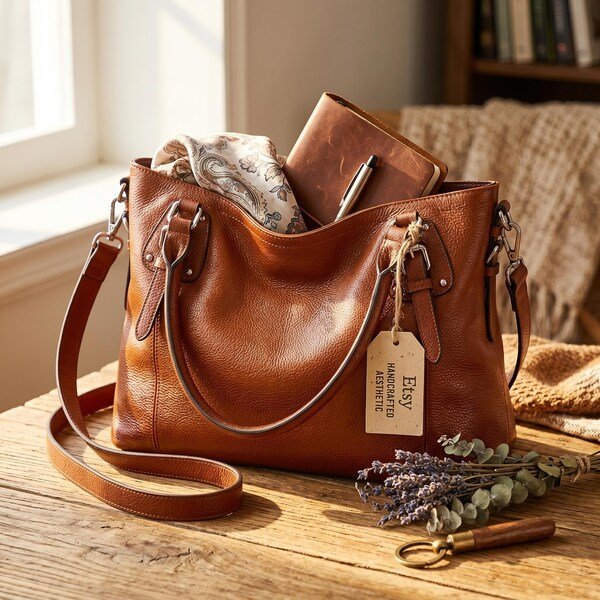
Handbag sizing is a Goldilocks problem. Too big and it becomes a black hole of receipts, crumbs, and that one pen that stabs you. Too small and you’re playing Tetris with your phone, wallet, and keys every morning. And ‘medium’ means something different at every brand. So let’s take what handbag size is practical for everyday use seriously and answer it properly.
After years of carrying everything from minis to totes, here’s my honest take on what actually works for daily life — with real measurements, not vague size names.
The Sweet Spot: Medium (With Real Numbers)
The practical everyday size is what the industry calls medium: roughly 10-12 inches wide, 8-10 inches tall, with a 4-6 inch depth. This fits the daily essentials — phone, wallet, keys, sunglasses, small cosmetics pouch, hand sanitizer — with room to spare but not room to lose things. It’s large enough for an e-reader or small tablet, small enough to not overwhelm your frame or your shoulder.
Why medium wins: large totes encourage overpacking (the heavier the bag, the more shoulder and back strain — orthopedists genuinely warn about this), while small bags force constant editing that gets old fast. Medium is the size you stop thinking about, which is exactly what an everyday bag should be: invisible infrastructure for your day. Who What Wear handbag guides
- Target ~10-12″ wide, 8-10″ tall: fits essentials plus e-reader without becoming a black hole.
- Fits phone + wallet + keys + extras: the everyday carry test — all in, no Tetris.
- Weight matters: empty bag under 2 lbs; heavy bags cause real shoulder strain.
- Proportional to you: petite frames: stay under 11″ wide; taller frames can go larger.
- Structured > slouchy: structure keeps contents findable; slouchy becomes a pit.
When to Go Bigger or Smaller
Go bigger (tote, 13-16 inches) when your day demands it: carrying a laptop, gym clothes, or kid supplies. But treat the tote as a task-specific tool, not the everyday default — and consider a separate laptop bag plus a medium purse rather than one giant bag. Your shoulders will thank you in ten years. The tote’s danger is that available space always fills; pack it intentionally.
Go smaller (mini or small crossbody, under 9 inches) for evenings, events, and minimalist days — when you need phone, card case, keys, and lipstick, nothing more. Minis are having a fashion moment, but as an everyday bag they’re impractical for most lives. Own the right size for the occasion rather than forcing one bag to do everything. Real Simple bag organization tips
- Tote for laptop/kid days: task-specific, not the everyday default.
- Mini for evenings/events: phone, cards, keys — nothing more needed.
- Two-bag system: medium daily + tote/laptop bag beats one giant compromise.
- Crossbody for travel/commute: hands-free and secure in crowds.
- Clutch for formal: the only job a tiny bag does perfectly.
Features That Matter More Than Size
Once size is right, features decide daily happiness. Compartments: at least one interior zip pocket and 1-2 slip pockets — the difference between organized and archaeological dig. A top zip or flap closure (open totes invite spills and theft). An adjustable, comfortable strap — test it loaded, not empty. Exterior pocket for your phone: the most-used feature on any bag I own.
Material and color: leather or quality vegan leather in black, tan, or navy goes with everything and ages well. Light-colored linings (beige, not black) make contents findable — this tiny detail matters enormously. And hardware quality: zippers should glide, not fight. A medium bag with great organization beats a designer tote that’s a beautiful pit.
- Interior organization: zip pocket + slip pockets minimum — no more digging.
- Secure closure: zip or flap top; open totes spill and invite theft.
- Exterior phone pocket: the most-used feature — non-negotiable for me.
- Light-colored lining: find things instantly; black linings swallow everything.
- Quality zippers: they should glide — sticky zippers ruin expensive bags.
Common Mistakes to Avoid
Before you put any of this into practice, save yourself the learning curve: here are the classic errors that derail progress. I’ve made several of these myself, so consider this the shortcut I wish I’d had.
- Buying for the brand, not the organization: a beautiful pit is still a pit. Compartments and a light lining beat a logo.
- Ignoring empty weight: a 4-pound empty bag plus contents destroys shoulders. Under 2 pounds empty is the target.
- Too big ‘just in case’: available space fills with junk. Size for your actual daily carry, not hypothetical emergencies.
- Dark lining: black interiors swallow everything — you’ll dig for keys daily. Light linings make contents findable instantly.
- Skipping the loaded test: try the bag with your actual stuff in the store. Empty-bag feel means nothing.
Frequently Asked Questions
What fits in a medium handbag?
Phone, wallet, keys, sunglasses, small cosmetics pouch, hand sanitizer — comfortably, with room for an e-reader or small tablet. That’s the everyday sweet spot: everything you need, nothing you don’t, all findable.
How heavy is too heavy for a daily bag?
Keep the loaded bag under 5-6 pounds and the empty bag under 2. Heavier daily loads cause real shoulder, neck, and back strain over time. If your bag hurts, it’s too heavy or poorly distributed — downsize or switch to crossbody.
Crossbody or shoulder bag for everyday?
Crossbody wins for commuting, travel, and security (hands-free, harder to snatch). Shoulder bags win for quick access and professional settings. Many women own both and choose by day — the two-bag approach beats one compromise.
How do I keep my bag organized?
Pouches by category (tech, cosmetics, essentials) inside one compartmentalized bag. The pouch system beats built-in organizers for flexibility — and light-colored pouches make everything findable. Purge weekly; bags accumulate junk fast.
Pro tip: Tell one person what you’re working on. Social accountability — even casual — measurably increases follow-through. You don’t need an accountability partner; you need a witness.
What handbag size is practical for everyday use: The Bottom Line
The practical everyday handbag is medium — about 10-12 inches wide — big enough for phone, wallet, keys, and extras without becoming a shoulder-wrecking black hole. Size it to your frame, keep the empty weight under 2 pounds, and prioritize organization (compartments, phone pocket, light lining) over brand. Use totes for laptop days and minis for evenings; let each bag do its job instead of forcing one to do everything.





One Comment