
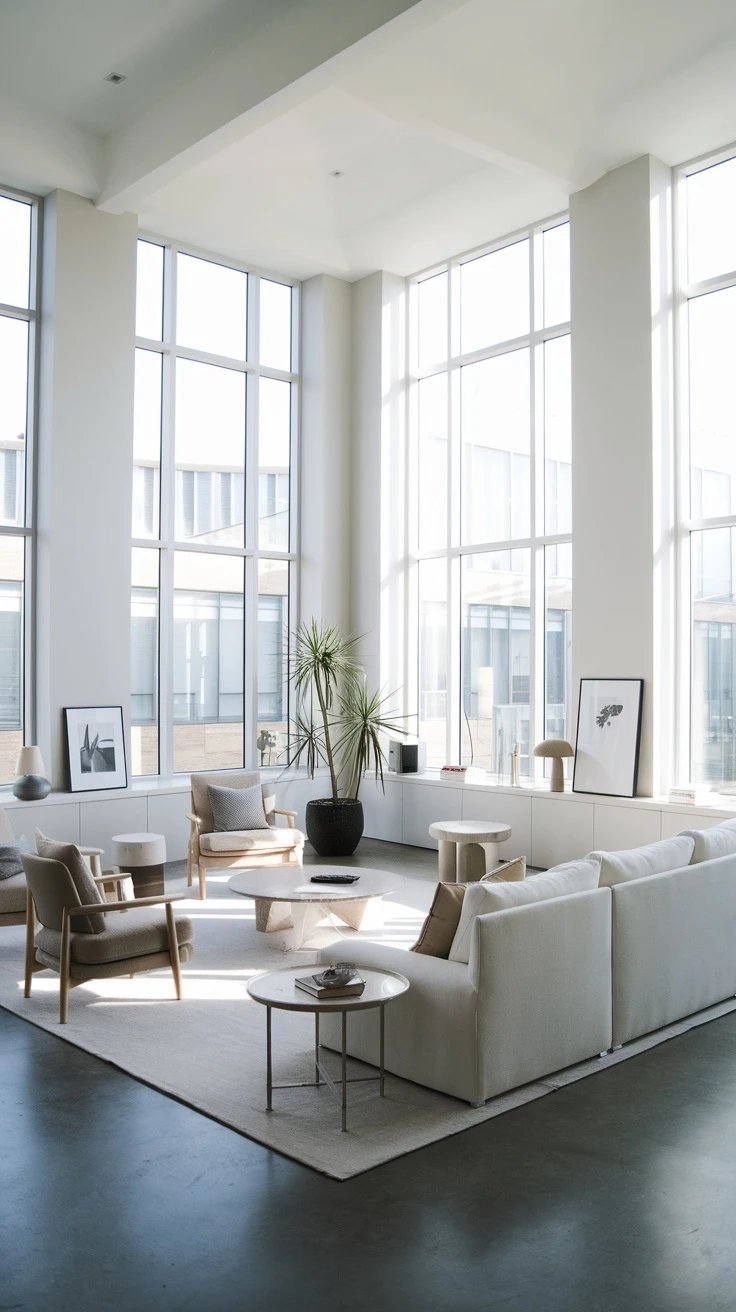
Some living rooms just feel dark — north-facing windows, deep eaves, mature trees outside, or a layout that swallows light. New windows would fix it, but that’s a $10,000+ project. The good news: you can dramatically brighten a dark living room without new windows using light, color, and reflection tricks that cost a fraction of that. I’ve used these in a basement-level living room that went from cave to cozy-bright, and the transformation was startling.
Maximize the Light You Already Have
Before adding anything, stop blocking what you’ve got:
- Clean the windows — inside and out. This sounds insultingly basic, but dirty windows can block 20–30% of light. It’s the highest-ROI 30 minutes in this entire guide.
- Ditch heavy curtains. Replace light-blocking drapes with sheer or semi-sheer panels that provide privacy while transmitting daylight. If you need blackout for a TV wall, use them only there.
- Mount curtain rods wider and higher than the window frame so open curtains clear the glass entirely instead of covering the edges.
- Trim outside obstructions. Overgrown bushes or tree limbs against windows are free to cut back and make an enormous difference.
- Remove window screens in winter if you don’t need them — screens filter meaningful light.
How to Brighten a Dark Living Room Without New Windows: The Reflection Strategy
Since you can’t add windows, bounce the existing light around. Reflection is the whole game:
- Hang a large mirror opposite or adjacent to the biggest window. It effectively doubles that window’s light contribution. A big mirror is the single most impactful purchase for a dark room.
- Choose light, reflective surfaces: glossy or satin paint (not flat) on walls, light-colored furniture, glass or lucite accent pieces, metallic decor accents.
- Light-colored rug over dark floors. Floors are the largest surface in the room — a light rug (see our rug sizing guide) bounces light up instead of absorbing it.
- Glass-front or open shelving instead of dark bulky bookcases that eat light.
Paint: The Nuclear Option (in a Good Way)
Dark walls in a dark room compound the problem. Repainting in a light, warm white or pale warm gray is transformative — and it’s the cheapest major change at ~$150–$300 DIY. Key points:
- Warm whites over cool whites in low-light rooms — cool whites go dingy gray without strong daylight; warm whites stay inviting.
- Paint the ceiling bright white (flat or matte) — ceilings reflect light down into the room.
- Consider painting trim the same color as walls — it eliminates visual boundaries and makes the room feel larger and airier.
- Satin or eggshell sheen reflects more light than flat — subtle but real.
Our small-room paint color guide has specific shade families that work in low light.
Layer Your Artificial Lighting Properly
Most dark living rooms have one sad overhead light. What they need is layered lighting:
- Ambient: the general overhead — upgrade to the brightest bulb the fixture allows, daylight temperature (5000K) for daytime use areas.
- Task: floor lamps beside reading chairs, table lamps on side tables — pools of light where activity happens.
- Accent: the secret weapon — LED strip lights behind the TV, uplights behind plants, picture lights on art. Accent lighting creates the perception of brightness even at modest wattages.
- Uplighting specifically: torchiere floor lamps bounce light off white ceilings, filling the room with diffuse brightness. Hugely effective in dark rooms.
Rule of thumb: aim for light sources at multiple heights in every corner — dark corners make the whole room feel darker. Smart bulbs ($10–$15 each) let you tune brightness and warmth by time of day; see our smart home beginner guide.
Furniture and Layout Adjustments
- Pull furniture away from windows — tall bookcases beside windows block surprising amounts of light.
- Choose lower-profile furniture where possible — light flows over it instead of being blocked.
- Swap dark upholstery for lighter slipcovers if new furniture isn’t in the budget.
- Declutter ruthlessly. Visual clutter reads as darkness — fewer, lighter objects feel brighter.
- Glass coffee tables and open-leg furniture let light pass through instead of creating dark masses.
Using Daylight Strategically
Beyond just “more light,” think about which light. South-facing windows (in the Northern Hemisphere) give the most consistent daylight — arrange reading chairs and workspaces to take advantage. East-facing gives bright mornings; west-facing gives warm afternoons but can overheat. If your dark living room faces north, you’re working with cool, indirect light — which is why warm paint colors and warm artificial lighting (2700–3000K) matter so much there; they compensate for what the sun doesn’t provide.
Skylights and sun tunnels are worth mentioning as the middle ground between “new windows” and “nothing” — a sun tunnel ($500–$1,000 installed) funnels surprising daylight into dark interiors with minimal construction. Not free, but transformative for rooms that face the wrong way. The Department of Energy’s daylighting guide explains the options and what to expect from each.
And the free version of all this: spend a day noticing where light actually falls in your room, hour by hour. Then arrange furniture, mirrors, and activities around the real light patterns — not where you wish the light were. Working with the room’s actual behavior beats fighting it every time.
The 80/20 of Brightening (If You Only Do Three Things)
Overwhelmed by the options? Do these three and skip the rest: 1. Clean the windows and remove heavy curtains — free, 30 minutes, the biggest single change. 2. Paint the walls a light warm white — $150 and a weekend, transformative. 3. Add a large mirror opposite the biggest window — $50–$80, doubles your best light source.
Those three capture maybe 80% of the possible improvement for under $250. Everything else — layered lighting, reflective decor, furniture swaps — is refinement. Start with the big three, live with it for two weeks, then decide if you need more. Most people don’t.
The Bottom Line
To brighten a dark living room without new windows: unblock and clean existing windows, add mirrors and reflective surfaces, repaint in light warm tones, and layer artificial lighting at multiple heights. Total cost: $300–$800 for a transformation that rivals a window project costing 20x more. You can’t change which way the house faces — but you can absolutely change how the room feels. And if you’re styling the refreshed space, our guides to hanging shelves properly and choosing the right rug size will help you finish the job.






One Comment