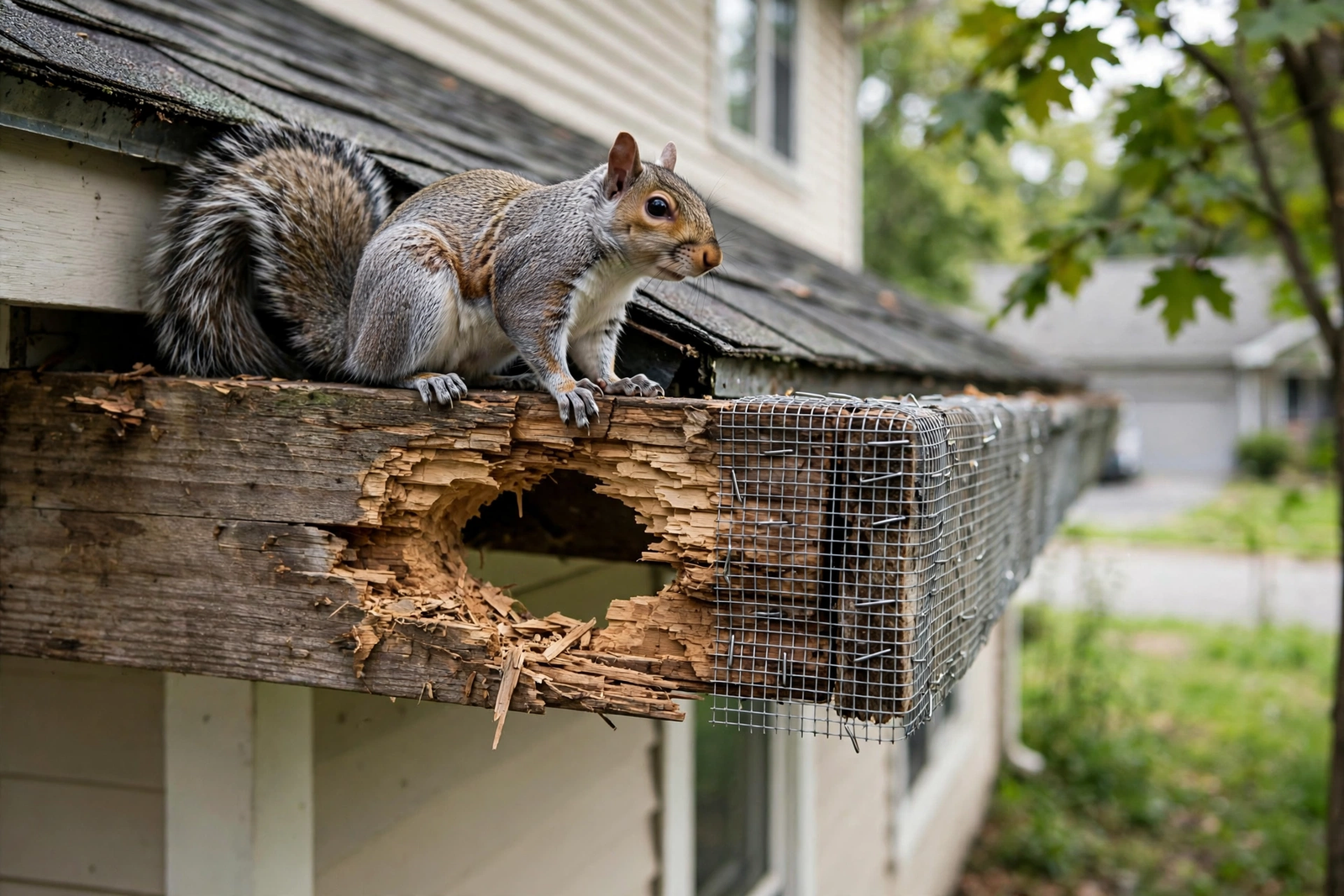
Quick Answer: To get rid of squirrels, remove food attractants (secure trash, take down or squirrel-proof bird feeders, pick up fallen fruit and nuts), seal entry points into attics and eaves with metal flashing or hardware cloth, use one-way exclusion doors so squirrels inside can leave but not re-enter, and protect gardens with fencing or netting. Poison is illegal for squirrels in most areas — do not use it.
Squirrels are entertaining in the park and infuriating at home. They chew into attics, shred insulation, gnaw wiring, raid bird feeders, dig up bulbs, and strip fruit trees bare. Gray squirrels, fox squirrels, and red squirrels cause the most property damage; flying squirrels are quieter but notorious attic invaders.
Squirrels are also protected or regulated in many states, which limits your options — but the legal methods (exclusion, habitat modification, and live trapping where permitted) work well when done properly.
Step 1: Identify the Species and the Problem
Different squirrels need slightly different approaches:
- Eastern gray squirrels: The most common culprit. Active during the day, nest in attics, chew entry holes in eaves and soffits.
- Fox squirrels: Larger, similar habits to grays, common in the Midwest and South.
- Red squirrels: Smaller, more aggressive, extremely destructive chewers for their size. Common in northern states.
- Flying squirrels: Nocturnal — if you hear scurrying in the attic at night but never see a squirrel by day, suspect these. They enter through very small gaps.
- Ground squirrels/chipmunks: Burrow in yards and gardens rather than invading attics.
Signs of squirrels in the attic include daytime scurrying and rolling sounds (squirrels are active morning and evening), gnawed wood around eaves or vents, nests of shredded insulation and leaves, droppings (about 3/8 inch, oblong), and a strong musky odor from urine.
Step 2: Know the Law Before You Act
This step is not optional. In many US states, squirrels are classified as game animals or protected wildlife:
- Poison is illegal for squirrel control in most jurisdictions. There are no EPA-registered poisons for tree squirrels, and using rat poison on squirrels violates federal law.
- Relocation is restricted or illegal in many states without a permit. Relocated squirrels also have very low survival rates.
- Trapping regulations vary: some states allow homeowners to live-trap nuisance squirrels; others require a licensed wildlife control operator.
- Baby season matters: Spring and late summer are breeding seasons. Removing a mother leaves babies to die in your attic — inhumane and a guaranteed odor disaster.
Check your state wildlife agency’s website before trapping or relocating. When in doubt, exclusion (sealing them out) is legal everywhere and is the most effective long-term solution anyway.
Step 3: Remove Food Attractants
Squirrels go where eating is easy. Make your yard less of a buffet:
- Bird feeders: The number one squirrel attractant. Use squirrel-proof feeders (weight-activated perches), hang feeders on poles with baffles at least 4 feet off the ground and 8-10 feet from anything a squirrel can jump from, or switch to safflower seed and nyjer, which squirrels dislike.
- Fallen fruit and nuts: Pick up fallen fruit daily and harvest promptly. Rake up acorns and nuts under trees.
- Trash and compost: Use locking lids; never put nuts, seeds, or fruit scraps in open compost.
- Pet food: Feed pets indoors or pick up bowls immediately after meals.
- Vegetable gardens: Harvest ripe produce promptly — squirrels target tomatoes, corn, and berries. See our guide on how to start a vegetable garden for garden planning that accounts for wildlife pressure.
Step 4: Exclude Squirrels From the Attic
Exclusion — letting squirrels out and keeping them out — is the gold standard for attic invasions.
Find All Entry Points
Inspect the roofline, eaves, soffits, fascia, gable vents, and chimney. Squirrels need only a 1.5-inch gap. Look for gnawed holes, rub marks, and disturbed insulation. A good trick: on a sunny day, have someone watch the roof from outside at dawn while you bang on the attic ceiling — squirrels will bolt for their exits, revealing every hole.
Install One-Way Exclusion Doors
Over the main entry hole(s), mount a one-way door — a simple device (wire mesh funnel or commercial excluder) that lets squirrels exit but not re-enter. Leave it in place for 5-7 days, monitoring for activity. Critical: do this outside of baby season (avoid March-May and August-October in most regions), or seal all secondary holes first and confirm no babies are inside by listening for high-pitched squeaking.
Seal Every Opening Permanently
Once you are certain all squirrels are out, seal every potential entry with materials they cannot chew through:
- Cover holes and vents with 1/2-inch or 1/4-inch galvanized hardware cloth, screwed (not stapled) in place.
- Repair gnawed fascia and soffits with metal flashing.
- Cap the chimney with a stainless steel chimney cap.
- Seal gaps where rooflines meet with metal or concrete — not foam or wood alone, which they chew through.
Trim tree branches 8-10 feet back from the roof. Squirrels can jump about 8 feet horizontally, so this removes their highway. The University of Minnesota Extension wildlife damage guides have detailed exclusion diagrams.
Step 5: Protect Gardens, Bulbs, and Fruit Trees
Vegetable Gardens
Fence the garden with 1-inch mesh wire at least 30 inches high, with the bottom buried 6 inches deep or bent outward in an L-shape to block digging. For individual high-value crops like tomatoes, drape bird netting over hoops or cages. Motion-activated sprinklers work well as a startle deterrent — squirrels hate being sprayed unexpectedly.
Bulbs
Squirrels dig up tulip and crocus bulbs relentlessly. Plant bulbs 6-8 inches deep, lay chicken wire flat over the bed before mulching, or switch to daffodils, alliums, and hyacinths, which squirrels naturally avoid.
Fruit and Nut Trees
Wrap a 2-foot-wide band of sheet metal around the trunk at least 6 feet off the ground — squirrels cannot climb the slick surface. Prune lower branches so they cannot bypass the band by jumping from nearby structures. Net smaller trees and berry bushes completely, securing the netting at the trunk.
Step 6: Repellents — What Actually Helps
Repellents are supplementary, not standalone solutions, but they help:
- Taste repellents containing capsaicin (hot pepper) or bittering agents, sprayed on bulbs, bark, and garden plants. Reapply after rain.
- Predator urine (fox or coyote) granules around garden perimeters — effectiveness varies but many gardeners report success.
- Motion-activated sprinklers and lights startle nocturnal flying squirrels and dawn-active grays.
What does not work reliably: ultrasonic repellers (no consistent evidence), mothballs (illegal as wildlife repellent and ineffective), and fake owls or snakes (squirrels figure them out within days).
Step 7: Trapping (Where Legal)
If exclusion alone is not practical — for example, a large yard population raiding gardens — live trapping may be an option where your state allows it:
- Use a cage-style live trap (not a lethal trap) baited with peanut butter, sunflower seeds, or apple slices.
- Place traps along squirrel travel routes: fence tops, near burrow entrances, at the base of frequented trees.
- Check traps at least twice daily — a trapped squirrel stresses quickly, especially in heat.
- Know your state’s relocation rules before you trap. Many states prohibit relocation beyond a short distance or require release on your own property (which just means they come back).
Safety note: Wear thick gloves when handling traps. Squirrels bite hard and can carry diseases including tularemia. Never handle a squirrel with bare hands.
Cleaning Up After Squirrels
Once squirrels are out, clean the attic: wear a respirator, gloves, and eye protection; remove soiled insulation (bag it for disposal); disinfect hard surfaces; and replace insulation. Squirrel urine and droppings can harbor leptospirosis and salmonella bacteria. The CDC’s rodent cleanup guidance covers safe decontamination procedures applicable to squirrel waste as well.
When to Call a Professional
Call a licensed wildlife control operator if: babies may be present in the attic, squirrels are in wall voids you cannot access, you are unsure about your state’s trapping laws, the infestation involves flying squirrels (they colony-nest and need specialized exclusion), or previous DIY exclusion failed. Professionals carry the right licenses, know baby-season timing, and guarantee their exclusion work.
Squirrels often raid the same garden beds and bird feeders targeted by other wildlife — our guide on how to attract crows explains feeder setups, and these UMN Extension tips for keeping squirrels out of gardens add humane deterrent ideas worth trying first.
Frequently Asked Questions
How do I get squirrels out of my attic?
Use one-way exclusion doors over their entry holes so they can leave but not return, then permanently seal all openings with hardware cloth and metal flashing. Do this outside of baby season (spring and late summer) to avoid trapping dependent young inside. Trim branches 8-10 feet from the roof to cut off access.
What smells do squirrels hate?
Squirrels dislike strong scents like peppermint oil, capsaicin (hot pepper), vinegar, and predator urine. These work as mild deterrents for gardens and entry areas but wear off quickly and will not stop a determined squirrel from entering an attic — exclusion is the real fix.
Will mothballs get rid of squirrels?
No. Mothballs are not registered or legal for use as squirrel repellent, they are ineffective, and their fumes are toxic to people and pets in enclosed spaces like attics. Do not use them.
Can I legally trap and relocate squirrels?
It depends entirely on your state. Many states prohibit relocating wildlife without a permit, and some ban it outright. Relocated squirrels also have poor survival odds. Always check your state wildlife agency’s regulations before trapping, and consider exclusion instead — it is legal everywhere.
How do I keep squirrels out of my bird feeder?
Use weight-activated squirrel-proof feeders, mount feeders on poles with baffles at least 4 feet high and 8-10 feet from jump-off points (trees, fences, roofs), and switch to safflower or nyjer seed, which squirrels dislike. Greasing poles works temporarily but needs frequent reapplication.
Do squirrels come back after exclusion?
They will try — squirrels are territorial and persistent. That is why permanent sealing with metal materials matters more than the removal itself. Inspect your exclusion work every spring and fall, keep attractants managed, and a properly sealed house stays squirrel-free for years.