Quick Answer: To get rid of fleas, treat your pets with a vet-approved flea preventive, vacuum your home thoroughly and daily, wash all bedding in hot water, and treat your yard. Because flea pupae resist chemicals, you must repeat the process for 4–8 weeks to break the life cycle. Skip any single step and the infestation comes back.
A flea infestation feels like it appears overnight: one day your dog scratches a little, the next day your ankles are covered in bites. In reality, the adult fleas you see jumping on your pet are only about 5% of the problem. The other 95% are eggs, larvae, and pupae hidden in carpets, upholstery, and your yard, waiting to hatch.
That is why spot treatments fail. Getting rid of fleas means attacking every life stage at once and keeping up the pressure for weeks. This guide covers whole-home flea elimination — pets, house, and yard. (For personal protection when fleas are biting you directly, see our separate guide on how to get rid of fleas on humans step by step guide 2026“>getting rid of fleas on humans.)
Understand the Flea Life Cycle First
- Eggs (50% of the infestation): Females lay up to 50 eggs a day, which fall off your pet into carpets and bedding. They hatch in 2–12 days.
- Larvae (35%): Tiny worm-like larvae hide deep in carpet fibers. This stage lasts 5–15 days.
- Pupae (10%): Larvae spin sticky cocoons that cling to carpet fibers. Pupae resist insecticides, vacuuming, and drying, and can lie dormant for months — hatching when they sense vibration, warmth, and carbon dioxide.
- Adults (5%): New adults jump onto a host within seconds of hatching and start laying eggs within days.
The pupal stage is why flea treatment takes weeks. No product reliably kills pupae, so your strategy is to kill every adult as it emerges before it breeds — until the reservoir runs dry.
Step 1: Treat Your Pets (The Source)
Your pets are the flea factory. Until they are protected, new eggs keep raining into your home daily.
- Use a vet-recommended product: Topical treatments, oral chews, or Seresto-style collars from your vet or a reputable pharmacy — counterfeit flea products are a real problem online.
- Treat ALL pets, including indoor-only cats. Fleas hitchhike in on clothing and through screens.
- Do not rely on flea shampoos or “natural” remedies alone. Shampoos kill only fleas currently on the animal. Some essential oils (like tea tree oil) are toxic to cats.
- Apply on day one so pets become walking flea traps — emerging adults jump on, bite, and die before reproducing.
Step 2: Vacuum Like Your Life Depends on It
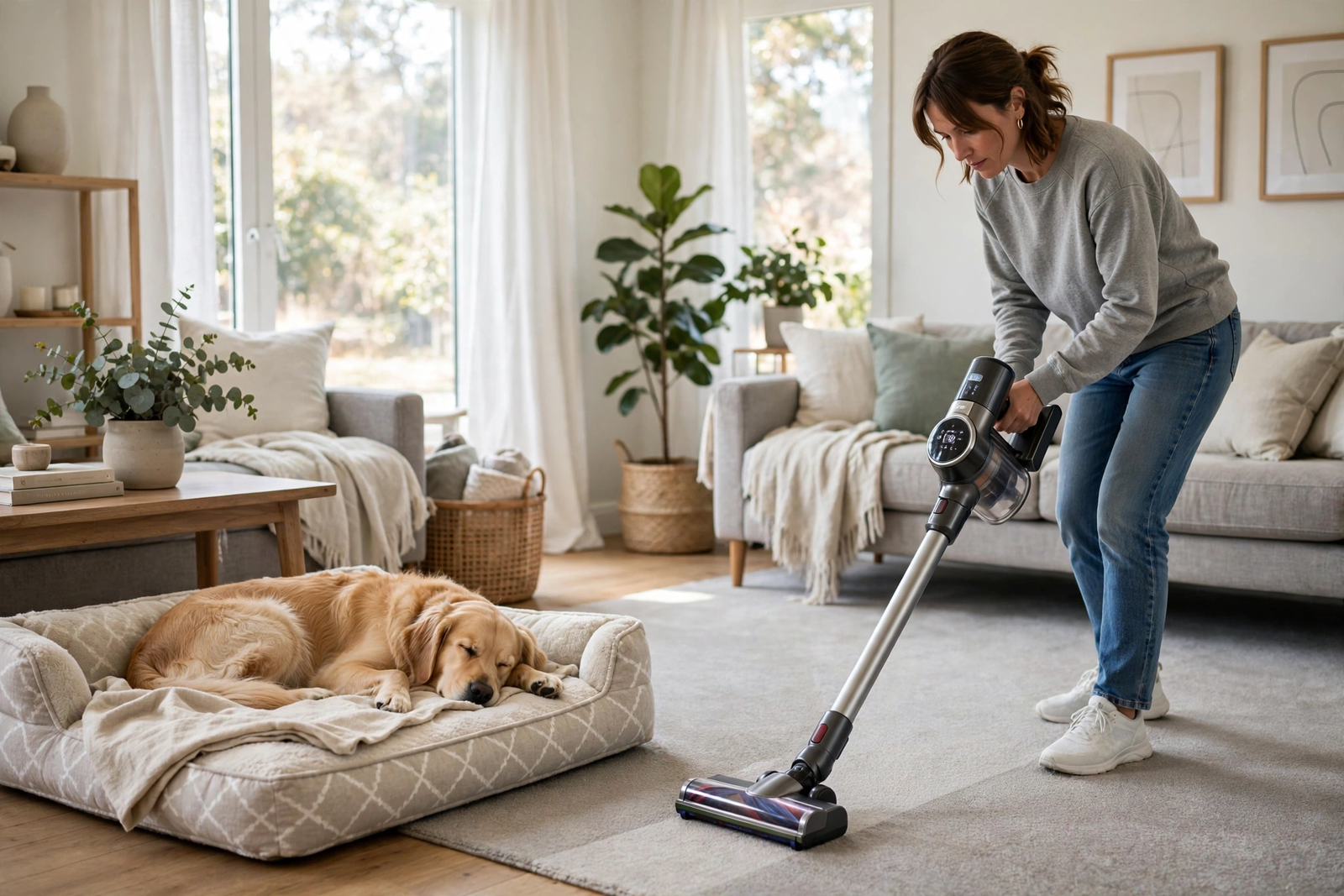
Vacuuming is the single most effective environmental weapon against fleas. It removes eggs and larvae, and the vibration stimulates pupae to hatch — exposing vulnerable adults to your treatments.
- Vacuum daily for 2–3 weeks, then every other day for another month.
- Hit the hot spots: Under furniture, along baseboards, under cushions, pet sleeping areas, and closets.
- Use a crevice tool for edges and upholstery seams where larvae concentrate.
- Empty the vacuum immediately into a sealed bag and take it outside — a bag of live fleas left in the closet just re-releases them.
Step 3: Wash Everything in Hot Water
Strip every washable item your pet contacts: pet beds, throw blankets, your bedding, couch covers, and rugs. Wash in the hottest water the fabric allows and dry on high heat for at least 30 minutes — heat kills all flea life stages. Repeat weekly during treatment. For unwashable items, a steam cleaner above 140°F (60°C) kills eggs and larvae on contact. The EPA’s pest control resources recommends combining non-chemical methods like washing, vacuuming, and steam with targeted products.
Step 4: Treat the Yard
If your pets go outside, your yard is re-infesting them. Fleas thrive in shady, moist areas — under decks, along fences, and in tall grass.
- Mow short and clear debris: Sunlight and dryness are natural flea killers. Trim bushes and remove clutter where stray animals sleep.
- Focus treatment on shaded rest areas, not the whole lawn — that is where larvae develop.
- Use an outdoor insecticide labeled for fleas (bifenthrin or carbaryl), or try beneficial nematodes (Steinernema carpocapsae) in garden beds.
- Discourage wildlife: Raccoons, opossums, and stray cats carry fleas in. Secure trash and block access under decks.
Step 5: Use Indoor Products Correctly
For moderate to severe infestations, look for products combining an adulticide (like permethrin) with an insect growth regulator or IGR (methoprene or pyriproxyfen). The IGR is the key ingredient — it stops eggs and larvae from maturing, breaking the cycle even where you cannot reach.
- Skip the foggers (“bug bombs”): The mist does not penetrate under furniture or into carpet bases where larvae live, and it coats every surface with residue.
- Use targeted IGR sprays on carpets, baseboards, and pet areas. Follow label directions exactly, keep pets and children off treated areas until dry, and ventilate well.
- One thorough application typically keeps working for months, sterilizing each new generation as it emerges.
For a similar integrated approach against other household invaders, see our how to get rid of german cockroaches step by step guide 2026“>German cockroach removal guide.
When to Call a Professional
Call a licensed pest control company if you still see fleas after 6–8 weeks of consistent DIY effort, the infestation is severe (fleas jumping on you the moment you enter a room), or you are uncomfortable applying insecticides yourself. Professional treatment typically costs $150–$400, usually requires vacating for a few hours, and most pros include a follow-up visit — because even they expect a second wave as pupae hatch. See the CDC flea control guidance for treatment timing tips.
Frequently Asked Questions
How long does it take to get rid of fleas completely?
Expect 4–8 weeks of consistent effort. The pupal stage is immune to almost everything, so you are waiting out the hatching cycle while killing each new generation of adults before they breed. A few fleas in week three is normal — it means pupae are hatching into your traps.
Why do fleas keep coming back after treatment?
Almost always because one reservoir was missed: an untreated pet (including indoor cats), the yard, or a favorite pet sleeping spot that was not vacuumed. Re-check all three zones before assuming the products failed.
Can fleas live without pets?
Adults die within days to weeks without a blood meal, but pupae can survive dormant for months. That is why vacant homes can suddenly “have fleas” the day new occupants move in — moving-day vibrations trigger mass hatching.
Are flea bombs effective?
Not really. Total-release foggers spray upward and settle on exposed surfaces, missing the carpet bases and cracks where larvae live. Targeted sprays with insect growth regulators are far more effective with less residue.
Can I get rid of fleas without chemicals?
Light infestations sometimes respond to aggressive vacuuming, hot washing, and diligent pet treatment — but it takes longer and demands near-perfect consistency. For moderate or severe cases, an insect growth regulator dramatically improves your odds.
Do fleas bite humans?
Yes, though they prefer animals. Bites typically appear as small, itchy red bumps around ankles and lower legs. Regular bites confirm an active infestation — start the full protocol above.