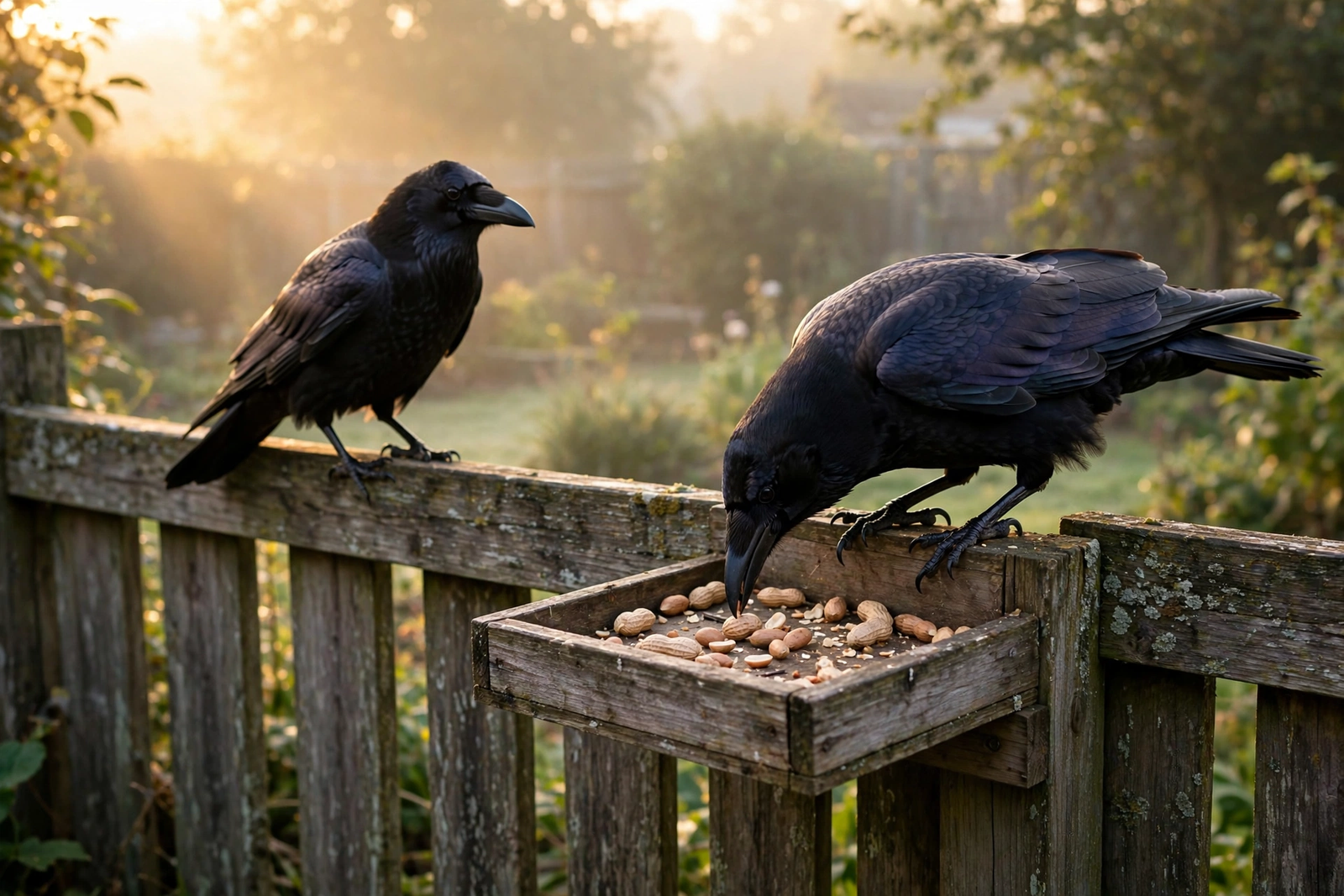
Quick Answer: To attract crows, offer their favorite foods — unsalted peanuts in the shell, dog or cat kibble, eggs, and meat scraps — on a consistent daily schedule in an open, visible spot. Add a large birdbath or shallow water dish, provide tall perches or trees for lookout posts, and be patient: crows are cautious and may take weeks to trust a new feeding spot. Never try to trap or keep a crow; they’re protected by law.
Crows are among the smartest birds on earth — they recognize human faces, use tools, and even hold grudges. That intelligence makes befriending them uniquely rewarding: once crows trust you, the same individuals may visit daily for years. But it also means you can’t rush them. Attracting crows is a slow trust-building exercise, not a weekend project.
Why Attract Crows?
- Natural pest control: crows eat grubs, cutworms, and other lawn and garden pests.
- Fascinating behavior: watching crow social dynamics, play, and problem-solving is endlessly entertaining.
- Territory defense: crows aggressively mob hawks, which can reduce hawk pressure on smaller songbirds and poultry.
- They remember kindness: research shows crows remember individual people who feed them — and tell their friends.
Step 1: Offer the Right Food
Crows are omnivores with strong preferences. The most reliable crow attractants:
- Unsalted peanuts in the shell — the classic crow favorite; the shell keeps them busy and visible.
- Dry dog or cat kibble — high-protein, cheap, and easy. Soak briefly in water to soften.
- Hard-boiled or scrambled eggs — a top-tier treat crows find irresistible.
- Meat scraps and suet — small pieces of cooked meat or raw suet.
- Cracked corn and sunflower seeds — decent filler, though squirrels and jays compete for these.
- Leftovers: plain cooked pasta, rice, and unsalted popcorn work in a pinch.
Foods to avoid: anything salted, seasoned, or containing chocolate, avocado, caffeine, or alcohol. Keep portions modest — a handful or two daily — so crows still forage naturally and don’t become fully dependent.
Step 2: Feed on a Consistent Schedule
Crows are creatures of habit and excellent timekeepers. Pick a time — early morning works best, when crows are actively foraging — and put food out at the same time every day in the same visible spot, like a platform feeder, a flat rock, or a cleared patch of lawn. Consistency is what converts a curious flyover into a daily visit. If you miss days, don’t worry; just resume the routine.
Step 3: Provide Water
A large, shallow birdbath or ground-level dish (2–3 inches deep) gives crows drinking water and a place to dunk food — crows famously soften dry food in water. Keep it clean and unfrozen in winter with a heater if needed. Place it near the feeding spot but with open sightlines so wary crows can watch for danger.
Step 4: Give Them Perches and Shelter
Crows scout from high vantage points before approaching food. Tall trees, a dead snag (if safe), a rooftop edge, or even a tall post gives them a lookout. They also appreciate:
- Open lawn or field nearby for ground foraging.
- Dense evergreens for roosting and shelter from weather.
- Minimal disturbance — keep dogs and cats away from the feeding area during visits.
Step 5: Build Trust Slowly
- Be visible but boring. Let crows see you placing the food, then step back. Don’t stare directly at them at first — predators stare; friends glance.
- Use a signal. Many crow-feeders use a specific whistle or call when putting food out. Crows learn the association fast.
- Stay calm and predictable. Move slowly, keep a routine, and never chase or startle them.
- Be patient. It commonly takes 2–6 weeks for crows to start visiting regularly, and months before they eat while you’re nearby. The payoff — crows that recognize you and announce your arrival — is worth it.
Interested in more backyard birds? See how to attract hummingbirds and best bird feeders for backyard.
What NOT to Do
- Never trap, catch, or try to keep a crow as a pet. In the US, crows are protected under the Migratory Bird Treaty Act — harming or possessing them without a permit is a federal offense. Similar wildlife protections apply in the UK and elsewhere.
- Don’t overfeed. Large food piles attract rats and create dependency. Small daily portions are best.
- Don’t feed near busy roads where crows could be hit by cars.
- Respect neighbors. A large crow gathering is noisy at dawn — keep feeding modest if you have close neighbors.
- Never offer salted or processed junk food — it can harm birds.
The U.S. Fish & Wildlife Service administers the Migratory Bird Treaty Act protecting crows, the National Audubon Society offers backyard bird habitat guidance, and the Cornell Lab of Ornithology has detailed crow behavior profiles. For keeping feeders squirrel-free, see how to keep squirrels out of bird feeders.
Frequently Asked Questions
How long does it take to attract crows?
Typically 2–6 weeks of consistent daily feeding before crows visit regularly, and several months before they become comfortable with your presence. Crows are naturally cautious — patience is the whole strategy.
What is the best food to attract crows?
Unsalted peanuts in the shell are the number-one crow attractant, followed by dog kibble, hard-boiled eggs, and meat scraps. Offer a small mix on a consistent morning schedule.
Will crows bring gifts?
Sometimes! Crows have been documented leaving shiny objects, stones, and trinkets for people who feed them regularly. It’s not guaranteed, but regular feeders do report it.
Is it legal to feed crows?
Feeding wild crows is legal in most places, but trapping, harming, or keeping them is not — they’re protected under the Migratory Bird Treaty Act in the US. Check local ordinances, as some municipalities restrict wildlife feeding.
Do crows scare away other birds?
Crows can dominate feeders, but they mostly prefer ground and platform feeding. Use separate tube feeders for songbirds and a ground feeding station for crows, and both can share your yard peacefully.