
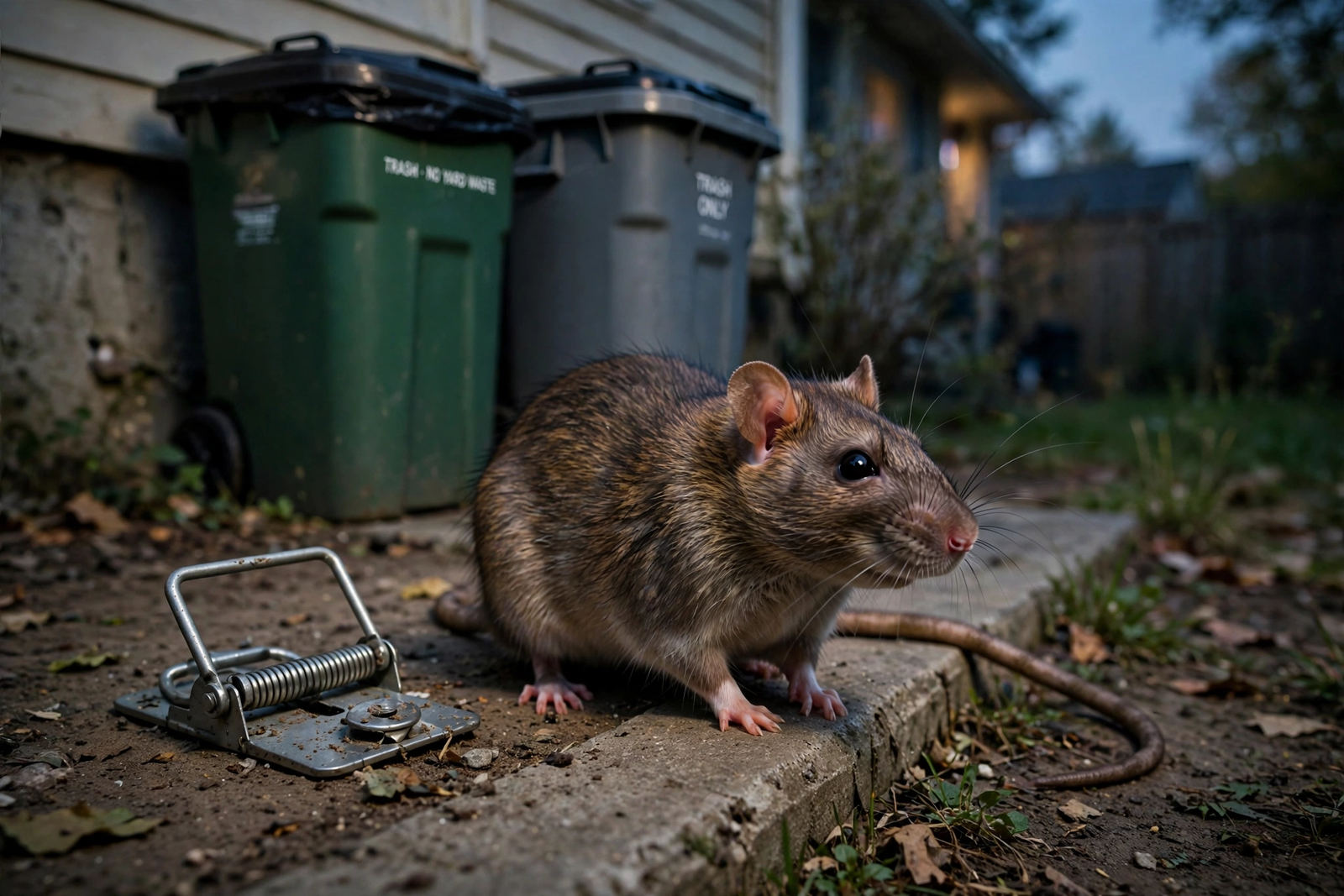
Quick Answer: To get rid of rats, remove their food and shelter first (seal trash, pick up pet food and fallen fruit, clear clutter), seal every entry hole larger than a half-inch with steel wool and caulk or hardware cloth, then set snap traps perpendicular to walls along their runways. Poison should be a last resort handled with extreme caution because of risks to pets, wildlife, and children.
Rats are more than a nuisance. They contaminate food, chew through wiring (a genuine fire hazard), damage insulation and structures, and spread diseases like leptospirosis and salmonellosis. Whether they are in your attic, garage, garden, or walls, the approach is the same: eliminate what attracts them, block how they get in, and remove the ones already there.
This guide covers the full process in order. Skipping straight to traps without doing the exclusion and sanitation steps first is the number one reason rat problems come back.
Step 1: Confirm You Have Rats (Not Mice)
Treatment differs, so make sure you are dealing with rats:
- Droppings: Rat droppings are 1/2 to 3/4 inch long, blunt-ended, and found in groups. Mouse droppings are much smaller (about 1/4 inch) with pointed ends.
- Gnaw marks: Rats leave marks about 1/8 inch wide; mice leave finer marks.
- Runways: Rats travel the same routes nightly, leaving greasy rub marks along walls and baseboards.
- Noise: Rats are heavier — you hear thumping and scurrying in walls or attics, especially at night. Mice make lighter scratching sounds.
- Burrows: Outdoors, Norway rats dig burrows 2-4 inches wide near foundations, under sheds, or in gardens.
Step 2: Remove Food Sources
Rats stay where food is easy. Cut off the supply and most will leave on their own.
- Secure trash: Use cans with tight-fitting, locking lids. Do not leave bags outside overnight. Rinse recyclables.
- Pet food: Never leave pet food out overnight — this is one of the most common rat attractants. Feed pets on a schedule and pick up leftovers.
- Bird feeders: Spilled seed is a rat buffet. Use catch trays, switch to hulled seed (less waste), or take feeders down until the problem is resolved.
- Fallen fruit and nuts: Pick up fallen fruit from trees daily. Harvest ripe produce promptly — rats love vegetable gardens (see our guide on how to keep pests out of your vegetable garden).
- Compost: Keep compost bins sealed and never add meat, dairy, or fats.
- Grills: Clean grease traps and drip pans after cooking.
Step 3: Remove Shelter and Nesting Sites
Rats need cover to feel safe. Make your property inhospitable:
- Clear clutter, junk piles, and stacked firewood away from the house (store firewood at least 18 inches off the ground and away from walls).
- Trim shrubs and tree branches so nothing touches the house — rats climb.
- Keep grass short and remove dense ground cover like ivy near foundations.
- Store items in garages and sheds in sealed plastic bins, not cardboard boxes.
Step 4: Seal Entry Points
A rat can squeeze through a hole the size of a quarter (about 1/2 inch). Inspect your home’s exterior carefully, especially at dusk when gaps are easier to spot.
Common entry points include gaps around pipes and utility lines, vents without screens, holes where cables enter, damaged weather stripping under doors, gaps under siding, and uncapped chimneys.
Seal holes with materials rats cannot chew through:
- Stuff small holes tightly with steel wool or copper mesh, then seal over with caulk.
- Cover larger openings with 1/4-inch hardware cloth (metal mesh), screwed in place — not chicken wire, which rats chew through.
- Install door sweeps on exterior doors with gaps underneath.
- Screen vents and chimney caps with metal mesh.
Do not seal entry points until you are sure no rats are trapped inside — otherwise they will chew new holes, potentially in worse places. Trap first, then seal, then keep trapping for a week to catch stragglers.
Step 5: Trap the Remaining Rats
Trapping is the most effective and safest removal method for homeowners.
Snap Traps (Recommended)
Use full-size rat snap traps (not mouse traps — rats can escape those). Bait with peanut butter, dried fruit, or a small piece of bacon tied to the trigger. Place traps perpendicular to walls with the trigger end facing the wall, since rats run along edges and rarely cross open space. Good locations: along walls in attics, garages, under sinks, behind appliances, and near (but not in) burrow entrances outdoors.
Set out several traps at once — for a serious infestation, a dozen or more. Check traps daily, wear gloves when handling them, and reset as needed. Pre-bait unset traps for 2-3 days if rats are trap-shy, letting them take the bait freely before you arm the traps.
Electronic and Live Traps
Electronic traps kill quickly with a high-voltage shock and are easy to empty without touching the rat. Live catch-and-release traps are humane but problematic: relocated rats usually die, may be illegal to release in your area, and often return. Check local regulations before using them.
What About Glue Traps?
Glue traps are widely considered inhumane — rats can take hours or days to die, often chewing off limbs trying to escape. Many pest professionals and animal welfare organizations advise against them. Snap traps are both more humane and more reliable.
Step 6: Use Poison Only as a Last Resort
Rodenticides carry serious risks and should not be your first move:
- Secondary poisoning: Owls, hawks, foxes, dogs, and cats die from eating poisoned rats. This is a major cause of wildlife death.
- Pets and children: Brightly colored bait blocks look like candy to toddlers and are attractive to dogs.
- Rats die in walls: A poisoned rat often retreats into a wall void to die, creating a smell that lasts for weeks and is nearly impossible to remove.
If you do use rodenticide, use tamper-resistant bait stations (required by law in many areas), place them only along exterior runways or in locked areas inaccessible to children and pets, and follow the label exactly. The EPA’s guidance on rodenticides details the safety requirements. Consider hiring a licensed pest control professional instead — they have access to restricted products and know how to use them safely.
Step 7: Clean Up Safely
Rat droppings and urine can carry disease. Never sweep or vacuum droppings dry — this launches contaminated particles into the air.
- Ventilate the area for 30 minutes first.
- Wear rubber gloves and a dust mask.
- Spray droppings, nests, and urine with a disinfectant or bleach solution (1 part bleach to 10 parts water) and let it soak for 5 minutes.
- Wipe up with paper towels and dispose of them in a sealed bag.
- Mop hard floors with disinfectant; steam-clean carpets and upholstery.
The CDC’s rodent cleanup guidance has the full protocol for heavy infestations.
Preventing Rats From Coming Back
Rat control is ongoing, not one-and-done. Keep up these habits:
- Inspect the exterior of your home every spring and fall for new gaps.
- Keep trash sealed and pet food picked up — permanently.
- Maintain a 2-foot vegetation-free zone around the foundation.
- Store bulk foods (including pet food and birdseed) in metal or heavy plastic containers with tight lids.
- If neighbors have attractants (open compost, junk piles), a polite conversation helps — rats do not respect property lines.
When to Call a Professional
Call a licensed pest control company if: you hear rats in walls you cannot access, the infestation persists after 2-3 weeks of diligent trapping, you find extensive burrowing under foundations, or you are uncomfortable handling traps. Professionals can also do a full exclusion inspection and seal a house properly — often the best money spent on a stubborn problem.
Rats frequently travel between gardens, sheds, and homes — see our guide on how to get rid of squirrels for exclusion tips that work against both rodents around outbuildings.
Frequently Asked Questions
What attracts rats to a house?
Food, water, and shelter — in that order. The biggest attractants are unsecured trash, pet food left out overnight, bird feeder spill, fallen fruit, open compost with food scraps, cluttered yards, and easy entry through gaps around pipes and foundations.
How do I know if rats are in my walls?
Listen at night for thumping, scurrying, or gnawing sounds. Look for greasy rub marks along baseboards, droppings in the attic or basement, gnawed food packaging, and a stale ammonia-like smell. Rats are nocturnal, so activity peaks after dark.
Do mothballs repel rats?
No — mothballs are ineffective against rats and illegal to use as a repellent (the label only allows use against clothes moths). The fumes are also toxic to people and pets in enclosed spaces. Ultrasonic repellers have similarly shown no consistent effectiveness in studies.
How long does it take to get rid of rats?
With diligent trapping plus sanitation and exclusion, most residential infestations are resolved in 2-4 weeks. If you only trap without sealing entry points and removing food, new rats will keep arriving and the problem will persist indefinitely.
Can rats climb into attics?
Yes — rats are excellent climbers. Roof rats in particular live in trees and enter attics through overhanging branches, roof vents, and gaps under eaves. Trim all branches at least 3-4 feet away from the roof and screen every vent with metal mesh.
Is rat poison safe to use around dogs?
No rodenticide is truly safe around dogs. Even in bait stations, dogs can be exposed by eating a poisoned rat (secondary poisoning). If you have dogs, stick to snap traps in areas the dog cannot reach, and consult your vet or a pest professional before considering any poison.



One Comment