
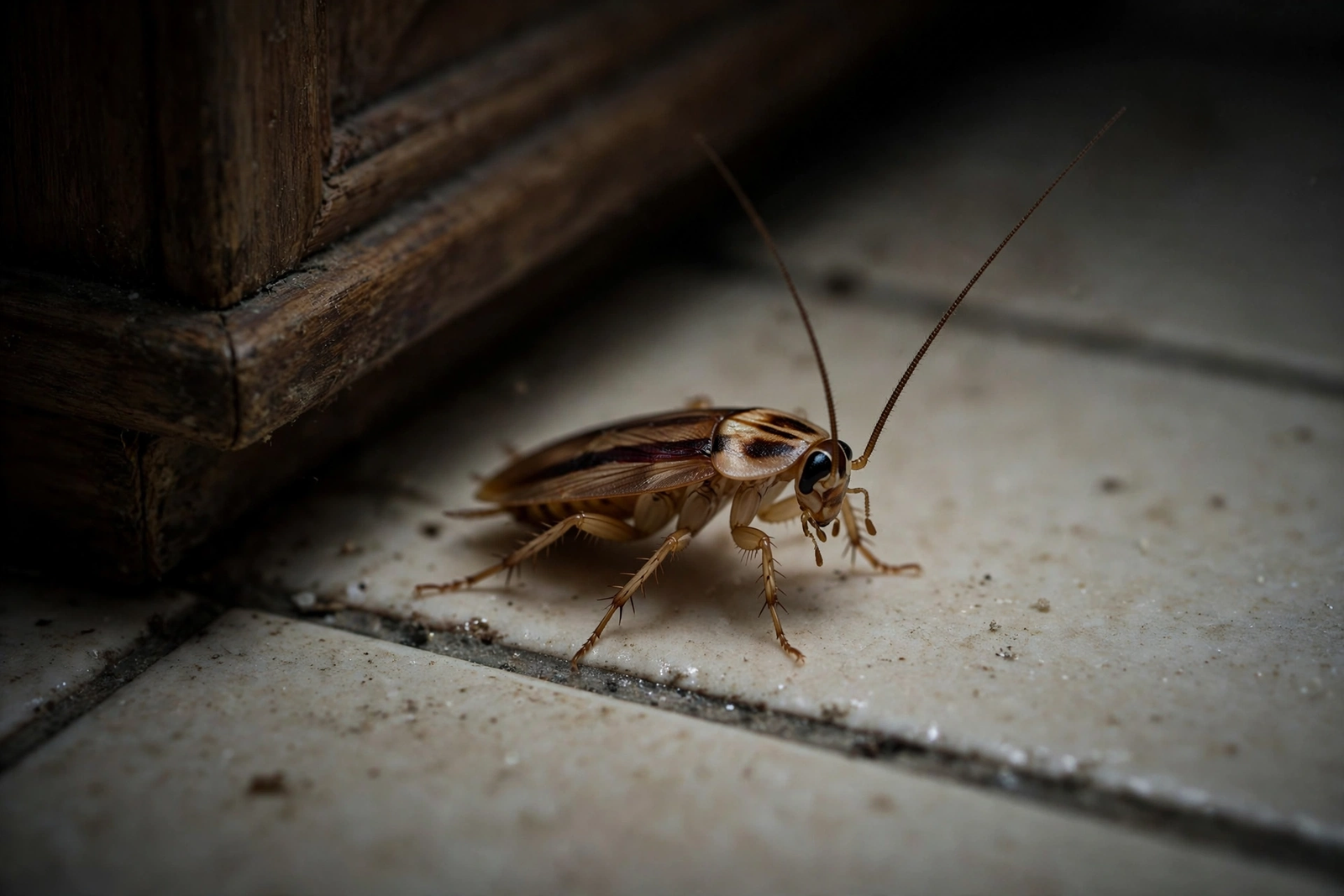
Quick Answer: To get rid of German cockroaches, start with aggressive sanitation — eliminate food, water, and clutter. Then apply pea-sized dots of gel bait in cracks, crevices, and under appliances where roaches hide, and use an insect growth regulator (IGR) to stop reproduction. Never use bug bombs; they scatter roaches deeper into walls. With consistent baiting, most infestations collapse in 2–6 weeks.
German cockroaches are the most common — and most stubborn — indoor cockroach in homes and apartments. A single female can produce hundreds of offspring in her lifetime, and populations explode in warm, food-rich kitchens. The good news: pest professionals beat them routinely with a methodical approach, and you can use the same strategy at home.
How to Identify German Cockroaches
- Size and color: about 1/2 to 5/8 inch long, light brown to tan.
- Two dark stripes running lengthwise behind the head — the telltale marking.
- Fast runners that scatter when lights turn on; they prefer kitchens and bathrooms.
- Egg cases (oothecae): small brown capsules the female carries until just before hatching.
- Signs: pepper-like droppings in cabinets, a musty oily odor in heavy infestations, and shed skins near hiding spots.
Seeing roaches during the day usually means the population is large — they’re normally nocturnal. Don’t panic, but do act promptly.
Why They’re So Hard to Kill
German cockroaches breed astonishingly fast: one ootheca holds 30–40 eggs, females produce several in a lifetime, and nymphs mature in under two months. They hide in tiny cracks — behind refrigerators, inside cabinet voids, under sinks, around pipe chases — and they quickly develop resistance to insecticides they’ve been exposed to. That’s why a single spray treatment fails: it kills the visible few while the hidden colony keeps breeding.
Step-by-Step Elimination Plan
- Sanitation blitz. This is non-negotiable. Clean behind and under the stove and refrigerator, degrease the stovetop and range hood, wipe cabinet interiors, take trash out nightly, fix leaky faucets and pipes, and store all food — including pet food — in sealed containers. Remove cardboard and clutter where roaches harbor. Bait works far better when it’s the best food source available.
- Declutter hiding spots. Recycle stacks of paper bags, boxes, and clutter under sinks. Pull appliances away from walls and vacuum the debris behind them (empty the vacuum outside afterward).
- Apply gel bait. Using a cockroach gel bait labeled for German cockroaches, place pea-sized dots in cracks and crevices: under the sink rim, behind the refrigerator and stove, inside cabinet hinges, along pipe penetrations, and behind the dishwasher. Reapply every 1–2 weeks or when bait is consumed. Rotate between two bait active ingredients if progress stalls, to beat resistance.
- Add an insect growth regulator (IGR). IGRs (like pyriproxyfen or hydroprene) don’t kill adults but prevent nymphs from maturing and females from producing viable eggs — breaking the breeding cycle. Available as sprays or bait stations; apply per label in the same harborages.
- Dust wall voids (optional). For nests inside walls, a light application of boric acid dust or diatomaceous earth puffed into voids and behind outlet covers reaches roaches baits can’t. Wear a dust mask and keep dust out of living spaces.
- Monitor with sticky traps. Place glue-board monitors under appliances and in cabinets. Trap counts tell you whether the population is falling — expect a steady decline over 2–6 weeks, not overnight.
- Seal entry and harborages. Caulk cracks around pipes, baseboards, and cabinets to eliminate hiding spots and block migration between apartment units.
What NOT to Do
- Don’t use total-release foggers (“bug bombs”). They don’t penetrate hiding spots, they scatter roaches deeper into walls and neighboring units, and they’re a fire and pesticide-exposure hazard. The EPA specifically warns against them for cockroach control.
- Don’t rely on sprays alone. Repellent sprays scatter colonies and accelerate resistance. If you spray, use only non-repellent products labeled for cockroaches, and never spray over your bait placements.
- Don’t stop early. Egg cases keep hatching for weeks. Continue baiting and monitoring for at least a month after the last sighting.
Dealing with other kitchen pests too? See how to get rid of ants in the kitchen and how to get rid of bed bugs.
Safety Notes
Keep all baits and dusts where children and pets can’t reach them — inside cracks, under appliances, and behind fixtures. Apply products exactly per label directions; the label is the law. Wash hands after handling pesticides, and ventilate when using sprays. If anyone in the home has asthma, note that cockroach allergens themselves trigger attacks — eliminating the infestation actually improves indoor air for asthma sufferers, a point highlighted in the CDC’s guidance on cockroach allergens and asthma. The EPA’s safe-use guidance for home insecticides covers proper application, and university extension programs publish research-based cockroach control guides — see the University of Minnesota Extension. For sealing tips, see how to seal cracks around home.
When to Call a Professional
Call a licensed pest management professional if the infestation is heavy (daytime sightings, strong odor), you’re in an apartment where roaches migrate between units (coordinated building-wide treatment works best), or DIY baiting shows no decline after 4–6 weeks. Pros have access to professional-grade baits, IGRs, and void-treatment equipment.
Frequently Asked Questions
How long does it take to get rid of German cockroaches?
With proper baiting and sanitation, expect noticeable reduction in 1–2 weeks and elimination in 2–6 weeks. Heavy infestations or apartment buildings can take longer. Keep baiting for a month after the last sighting because egg cases keep hatching.
Do bug bombs work on German cockroaches?
No — foggers are one of the worst options. The mist doesn’t reach into cracks and wall voids where roaches live, it scatters them into new areas, and it leaves pesticide residue on your counters and dishes. Use gel baits and IGRs instead.
Why do I still see roaches after baiting?
Early on, that’s normal — baits take days to work through the colony, and egg cases keep hatching new nymphs for weeks. If numbers aren’t declining after 3–4 weeks, improve sanitation, rotate bait products, and check that you’re placing bait in the actual harborages.
Can German cockroaches make you sick?
They can carry bacteria like Salmonella across food surfaces, and their droppings and shed skins are a major asthma and allergy trigger, especially in children. Prompt elimination protects both food safety and respiratory health.
What’s the best bait for German cockroaches?
Professional-grade gel baits with active ingredients like fipronil, indoxacarb, or hydramethylnon are the most effective. Place small dots in many locations near harborages, and rotate active ingredients if one stops performing.



One Comment