
Quick Answer: To grow flowers indoors, choose varieties suited to indoor light (like African violets, begonias, peace lilies, or orchids), give them bright indirect light for 6+ hours daily or a grow light, plant in well-draining potting mix in pots with drainage holes, water when the top inch of soil dries out, and feed monthly with a balanced liquid fertilizer. Most indoor flowers bloom best at 65–75°F with moderate humidity.
Growing flowers indoors lets you enjoy fresh blooms year-round, no matter the weather outside. While not every garden flower adapts to windowsill life, dozens of varieties thrive indoors — and many are easier than beginners expect. Success comes down to matching the right plant to your light conditions and learning a simple watering rhythm.
The Best Flowers to Grow Indoors
Start with forgiving varieties while you learn:
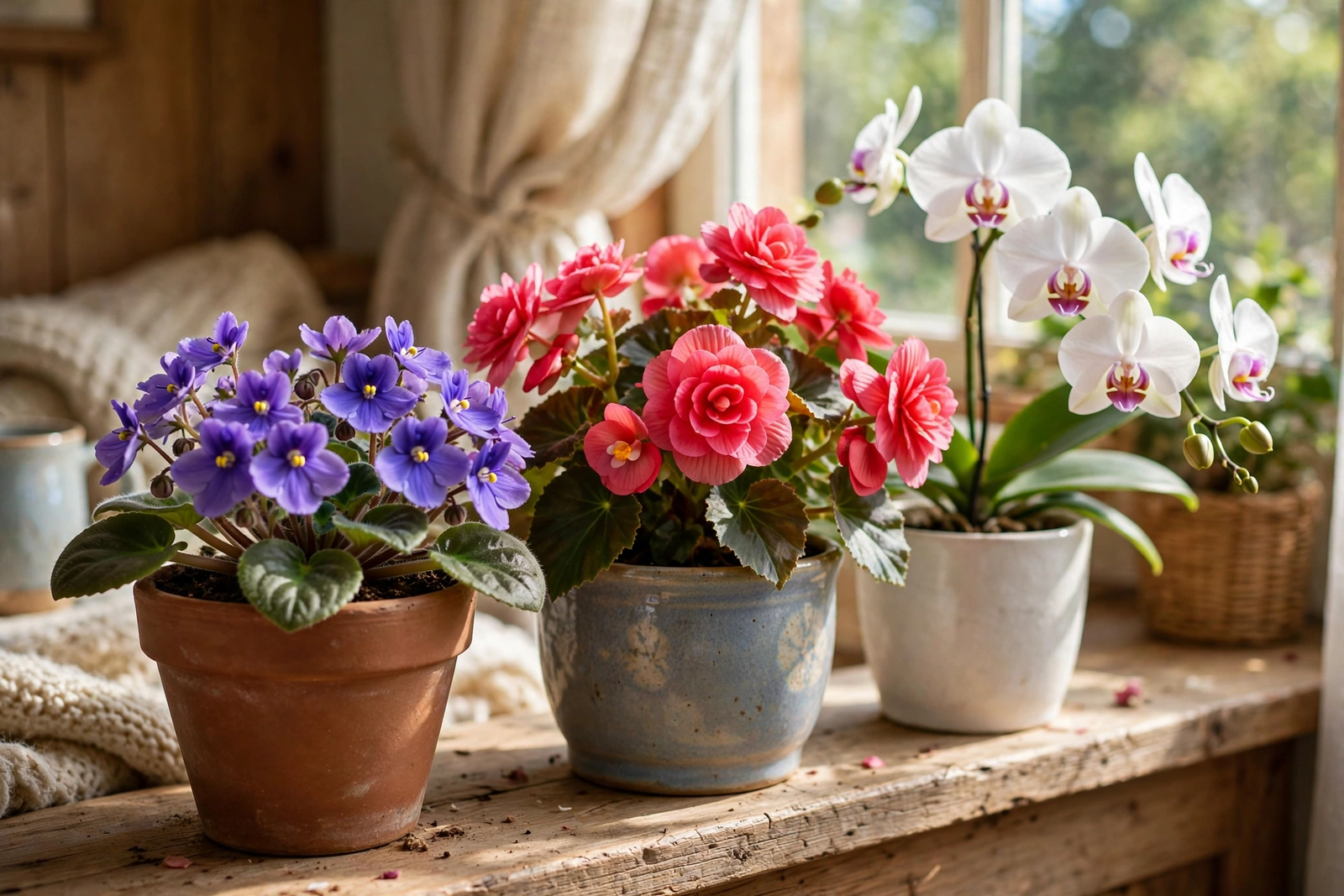
- African violets — bloom almost continuously in bright indirect light; a classic beginner win.
- Begonias (wax and rex) — colorful flowers or dramatic foliage; tolerant of average indoor conditions.
- Peace lilies — elegant white blooms; tolerate lower light and droop visibly when thirsty (a built-in reminder).
- Orchids (Phalaenopsis) — long-lasting blooms; need bright indirect light and a bark-based mix, not soil.
- Kalanchoe — clusters of bright flowers; a succulent that forgives missed waterings.
- Geraniums — need strong light but reward you with months of color; great on a sunny sill.
- Amaryllis and paperwhites — grown from bulbs; spectacular, easy winter blooms with almost no skill required.
- Jasmine (indoor varieties) — fragrant white flowers; needs bright light and consistent moisture.
Light: The Make-or-Break Factor
Light is the single biggest factor in indoor flowering. Most flowering plants need bright indirect light for at least 6 hours a day — typically an east or south-facing window with a sheer curtain, or a spot a few feet back from a bright window.
- Signs of too little light: leggy stretched stems, few or no buds, pale leaves.
- Signs of too much direct sun: scorched brown patches on leaves, wilting despite moist soil.
- Grow lights: if your windows are dim, a full-spectrum LED grow light on a timer (12–14 hours daily) works beautifully. Keep it 6–12 inches above the plant.
- Rotate pots a quarter turn weekly so growth stays even.
Containers, Soil, and Drainage
- Pots must have drainage holes. No exceptions — waterlogged roots rot, and root rot is the top killer of indoor flowers.
- Use quality potting mix, not garden soil, which compacts and drains poorly indoors. A peat- or coco-coir-based mix with perlite is ideal for most flowering plants.
- Match pot size to the plant. Slightly snug is better than oversized — too much soil stays wet and invites rot. Move up one pot size (about 2 inches wider) when roots fill the pot.
- Orchids are the exception: they need coarse bark mix in a ventilated pot, never standard potting soil.
Step-by-Step: Planting Your Indoor Flowers
- Choose healthy plants or seeds. Nursery transplants give fastest blooms. If starting from seed, check the packet — many flower seeds need bottom heat or light to germinate.
- Prep the pot. Cover the drainage hole with a shard or mesh (not gravel — it doesn’t help drainage), then fill one-third with moistened potting mix.
- Plant at the right depth. Set the plant so its crown sits at the same level as it was in the nursery pot. Burying the stem invites rot; planting too high dries roots.
- Fill and firm gently. Add mix around the roots, pressing lightly to remove air pockets. Leave about an inch of space below the rim for watering.
- Water thoroughly. Water until it flows from the drainage holes, then empty the saucer after 15 minutes. This first deep watering settles the soil.
- Place in appropriate light. Start in bright indirect light for a few days to let the plant acclimate, then move to its ideal spot.
For more on container gardening basics, see how to repot a houseplant and best indoor plants for low light.
Watering and Feeding
- The finger test: water when the top inch of soil feels dry. Most flowering plants prefer a slight dry-down between waterings over constant sogginess.
- Water deeply, then drain. Soak until water runs out the bottom; never let pots sit in standing water.
- Reduce watering in winter when growth slows and light is weaker.
- Feed monthly during the growing season with a balanced liquid fertilizer (like 10-10-10) at half strength, or a bloom-boosting formula higher in phosphorus once buds form. Skip feeding in winter dormancy.
- Humidity helps. Many flowering plants appreciate 40–60% humidity. Group plants together, use a pebble tray, or run a humidifier — misting gives only brief relief.
Forcing Bulbs Indoors for Winter Blooms
Bulbs like amaryllis, paperwhites, and hyacinths are the easiest indoor flowers of all:
- Amaryllis: plant the bulb with its top third above the soil in a snug pot; water sparingly until growth appears, then water regularly. Blooms in 6–8 weeks.
- Paperwhites: nest bulbs in a shallow dish of pebbles with water just touching the bulb bases. No soil needed; blooms in 3–5 weeks.
- Hyacinths: need 10–12 weeks of cold (a refrigerator works) before bringing into warmth to bloom.
The Old Farmer’s Almanac has excellent seasonal bulb-forcing calendars, and university extension services publish research-based houseplant care guides — see the University of Minnesota Extension. More inspiration is available at Better Homes & Gardens.
Common Problems and Fixes
- No blooms: usually insufficient light. Move closer to a window or add a grow light; also check you’re not overfeeding nitrogen.
- Yellow leaves: most often overwatering. Let soil dry more between waterings and check drainage.
- Buds dropping: caused by sudden temperature changes, drafts, or underwatering. Keep plants away from heating vents and cold windows.
- Pests (aphids, spider mites, fungus gnats): wipe leaves, rinse plants in the shower, or use insecticidal soap. Letting the top soil dry controls fungus gnats.
- Leggy growth: not enough light — prune back and relocate.
If you’d like to expand into edible indoor growing, see how to grow herbs indoors.
Deadheading for Continuous Blooms
To keep flowers coming, deadhead — snip off spent blooms just above the nearest healthy leaf or bud. This stops the plant from wasting energy on seed production and encourages new buds. Check plants weekly and remove faded flowers promptly. For plants like African violets and begonias, gently pinch or twist off old flower stems at the base. Light pruning of leggy stems in spring also promotes bushier growth and more flowering sites. Always use clean, sharp scissors to avoid spreading disease between plants.
Frequently Asked Questions
Can any flower be grown indoors?
No — many garden flowers need full sun, cold dormancy, or pollinators. Stick with proven indoor performers like African violets, begonias, peace lilies, orchids, kalanchoe, and forced bulbs for reliable blooms.
How much light do indoor flowers really need?
Most need bright indirect light for 6+ hours daily. A south or east-facing window usually works; in dim homes, a full-spectrum LED grow light for 12–14 hours a day is an excellent substitute.
Why are my indoor flowers not blooming?
The top causes are too little light, excess nitrogen fertilizer, and plants that are too young. Increase light first, switch to a bloom formula fertilizer, and be patient — some plants need a season to settle in.
How often should I water indoor flowers?
There’s no fixed schedule — check the soil. Water thoroughly when the top inch is dry, let excess drain, and water less in winter. Overwatering kills more indoor plants than underwatering.
Do indoor flowers need fertilizer?
Yes, during active growth (spring through fall). Potting mix nutrients run out in weeks, so feed monthly with diluted liquid fertilizer. Hold off in winter when growth slows.

One Comment