
Quick Answer: To get rid of fleas on humans, shower with warm water and soap, then wash your clothing and bedding in hot water (at least 130°F / 54°C) and dry on high heat. Treat bites with hydrocortisone cream or calamine lotion. Fleas do not live on humans — they bite and jump off — so the permanent fix is treating your pets with veterinarian-approved flea products and deep-cleaning your home to break the flea life cycle.
Finding fleas on your body is unpleasant, but humans are not a flea’s preferred host — they bite people opportunistically, usually when a pet brings them indoors. Getting fleas off yourself is the easy part; the real work is eliminating them from your home and pets. This guide covers both.
Why Do Fleas Bite Humans?
Fleas evolved to live on furry animals like cats, dogs, and rodents. Humans make poor permanent hosts — a flea that jumps on you will typically feed and jump off again within minutes.
Fleas usually bite people when:
- A dog or cat carries fleas indoors and the population explodes.
- You move into a home where a previous pet left flea eggs in the carpets.
- You spend time in a yard, crawl space, or basement with a wildlife or stray-animal flea problem.
- An infestation gets so heavy that fleas bite anything warm that walks by.
Understanding this matters because it tells you where to aim your efforts: flea eggs, larvae, and pupae live in carpets, rugs, upholstery, and pet bedding — not on your body. If you only treat yourself, the bites will keep coming. For a full breakdown of eliminating them everywhere, see our guide on how do you get rid of fleas what you need to know“>how to get rid of fleas throughout your home.
Step 1: Get the Fleas Off Your Body
This is the fastest step and takes about 15 minutes.
- Take a warm shower with soap. Fleas cannot survive soapy water — the soap breaks the surface tension they rely on, and they drown. Lather thoroughly, including your hair, and rinse well.
- Scrub gently with a washcloth. This dislodges fleas clinging to skin or trapped in body hair.
- Put on completely clean clothes from a drawer or closet — not the clothes you just took off, which may still harbor fleas.
Regular soap and water does the job — pet flea shampoos can irritate human skin, so skip those.
Step 2: Identify and Treat Flea Bites
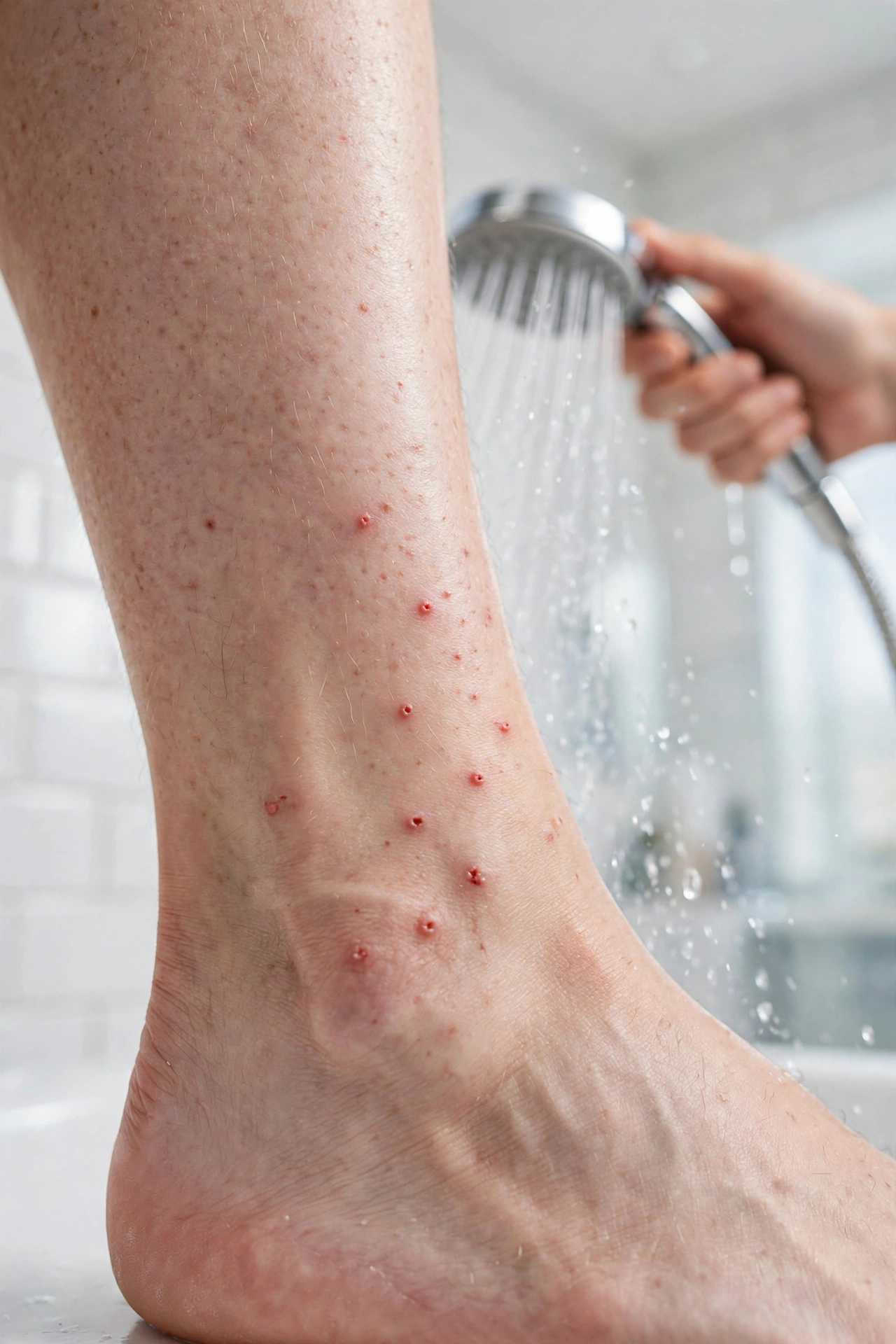
Flea bites look like small, red, raised bumps, often appearing in clusters of three or four (sometimes called the “breakfast, lunch, and dinner” pattern). They itch intensely and show up most often around the ankles, lower legs, waistline, and other warm, constricted areas where clothing fits snugly.
Flea bites resemble bed bug bites, which appear on exposed skin after sleeping — how do i check for bed bugs at a hotel what you need to know“>how to check for bed bugs explains how to tell them apart.
To treat flea bites:
- Wash the area with soap and water, then apply hydrocortisone cream or calamine lotion to calm itching.
- Take an oral antihistamine if itching is severe or widespread.
- Do not scratch — broken skin invites bacterial infection, the most common complication of flea bites. Use a cold compress for 10–15 minutes on badly swollen bites.
See a doctor if you notice spreading redness, warmth, pus, red streaks, fever, or an allergic reaction such as hives or swelling beyond the bite area.
Step 3: Kill Fleas in Your Clothing and Bedding
Anything you wore or slept in while fleas were active needs to be decontaminated:
- Wash in hot water — at least 130°F (54°C). This temperature kills fleas at every life stage, including eggs.
- Dry on the highest heat setting for at least 30 minutes. Heat is lethal to fleas and their eggs.
- Bag items you cannot wash immediately in sealed plastic bags so fleas cannot escape into other rooms.
- Vacuum your mattress, box spring, and bed frame, paying attention to seams and tufts where flea dirt and eggs collect.
Step 4: Treat Your Pets — the Real Source
The fleas biting you almost certainly arrived on a dog or cat. Until the animals are treated, the bites will continue no matter how many showers you take.
- Treat every pet in the household, not just the itchy one — fleas spread easily between animals.
- Use veterinarian-approved products (oral or topical treatments with fipronil, selamectin, or fluralaner). Ask your vet which suits your pet’s species, age, and weight.
- Never use dog flea products on cats — some contain permethrin, which can be fatal to cats.
- Keep up monthly prevention year-round. Fleas survive indoors through winter.
The U.S. Environmental Protection Agency offers guidance on controlling fleas and ticks around your home and choosing products safely.
Step 5: Break the Flea Life Cycle in Your Home
Only about 5% of a flea population is visible adults — the other 95% (eggs, larvae, pupae) hides in your environment. Vacuuming is your most powerful weapon:
- Vacuum daily for 2–3 weeks — carpets, rugs, upholstery, baseboards, and under furniture. Vibration stimulates pupae to hatch, exposing new adults.
- Empty the vacuum outside after each session so captured fleas cannot escape back indoors.
- Wash pet bedding weekly in hot water; dry on high heat.
- Steam-clean carpets if possible — heat above 140°F kills all flea life stages on contact.
- For severe infestations, use an insect growth regulator (IGR) with methoprene or pyriproxyfen to stop larvae maturing. Follow label directions exactly.
University extension entomologists provide detailed, research-backed flea control strategies — see the University of Kentucky’s flea control guide and the CDC’s flea information page.
How to Prevent Fleas From Coming Back
- Keep pets on year-round veterinarian-recommended flea prevention.
- Mow regularly and clear leaf litter where outdoor fleas breed.
- Comb-check pets after outdoor time in warm months.
- Inspect secondhand furniture and rugs before bringing them inside.
- Fix rodent issues fast — mice can carry fleas indoors (see how do i get rid of mice what you need to know“>getting rid of mice).
Frequently Asked Questions
Do fleas live on human hair or skin?
No. Unlike lice, fleas do not live on humans — they feed and jump off within minutes. Insects staying in your hair are likely lice, not fleas.
Can fleas spread diseases to humans?
Rarely in the modern US, but fleas can transmit murine typhus (and historically, plague). The bigger risk is skin infection from scratching — controlling fleas on pets and in the home is the best protection.
How long do flea bites last?
Most flea bites stop itching within a few days and fade completely in one to two weeks. Bites that worsen after several days, develop pus, or show red streaks may be infected and should be checked by a clinician.
Why do fleas bite me but not other people in my house?
Fleas target body heat, carbon dioxide, and movement — the first warm body crossing a carpet gets the most bites. It is mostly about exposure and timing, not personal chemistry.
When should I call a pest control professional?
Call a professional if you still see adult fleas after 3–4 weeks of diligent vacuuming, laundering, and pet treatment, or if the infestation covers multiple rooms. Professionals have access to commercial-grade IGRs and can treat wall voids and crawl spaces you cannot reach.





One Comment