
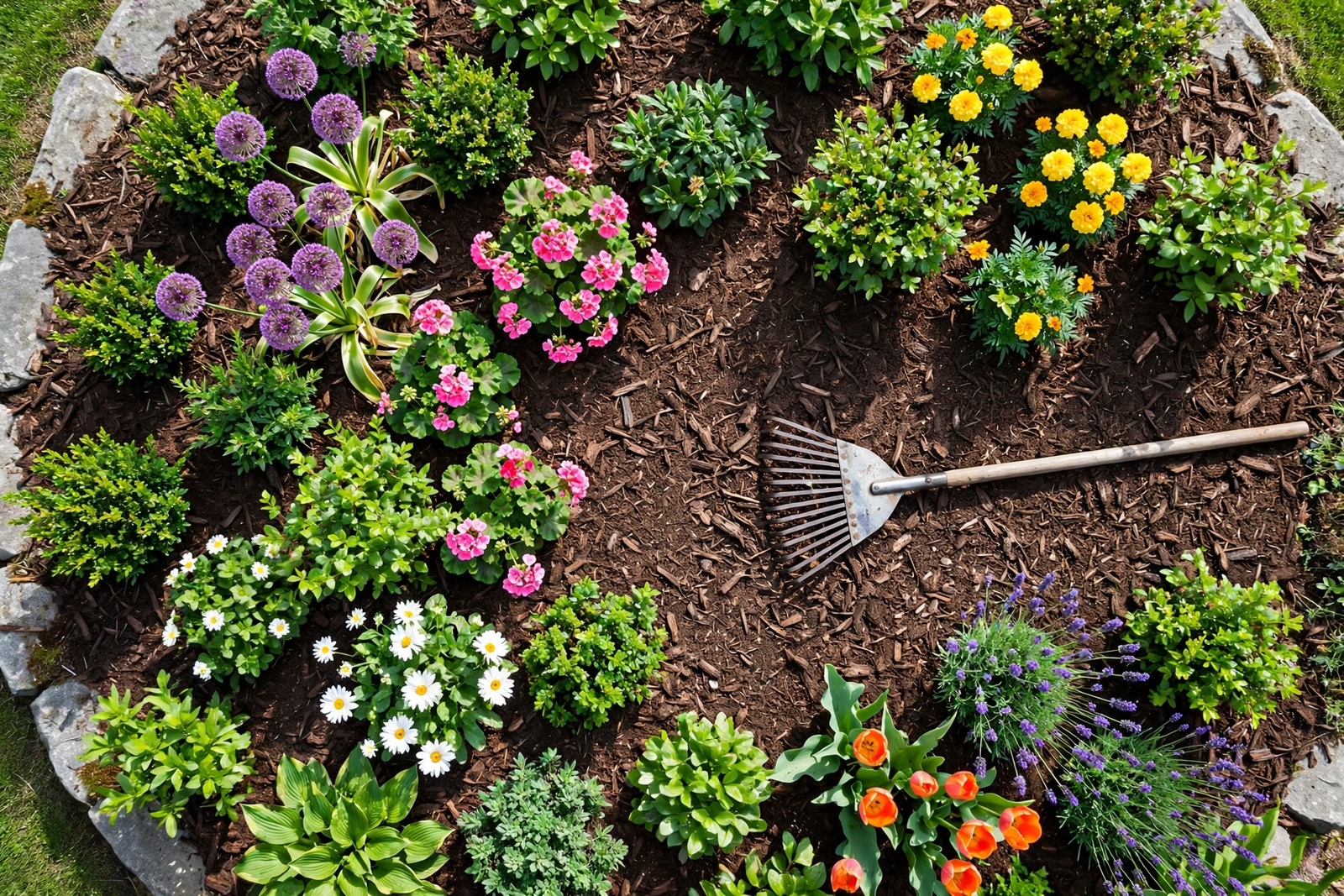
Quick Answer: To figure out how much mulch you need, multiply your bed’s length × width (in feet) × desired depth (in inches), then divide by 324. The result is the number of cubic yards to buy. As a rule of thumb, one cubic yard of mulch covers about 100 square feet at 3 inches deep — the standard depth for most flower and shrub beds.
Ordering mulch without doing the math first leaves you with a patchy bed or a mountain of leftovers on the driveway. The calculation takes under a minute. Here is the exact formula, worked examples, a quick-reference table for common bed sizes, and 2026 cost guidance.
The Mulch Formula (With Worked Examples)
The formula is:
(Length in feet × Width in feet × Depth in inches) ÷ 324 = Cubic yards needed
The number 324 comes from converting cubic feet to cubic yards (27 cubic feet per yard) and inches to feet (12 inches per foot): 27 × 12 = 324.
Example 1 — small flower bed: A bed 8 ft long × 4 ft wide, mulched 3 inches deep.
(8 × 4 × 3) ÷ 324 = 96 ÷ 324 = 0.30 cubic yards (about one-third of a yard).
Example 2 — foundation planting: A bed 20 ft long × 5 ft wide, mulched 3 inches deep.
(20 × 5 × 3) ÷ 324 = 300 ÷ 324 = 0.93 cubic yards (round up to 1 yard).
Example 3 — large backyard bed: An area 25 ft × 12 ft, mulched 4 inches deep for shrubs.
(25 × 12 × 4) ÷ 324 = 1,200 ÷ 324 = 3.7 cubic yards (order 4 yards).
For irregular or curved beds, break the area into rectangles, calculate each, and add them together. For a roughly circular bed, use 3.14 × radius × radius for the square footage, then multiply by depth in inches and divide by 324.
Quick-Reference Mulch Calculator Table
Skip the math with this table. Find your bed size, pick your depth, and read off the cubic yards:
| Bed size | 2 inches deep | 3 inches deep | 4 inches deep |
|---|---|---|---|
| 4 × 4 ft | 0.1 yd³ | 0.15 yd³ | 0.2 yd³ |
| 4 × 8 ft | 0.2 yd³ | 0.3 yd³ | 0.4 yd³ |
| 5 × 10 ft | 0.3 yd³ | 0.45 yd³ | 0.6 yd³ |
| 6 × 12 ft | 0.45 yd³ | 0.65 yd³ | 0.9 yd³ |
| 8 × 12 ft | 0.6 yd³ | 0.9 yd³ | 1.2 yd³ |
| 10 × 10 ft | 0.6 yd³ | 0.9 yd³ | 1.2 yd³ |
| 10 × 20 ft | 1.2 yd³ | 1.85 yd³ | 2.5 yd³ |
| 12 × 20 ft | 1.5 yd³ | 2.2 yd³ | 3.0 yd³ |
| 15 × 20 ft | 1.85 yd³ | 2.8 yd³ | 3.7 yd³ |
Always round up and add 5–10% extra for settling, uneven ground, and spillage. Running short mid-job is far more annoying than having half a yard left over.
How Deep Should Mulch Be?
- Flower and vegetable beds: 2–3 inches. This suppresses weeds and holds moisture without suffocating shallow roots. If you are planning the bed itself, our guide on how to start a vegetable garden step by step guide 2026“>starting a vegetable garden covers soil prep before mulching.
- Shrubs and perennials: 3 inches is the sweet spot for most landscape plantings.
- Trees: 3–4 inches, spread in a wide donut — never piled against the trunk (the infamous “mulch volcano,” which traps moisture against bark and invites rot and pests).
- Never exceed 4 inches. Excessively deep mulch blocks water and oxygen from reaching roots.
Keep mulch 2–3 inches away from plant stems and tree trunks, and about 6 inches away from your home’s foundation or siding to discourage pests.
Bulk vs. Bagged Mulch: Cost Comparison
Once you know your cubic yardage, the next question is how to buy it:
- Bagged mulch (typically 2-cubic-foot bags, $2–$5 each in 2026): convenient for small jobs. Since one cubic yard equals 27 cubic feet, you need 13.5 bags per cubic yard. A 1-yard job in bags costs roughly $30–$65.
- Bulk mulch ($25–$60 per cubic yard, varies by type and region): far cheaper per yard for jobs over about 2 cubic yards. Most suppliers deliver for a flat fee ($30–$75), often free above a minimum order.
- Break-even point: for anything over ~2 cubic yards, bulk delivery almost always wins. Under 1 yard, bags are simpler.
Basic shredded hardwood or pine bark is cheapest; dyed mulches cost more and fade within a season; cedar and cypress run highest.
Step-by-Step: How to Apply Mulch
- Measure and calculate using the formula above, then order 5–10% extra.
- Weed the bed thoroughly and edge it with a spade for a crisp line that keeps mulch (and grass) where it belongs.
- Water the soil before mulching so moisture is locked in underneath.
- Spread evenly with a rake or pitchfork to your target depth. Check depth in several spots with a ruler — eyeballing consistently underestimates.
- Pull mulch back from stems, trunks, and the base of perennials.
- Water lightly after spreading to settle the mulch and prevent it from blowing away.
Common Mulch Mistakes to Avoid
- The mulch volcano: piling mulch against tree trunks causes bark decay and rodent damage. Think donut, not volcano.
- Using fresh wood chips in vegetable beds: uncomposted wood chips can temporarily tie up soil nitrogen as they decompose. Aged or composted mulch is safer — and if your plants look nitrogen-starved, see how to add nitrogen to soil step by step guide 2026“>how to add nitrogen to soil.
- Mulching over thick weed fabric: landscape fabric under organic mulch prevents the mulch from improving the soil and eventually weeds root into it anyway. Newspaper or cardboard sheet-mulching is a better weed barrier.
- Never topping up: mulch decomposes. Check depth each spring and top up to maintain 2–3 inches rather than letting it thin to nothing.
For authoritative mulching guidance, see the University of Minnesota Extension’s yard and garden resources and the Arbor Day Foundation’s tree mulching guides.
Frequently Asked Questions
How often should I reapply mulch?
Most organic mulches decompose significantly within 1–2 years. Top up each spring to maintain your target depth — you rarely need to remove old mulch first, just keep total depth under 4 inches.
Can I put new mulch over old mulch?
Yes, as long as the combined depth stays at or below 4 inches and the old mulch is not matted into a water-repelling crust. Break up any crusty layers with a rake first.
Does mulch attract termites?
Termites can tunnel through any mulch, but mulch itself does not attract them to your home — moisture and wood-to-soil contact do. Keep mulch 6 inches below siding and a few inches away from the foundation, and termite risk from mulching is minimal.
What is the cheapest type of mulch?
Free municipal wood chips (many cities give away chips from tree trimming) are cheapest, followed by bulk shredded hardwood or pine bark. For ornamental beds, our guide on how to grow flowers indoors step by step guide 2026“>growing flowers pairs well with a light bark mulch top-dressing.
How much does a cubic yard of mulch weigh?
Typically 400–800 pounds depending on type and moisture content — dry shredded bark is lighter, wet hardwood mulch is heavier. Make sure your delivery spot (and your wheelbarrow plan) can handle it.



One Comment