
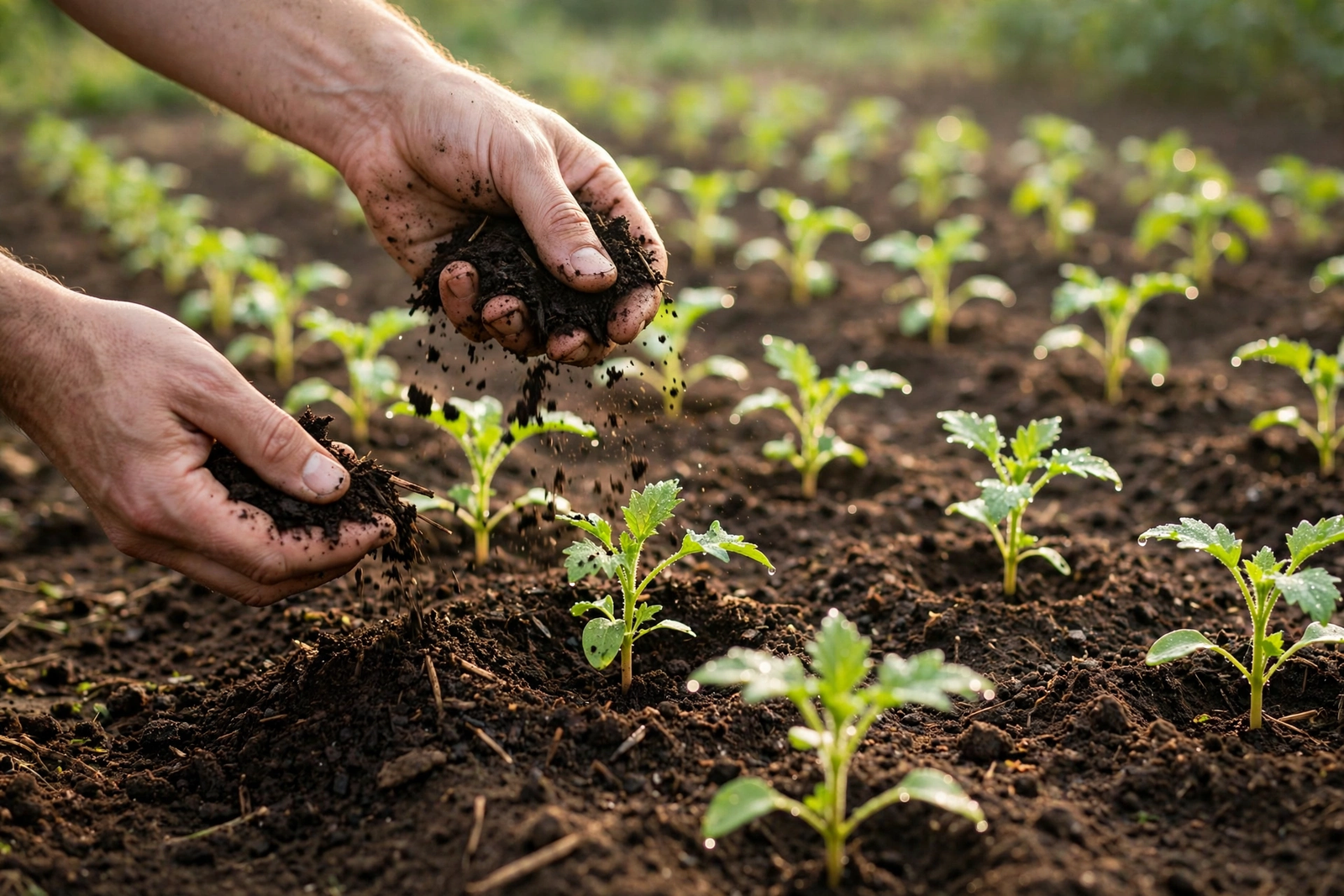
Quick Answer: To add nitrogen to soil, first test your soil to confirm a deficiency, then apply a nitrogen source matched to your needs. Fast-acting options include blood meal (organic) and ammonium sulfate or urea (synthetic). Slow-release options include composted manure and legume cover crops. Apply in spring or early summer at label rates, water it in, and never over-apply: excess nitrogen burns plants, leaches into groundwater, and promotes weak, pest-prone growth.
Nitrogen is the nutrient plants consume in the largest quantity. It drives leafy green growth, powers photosynthesis through chlorophyll, and is a core building block of plant proteins. When soil runs short, plants tell you clearly: yellowing older leaves, stunted growth, and disappointing harvests.
But adding nitrogen is not as simple as dumping fertilizer. The right source, rate, and timing matter enormously, and overdoing it causes real harm. This step-by-step guide covers how to add nitrogen to soil correctly in 2026, from soil testing through application.
Step 1: Test Your Soil First
Yellowing leaves can signal nitrogen deficiency, but they can also indicate overwatering, compacted soil, pH problems, or other nutrient deficiencies. A soil test tells you exactly what your soil needs and, just as importantly, what it does not need.
- Get a lab test. Your local cooperative extension service offers inexpensive soil testing, typically $15 to $30, with results showing nitrogen, phosphorus, potassium, pH, and organic matter. Find testing guidance through university extension resources.
- Test in fall or early spring before the growing season, so you have results in time to plan amendments.
- Check pH too. Nitrogen uptake drops sharply in very acidic or very alkaline soil. Most vegetables prefer a pH between 6.0 and 7.0. Fixing pH can solve what looks like a nitrogen problem.
If you are setting up new beds, read our how to start a vegetable garden step by step guide 2026“>step-by-step vegetable garden guide for soil preparation basics before you plant.
Step 2: Choose Your Nitrogen Source
Nitrogen sources fall into two broad families. Neither is universally better; the right choice depends on your speed needs, philosophy, and soil condition.
Organic nitrogen sources
Organic sources release nitrogen slowly as soil microbes break them down, feeding plants over weeks to months while building soil health.
- Blood meal (12-0-0): The fastest-acting organic option, with about 12% nitrogen by weight. Excellent for a quick green-up. Apply sparingly: it is potent and can burn plants. Also deters rabbits and deer with its scent.
- Composted manure (roughly 1-1-1): Low in nitrogen but improves soil structure, water retention, and microbial life. Use how much mulch do i need calculator cost guide 2026“>compost and mulch coverage guideed, never fresh, manure to avoid burning plants and introducing pathogens.
- Legume cover crops: Clover, vetch, peas, and beans partner with rhizobia bacteria to pull nitrogen from the air and fix it in the soil. Plant in fall, then till the crop into the soil in spring before planting. This is the most sustainable long-term strategy.
Synthetic nitrogen fertilizers
Synthetic fertilizers deliver precise, immediately available nitrogen but do nothing for soil biology and carry higher burn and leaching risks.
- Ammonium sulfate (21-0-0): High nitrogen, fast-acting, and acidifying, useful for alkaline soils. About 21% nitrogen by weight.
- Urea (46-0-0): The most concentrated common nitrogen fertilizer at 46% nitrogen. Very economical but easy to over-apply; always follow label rates precisely.
USDA Natural Resources Conservation Service offers guidance on nutrient management that balances productivity with environmental protection.
Step 3: Calculate Application Rates
This is where most gardeners go wrong. More is not better with nitrogen.
- Follow the soil test recommendation first. It is calibrated to your actual soil.
- General vegetable garden guideline: Most vegetables need roughly 0.1 to 0.2 pounds of actual nitrogen per 100 square feet per application, with 2 to 3 applications per season for heavy feeders like corn and tomatoes.
- Convert using the N-P-K numbers. A 50-pound bag of 10-10-10 contains 5 pounds of nitrogen (10%). Blood meal at 12% nitrogen: about 1 pound per 100 square feet delivers roughly 0.12 pounds of actual nitrogen.
Step 4: Time Your Application
Nitrogen is mobile in soil and leaches away with rain and irrigation, so timing matters:
- Spring is prime time. Apply the main dose as plants enter active growth, not months before planting when rain will wash it away.
- Split applications. For heavy feeders, divide the seasonal total into 2 or 3 smaller doses (at planting, mid-season side-dressing) rather than one big dose. This feeds plants steadily and reduces leaching.
- Side-dress growing plants by spreading granular fertilizer in a band 4 to 6 inches from stems, then watering it in. Never pile fertilizer against stems.
Step 5: Apply It Correctly
- Granular fertilizers: Broadcast evenly over the bed or band along rows, lightly rake into the top inch of soil, and water thoroughly. Watering dissolves granules and carries nitrogen to the root zone.
- Liquid feeds (fish emulsion, soluble synthetics): Mix per label directions and apply as a soil drench around the base of plants, or as a foliar spray in the cool of morning. Foliar feeding gives the fastest correction of visible deficiency.
- Manure and compost: Spread 1 to 2 inches over beds and work into the top few inches of soil several weeks before planting.
- Wear gloves when handling blood meal, synthetic fertilizers, and manure. Wash hands afterward and keep products away from children and pets.
Warning Signs of Over-Fertilization
Excess nitrogen is one of the most common gardening mistakes. Watch for:
- Burned leaf edges and wilting despite moist soil: fertilizer salts drawing water out of roots.
- Explosive leafy growth with no fruit or flowers: Tomatoes and peppers producing jungle foliage but few tomatoes or peppers.
- Weak, floppy stems that attract aphids and other pests; over-fertilized plants are pest magnets.
If you over-apply, water deeply to leach excess salts below the root zone, and hold off on further feeding. Beyond the garden, excess nitrogen fertilizer contributes to water pollution, so precise application protects local waterways as well as your plants.
Frequently Asked Questions
How do I know if my soil needs nitrogen?
Classic signs are yellowing of older, lower leaves first (nitrogen is mobile, so the plant moves it to new growth), stunted plants, and poor yields. But these symptoms overlap with other problems, so confirm with a soil test from your local extension service before treating.
What is the fastest way to add nitrogen to soil?
Blood meal scratched into the soil and watered in, or a liquid fish emulsion soil drench, corrects deficiency fastest among organic options. Synthetic ammonium sulfate or urea act even faster. For near-instant results on visibly struggling plants, foliar feeding with diluted fish emulsion works within days.
Can I add too much nitrogen to soil?
Yes, easily. Excess nitrogen burns roots, produces all leaves and no fruit, creates weak pest-prone growth, and leaches into groundwater. Always follow soil test recommendations and product label rates, and split large doses into smaller applications.
Should I use organic or synthetic nitrogen fertilizer?
Organic sources feed soil biology and release slowly, reducing burn and leaching risk; they are ideal for long-term soil health. Synthetics give precise, immediate nutrition at lower cost. Many successful gardeners use both: compost and cover crops as the foundation, with targeted synthetic or fast organic doses when plants need a quick boost.




One Comment