Quick Answer: Tillandsia, commonly called air plants, thrive on bright indirect light, a weekly 20–30 minute soak in room-temperature water, and plenty of air circulation. Feed monthly with a diluted bromeliad fertilizer, and always shake off excess water after soaking. Most air plants die from rot caused by overwatering and poor airflow — not from being forgotten.
Tillandsia have a reputation for being indestructible, the plant you can supposedly ignore forever. That is half true: they really do survive without soil, pulling moisture and nutrients from the air through tiny scales on their leaves. But “low maintenance” is not “no maintenance.” Most air plants that die indoors die from two preventable mistakes: staying wet too long, or getting too little light.
The good news: once you learn the simple routine — soak, dry, repeat — Tillandsia are genuinely easy keepers. Here is everything you need to know.
What Exactly Are Tillandsia?
Tillandsia are a genus of around 650 species in the bromeliad family, native to the forests, mountains, and deserts of the Americas. They are epiphytes, meaning they grow attached to trees, rocks, or even telephone wires rather than rooted in soil.
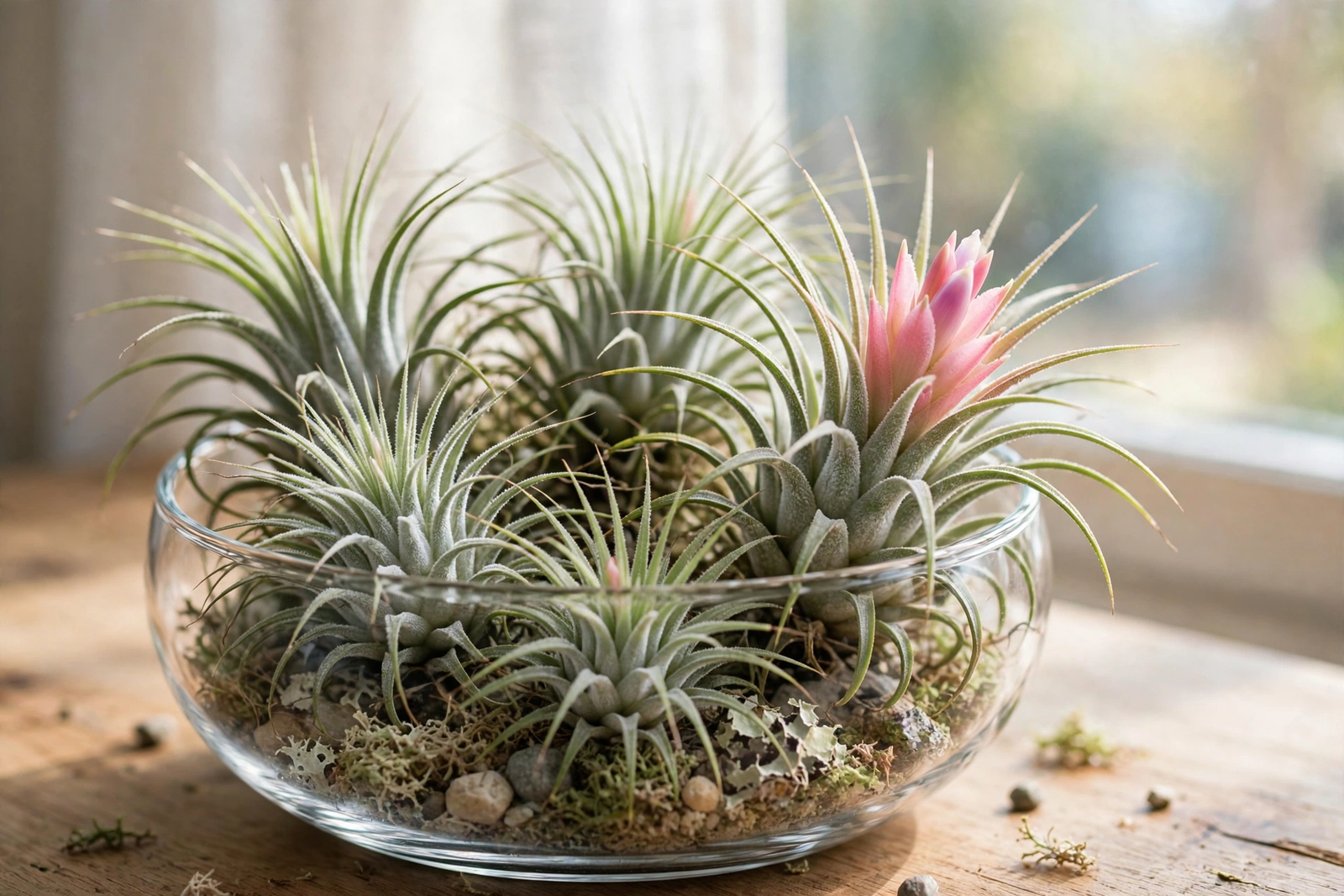
Instead of absorbing roots, Tillandsia use specialized leaf structures called trichomes — the silvery, fuzzy coating on many varieties — to capture moisture and nutrients from rain, dew, and dust. Their small wiry roots exist only to grip surfaces. That is why you can display them in open glass bowls, on driftwood, or in hanging wire holders with no pot or soil at all, making them one of the most versatile how to grow flowers indoors step by step guide 2026“>indoor plants you can grow.
Light: Bright but Indirect
Light is the most underestimated factor in Tillandsia care. In the wild they grow in dappled forest canopies — always with strong, filtered light. Place yours within a few feet of an east- or west-facing window, or a bright south-facing window with a sheer curtain. They can survive lower light for a while, but growth stalls and rot risk rises. Avoid harsh direct midday sun through glass, which scorches leaves.
Silvery, stiff-leafed species such as Tillandsia xerographica handle more sun and drier air; greener, softer types like Tillandsia ionantha prefer slightly less light and more frequent watering.
How to Water Air Plants: Soaking vs. Misting
Because Tillandsia drink through their leaves, how you deliver water matters enormously. There are two methods, and knowing when to use each is the core skill of air plant care.
The Weekly Soak (Best Method for Most)
Submerge your air plants in room-temperature water for 20–30 minutes once a week. Use rainwater or tap water that has sat out overnight so chlorine dissipates. After soaking, gently shake each plant upside down to remove trapped water, then set it where air moves freely so it dries completely within four hours.
This drying step is non-negotiable. Water sitting in the plant’s center invites rot — a mushy, brown base that pulls apart easily. A plant that dries fully after every soak can live for years.
Misting as a Supplement
Mist 2–3 times a week between soaks, especially in dry indoor air or during winter heating season. Misting alone is rarely enough — think of it as a drink of water while soaking is a full meal. Soak twice weekly in hot, dry summers; scale back in cool, humid winters when plants dry more slowly.
Air Circulation Is Non-Negotiable
Tillandsia evolved on breezy branches, and stagnant air keeps leaves wet too long after watering. Place them where air moves — near an open window, under a ceiling fan on low, or simply not crammed into a sealed container. Enclosed terrariums are a common killer because they trap humidity; if you love the look, use a wide-open bowl with no lid.
Feeding Your Tillandsia
Once a month, add a bromeliad or air-plant fertilizer to your soak water at quarter strength. Avoid products high in copper or boron, which are toxic to Tillandsia, and skip urea-based nitrogen, which they cannot absorb. Fertilizer encourages stronger growth, richer color, and blooming — an unfed plant survives, but a fed one thrives.
The Bloom Cycle and Pups
Each Tillandsia rosette blooms once in its lifetime, usually after 1–3 years of good care, often blushing red or pink first. After blooming, the mother plant slowly declines — but produces offsets called “pups” around her base. Leave pups attached until they are one-third the mother’s size, then gently twist them off, or leave the cluster intact for a clump that blooms in waves.
Common Tillandsia Care Mistakes
- Never letting them dry: Soaking without a full drying period is the number one killer.
- Using softened water: Softeners swap minerals for sodium, which damages leaves. Use untreated tap, rain, or filtered water.
- Planting in soil: Soil traps moisture against the base and causes rot.
- Glueing the crown: Glue on the base is fine for mounting, but never on the center where new growth emerges.
- Ignoring seasons: Heated winter air is extremely dry — mist more in winter and keep plants out of scorching summer windows.
- Copper exposure: Copper wire and copper fungicides are toxic to Tillandsia. Use aluminum, stainless steel, or fishing line instead.
With the soak-dry-feed rhythm in place, Tillandsia ask for less than almost any other houseplant. For more greenery ideas, see our guide to how to grow flowers indoors step by step guide 2026“>growing flowers indoors step by step. Authoritative background on epiphytes is available from the USDA PLANTS Database and your local university extension service.
Frequently Asked Questions
How often should I water my air plant?
Soak most Tillandsia for 20–30 minutes once a week, plus misting 2–3 times weekly in dry conditions. Silvery xeric types need less water; greener types appreciate more. Always let the plant dry completely within four hours.
Why is my air plant turning brown?
Brown, crispy leaf tips usually mean underwatering or dry air — soak more often. A brown, mushy base means rot from water sitting too long; remove affected leaves and improve airflow immediately.
Do air plants need soil or pots?
No. Tillandsia absorb water and nutrients through their leaves. Mount them on wood, hang them in wire, or set them in open bowls — soil traps moisture and causes rot.
How do I get my air plant to bloom?
Provide bright indirect light, consistent weekly soaking, good airflow, and monthly fertilizer. Most bloom after 1–3 years of healthy growth. There is no way to force an immature plant to flower.
Are air plants safe for pets?
Yes. Tillandsia are non-toxic to cats and dogs according to the ASPCA, making them one of the safest decorative plants for pet owners.