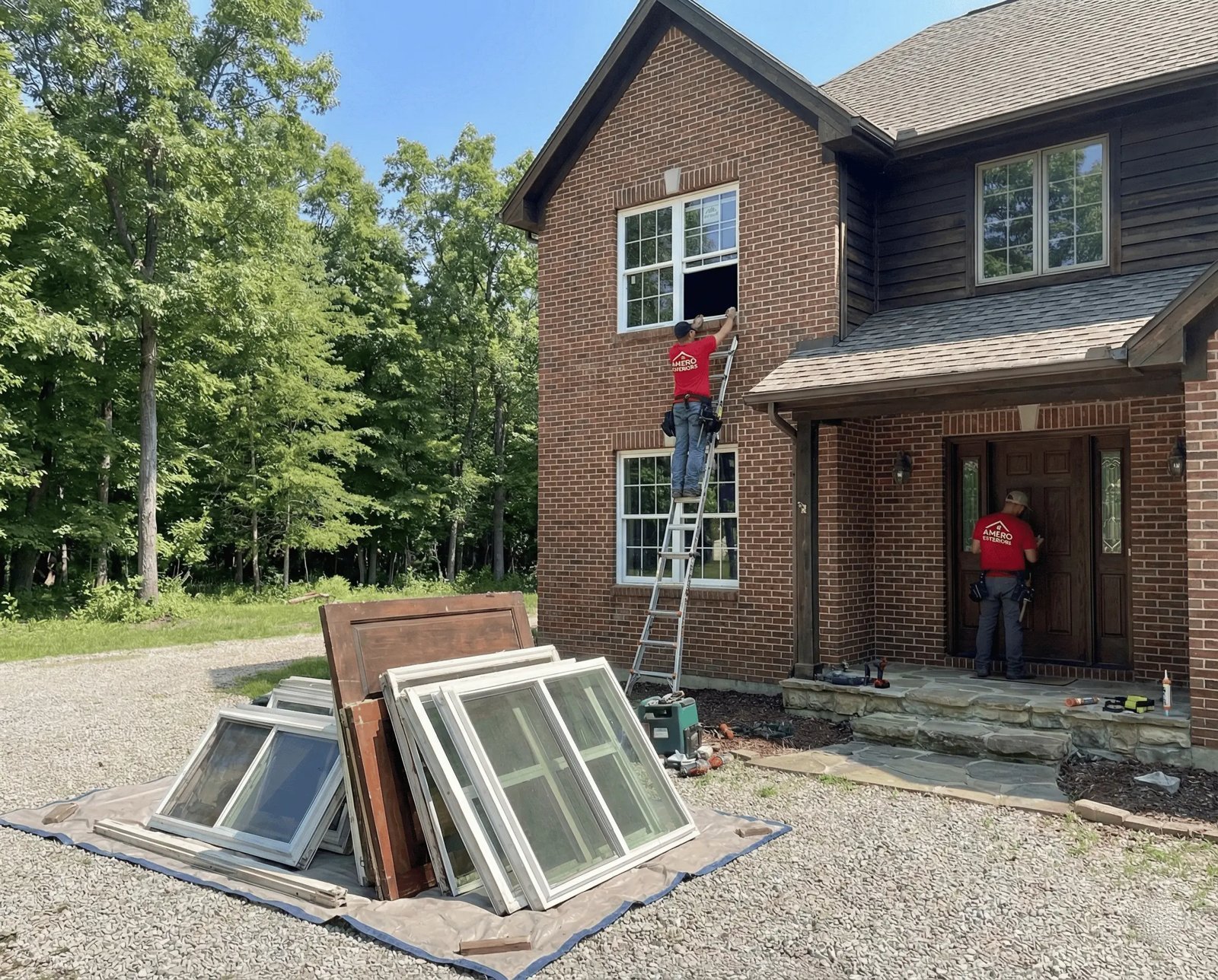
Your windows are drafty, foggy between the panes, or just plain stuck — and you’re wondering whether replacement is worth it and what it’ll cost. Fair questions, because window replacement is one of the pricier home projects. So how much does it cost to replace old windows in a house? The national average lands around $600–$1,200 per window installed, with most whole-house projects (10–15 windows) running $8,000–$18,000. Here’s what moves you up or down that range, and how to spend wisely.
Per-Window Costs by Type and Material
Window prices vary enormously by style and frame material. Typical installed costs per window:
- Vinyl, single-hung: $400–$700 — the budget workhorse; good value, low maintenance
- Vinyl, double-hung: $500–$900 — most popular replacement choice
- Wood: $800–$1,500+ — beautiful, traditional, but needs painting and maintenance
- Fiberglass: $700–$1,200 — extremely durable, low expansion/contraction, great in extreme climates
- Aluminum: $500–$1,000 — strong and slim-profiled, but poor insulator (avoid in cold climates unless thermally broken)
- Bay/bow windows: $2,000–$5,000+ — structural work involved
- Picture/fixed windows: $400–$800 — no moving parts, cheaper
Double-pane with low-E coating and argon fill is the sensible baseline in 2026 — triple-pane adds 15–25% and only pays off in very cold climates. Check the ENERGY STAR window ratings for your climate zone before choosing.
What Drives the Price Up (or Down)
- Number of windows: More windows = better per-window pricing. Contractors discount bulk jobs significantly — replacing 15 at once can cost 20% less per window than doing 3.
- Full-frame vs. insert replacement: Insert (pocket) replacements fit inside the existing frame: cheaper ($$$). Full-frame replacements remove everything down to the studs: 20–50% more, but necessary if frames are rotted.
- Labor market: Installation is roughly half the total cost. Get 3–4 quotes; prices vary wildly between companies.
- Custom sizes and shapes: Standard sizes are dramatically cheaper. Arches, circles, and odd sizes cost 2–3x.
- Second stories: Ladder/scaffold work adds labor cost.
- Lead paint: Pre-1978 homes may need EPA lead-safe practices, adding cost but legally required.
Will New Windows Pay for Themselves?
Honest answer: partially, and slowly. The Department of Energy estimates efficient windows save $100–$600/year on energy depending on climate and what you’re replacing. At $10,000 installed, that’s a 15–30 year simple payback on energy alone. But energy isn’t the whole story:
- Comfort: No more drafts, cold spots, or condensation — the daily quality-of-life gain is real and immediate.
- Resale value: Window replacement recoups roughly 60–70% at resale, among the better returns for major projects.
- Noise reduction: Modern double-pane windows noticeably cut outside noise — huge if you’re near a road.
- UV protection: Low-E coatings protect floors and furniture from fading.
Replace windows because they’re failing (fogged, rotted, inoperable, drafty) — not purely as an investment. The math works when comfort and function join the equation.
Cheaper Alternatives Worth Considering First
Before committing $10,000+, ask whether you actually need full replacement:
- Drafty but sound windows? Weatherstripping, caulking, and storm windows cost a few hundred dollars total and fix most drafts. See our guide to sealing window gaps for winter.
- Fogged double-pane? The seal failed. Glass-only replacement (keeping the frame) costs a fraction of full replacement.
- Stuck or ugly? Restoration — reglazing, new hardware, fresh paint — can revive wood windows for far less.
And if energy efficiency is the main goal, windows are rarely the best first dollar — attic insulation and air sealing typically save more per dollar spent.
How to Hire Right
- Get at least 3 detailed quotes specifying window brand, model, glass package, and full-frame vs. insert.
- Check reviews and ask for local references — then actually call them.
- Confirm licensing, insurance, and warranty terms (lifetime on vinyl windows is common from reputable brands).
- Never pay more than 30–50% upfront.
- Ask how they handle interior/exterior trim repair — surprise trim damage is a classic change-order gotcha.
Understanding Window Ratings and Labels
Window shopping involves alphabet soup — here’s what actually matters on the NFRC label. U-factor measures heat loss (lower is better; look for 0.30 or below in most climates, 0.25 or below in cold ones). Solar Heat Gain Coefficient (SHGC) measures how much sun heat comes through (lower blocks more heat — good in hot climates; higher welcomes winter sun — good in cold climates). Visible Transmittance (VT) is how much light comes through — higher means brighter interiors.
Air Leakage (AL) rating matters more than people realize — 0.30 or lower is standard; the best windows hit 0.10. A window with great U-factor but poor air sealing still drafts. And Condensation Resistance (CR) scores 1–100; higher means less interior condensation in winter.
The practical takeaway: match the ratings to your climate, not to the salesperson’s pitch. A Florida home wants low SHGC; a Minnesota home wants low U-factor and high SHGC. ENERGY STAR’s climate-zone map tells you the right targets for your zip code — bring those numbers to every quote and watch how quickly the conversation gets honest.
Financing, Incentives, and Timing the Purchase
Window replacement is expensive enough that how you pay matters. Federal tax credits (currently up to 30% for qualifying energy-efficient windows, capped annually — verify current rules at energystar.gov before counting on them) can take thousands off. Utility rebates are common too — check your utility’s website before signing anything; some require pre-approval. Contractor financing is convenient but compare rates — 0% promotional offers are great if you pay them off in time, brutal if you don’t.
Timing: late fall and winter are the slow season for window companies — you get better prices, faster scheduling, and more negotiating leverage. Yes, installation in cold weather is fine; crews do it routinely (they work one window at a time, so the house isn’t exposed). Never sign at the kitchen table on the first visit — the “today-only discount” is theater. Get the quote, compare with two others, then decide.
The Bottom Line
How much does it cost to replace old windows in a house? Budget $600–$1,200 per window installed, or $8,000–$18,000 for a typical whole house. Vinyl double-hung with low-E glass is the value sweet spot for most homes. But first, rule out the cheap fixes — weatherstripping and storm windows solve many “bad window” complaints for under $500. Replace when windows are truly failing; repair and seal when they’re just drafty. And pair the project with attic insulation for the full comfort upgrade.