Pattern mixing looks like advanced fashion magic — the people who do it well seem to have an instinct the rest of us lack. But it’s not instinct; it’s four simple rules. Learn them and you can combine stripes, florals, and plaids with confidence instead of fear. That’s why so many people ask how do I wear patterns without clashing — and why you deserve a real answer, not clichés.
The goal isn’t to be bold for boldness’s sake. It’s to wear the patterned pieces you own instead of letting them sit in the closet because ‘nothing goes with them.’
The Four Rules of Pattern Mixing
Rule one: vary the scale. Pair a large-scale pattern with a small-scale one — big florals with thin pinstripes, bold plaid with micro-dots. Same-scale patterns compete; different scales harmonize. This is the single most important rule; get this right and you’re 70% there.
Rule two: share a color. Patterns with at least one common color look intentional together — a navy stripe with a floral containing navy reads as coordinated, not chaotic. Rule three: treat stripes as a neutral — thin stripes (especially navy/white or black/white) mix with almost anything. Rule four: limit to two patterns (three max for experts), and ground them with solids. Two patterns + solid pants/shoes = the safe formula. Who What Wear pattern mixing guides
- Vary the scale: large + small patterns harmonize; same-scale competes.
- Share a color: one common color makes mixed patterns look intentional.
- Stripes are neutral: thin stripes mix with almost anything.
- Two patterns max: ground them with solids — the safe formula.
- When in doubt, simplify: one pattern + solids is always correct.
Combinations That Always Work
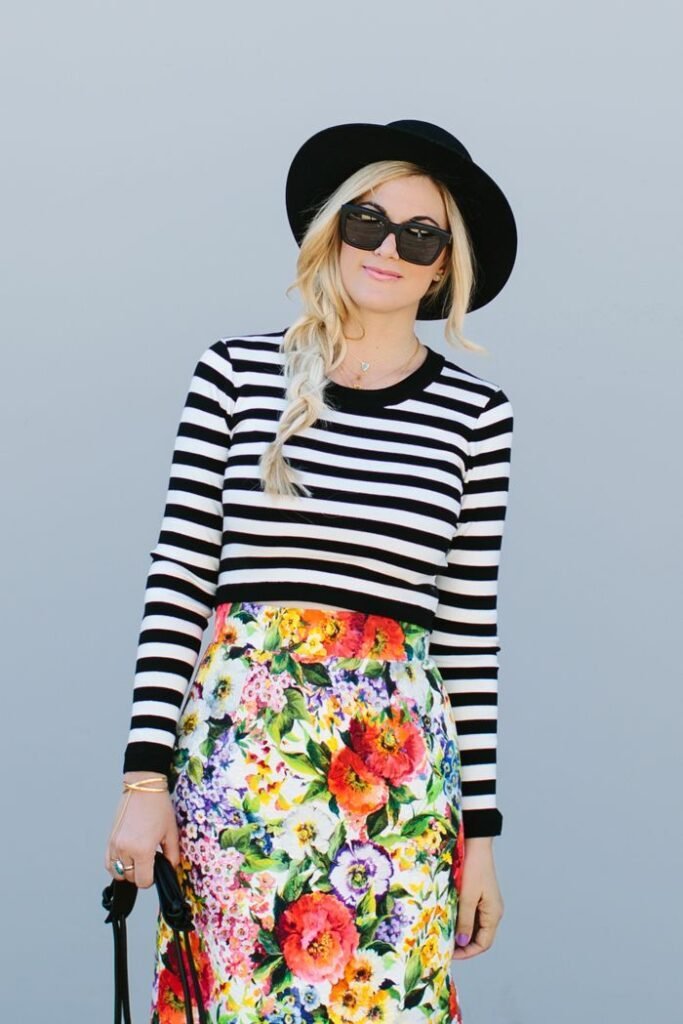
Some pairings are nearly foolproof. Stripes + florals: the classic — thin Breton stripes with a floral skirt or scarf, sharing a color. Plaid + solid texture: a plaid shirt with textured solid (cable knit, corduroy) adds interest without a second pattern. Polka dots + stripes: the playful classic, best with varied scale (small dots, wider stripes).
Leopard as a neutral: leopard print functions as a neutral in pattern mixing — it pairs with stripes, florals, and plaids surprisingly well. Geometric + organic: a geometric pattern (stripes, checks) with an organic one (floral, paisley) creates pleasing contrast. Start with these training-wheel combos before freestyling. The Cut style guides
- Stripes + florals: the classic — share a color, vary the scale.
- Plaid + textured solid: interest without a second competing pattern.
- Dots + stripes: small dots with wider stripes — playful and safe.
- Leopard = neutral: mixes with stripes, florals, plaids unexpectedly well.
- Geometric + organic: stripes/checks with florals/paisley contrast beautifully.
Common Mistakes and How to Check Yourself
The classic mistakes: same-scale patterns fighting (two medium plaids), no shared color (looks accidental), too many patterns (three+ without expertise = chaos), and clashing formality (formal pinstripe with casual novelty print reads confused). Also watch pattern placement — bold patterns on areas you want to minimize draw the eye there.
The mirror test: step back and squint. If the outfit reads as one cohesive impression rather than separate shouting pieces, it works. The photo test is even better — snap a picture; the camera reveals clashing your mirror-brain excuses. And remember the escape hatch: when a mix feels off, swap one pattern for a solid in a shared color. Instant fix, every time.
- Same-scale clash: two medium patterns compete — vary the scale.
- No shared color: looks accidental; find the common thread.
- Formality mismatch: formal + novelty patterns read confused.
- The squint test: step back and squint — cohesive impression = success.
- Escape hatch: swap one pattern for a solid in a shared color.
Common Mistakes to Avoid
A quick word on what not to do — because the fastest way to succeed at anything is to stop doing the things that guarantee failure. These five mistakes are more common than the right moves.
- Same-scale patterns: two medium-scale patterns compete visually. Large + small is the harmony formula — scale contrast first.
- No shared color: patterns without a common color look accidental rather than intentional. Find the thread that ties them.
- Three or more patterns: expert territory. Two patterns + solids is the safe, stylish formula — master it before adding a third.
- Clashing formality: formal pinstripes with novelty prints read confused. Patterns should agree on the dress code.
- Bold patterns on ‘minimize’ areas: the eye goes where the pattern is. Place bold prints where you want attention, not where you don’t.
Frequently Asked Questions
What’s the easiest pattern combination for beginners?
Thin stripes + small floral sharing a color — the training-wheel combo. Stripes act as a neutral, the shared color ties them together, and the scale contrast does the rest. Master this, then experiment.
Can I mix plaid and stripes?
Yes — with scale contrast (large plaid, thin stripe) and a shared color. It’s a classic menswear combination. Keep one pattern dominant and the other secondary; equal billing creates competition.
Does leopard print go with everything?
Nearly — leopard functions as a neutral in pattern mixing, pairing surprisingly well with stripes, florals, and plaids. Treat it as you would a neutral shoe: the wildcard that somehow works with the whole closet.
How do I know if my pattern mix works?
The squint test (step back, squint — cohesive impression = success) and the photo test (cameras reveal clashing that mirrors excuse). And the escape hatch: swap one pattern for a solid in a shared color — instant fix.
Pro tip: Track the one metric that matters most for your goal (not five metrics — one) for 30 days. What gets measured gets managed, and a single number keeps you honest without overwhelming you.
How do I wear patterns without clashing: The Bottom Line
Pattern mixing runs on four rules: vary the scale (large + small), share at least one color, treat thin stripes as neutral, and limit to two patterns grounded by solids. Training-wheel combos — stripes + florals, dots + stripes, leopard + anything — build confidence before freestyling. Check with the squint test and a photo, and keep the escape hatch handy (swap one pattern for a solid). Those patterned pieces in your closet aren’t orphans — they just needed the rules.