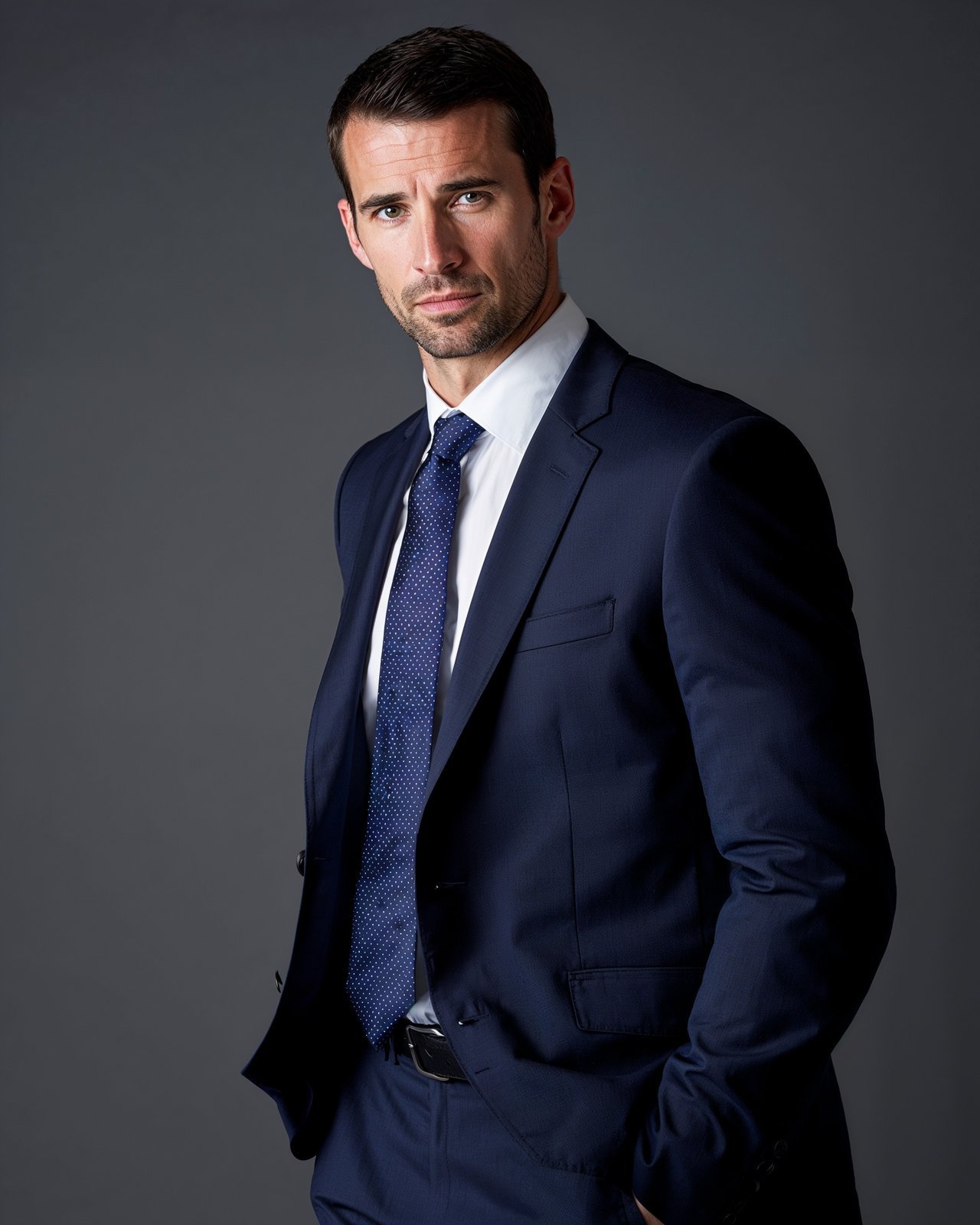
The suit is no longer the price of admission to looking professional. In most modern workplaces — tech, creative, startups, even many corporate offices on non-client days — a well-put-together suit-free outfit reads as competent and current, not underdressed. The key word is well-put-together: ‘no suit’ isn’t a license for sloppy. The question of how can I dress professionally without wearing a suit comes up constantly — here’s what actually works.
Dressing professionally without a suit is about hitting the same notes a suit hits — structure, polish, intention — with different instruments. Here’s how.
The Foundation: Structure Without the Suit
A suit communicates professionalism through structure: defined shoulders, clean lines, intentional coordination. You can get all of that from separates. The single most powerful suit replacement is an unstructured blazer or sport coat worn with non-matching trousers — navy blazer, gray trousers, brown shoes is the canonical formula that works in 90% of business-casual offices. It has the suit’s authority with half the stiffness.
For women, the equivalents are everywhere: a blazer with tailored trousers or a midi skirt, a knit blazer with dark jeans (in casual offices), or a structured dress with a cardigan or jacket. The principle is identical — one structured piece anchors the outfit and signals intention. Without at least one structured element, outfits drift toward casual. GQ style guides for professional menswear
- Navy blazer + gray trousers: the canonical suit-free professional uniform.
- One structured piece minimum: blazer, structured dress, or tailored jacket anchors the look.
- Dark, well-fitting trousers: chinos or dress pants in navy, charcoal, or olive.
- Women: blazer + separates: tailored trousers, midi skirt, or structured dress.
- Fit is non-negotiable: without a suit’s formality, perfect fit carries the professionalism.
10 Outfit Formulas That Work
Build a rotation from proven formulas rather than inventing outfits daily. For men: (1) navy blazer, white oxford, gray chinos, brown loafers; (2) knit polo, navy chinos, clean white sneakers (minimalist leather); (3) quarter-zip sweater, button-down collar shirt, dark jeans, desert boots — for casual Fridays; (4) charcoal cardigan, light blue shirt, olive chinos. Each is professional without a whisper of suit.
For women: (5) black blazer, silk shell, dark straight-leg jeans, pointed flats; (6) midi wrap dress with a cropped cardigan and loafers; (7) cream sweater, navy wide-leg trousers, gold hoops; (8) button-down shirt (half-tucked), tailored shorts… no — tailored trousers, mules. The through-line: polished fabrics, intentional color coordination, and shoes that aren’t athletic. Who What Wear workwear style resources
- Blazer + oxford + chinos: the baseline professional formula for men.
- Knit polo + tailored trousers: modern, sharp, zero stiffness.
- Wrap dress + cardigan: effortless professional for women.
- Monochrome separates: tonal dressing (navy on navy, gray on gray) looks expensive.
- Sweater + collared shirt: the smart-casual layering that always works.
The Details That Make or Break It
Without a suit, details carry more weight. Shoes are the biggest tell: clean, polished leather shoes (or minimalist leather sneakers in casual offices) versus beat-up trainers is the difference between ‘sharp’ and ‘sloppy.’ Grooming matters more too — neat hair, trimmed nails, and ironed (or knit, which doesn’t wrinkle) clothes. People read these details as competence signals.
Know your office’s actual ceiling. ‘Business casual’ at a law firm differs wildly from ‘business casual’ at a startup. Observe what successful people at your level wear and match that, plus 10%. And keep one actual suit or equivalent (a sharp blazer outfit counts) ready for client meetings, interviews, and days when the stakes are high. Suit-free is a strategy, not a religion.
- Shoes make or break it: clean leather shoes or minimalist sneakers — never beat-up trainers.
- Grooming counts double: neat hair, nails, and wrinkle-free clothes signal competence.
- Read your office: match what successful peers wear, plus 10%.
- Keep one power outfit ready: for clients, interviews, and high-stakes days.
- Iron or go knit: wrinkle-free fabrics (knits, treated cotton) remove a daily chore.
Common Mistakes to Avoid
A quick word on what not to do — because the fastest way to succeed at anything is to stop doing the things that guarantee failure. These five mistakes are more common than the right moves.
- Treating ‘no suit’ as ‘no standards’: suit-free still demands polish — fit, fabrics, grooming. Casual isn’t sloppy.
- Wearing athletic shoes: the fastest way to look underdressed. Clean leather shoes or minimalist leather sneakers are the floor.
- Skipping the structured piece: without at least one blazer/structured element, outfits drift casual. One anchor piece carries the professionalism.
- Ignoring the specific office: startup-casual and law-firm-casual are different planets. Match your actual room, plus 10%.
- Wrinkled everything: without a suit’s formality, wrinkle-free fabrics and pressing matter more, not less.
Frequently Asked Questions
Can I wear jeans to a business-casual office?
Dark, non-distressed jeans: yes in most modern offices, elevated with a blazer and proper shoes. Light-wash, ripped, or baggy jeans: no. When unsure, chinos are the safer choice that never misfires.
Is a tie necessary without a suit?
No — that’s the point of suit-free dressing. An open-collar shirt with a blazer is the modern professional standard. Ties now read as formal; skipping them is correct for business casual.
What should I wear to a client meeting?
One notch above your daily: the blazer comes out, shoes get polished, fabrics get sharper. Keep a ‘client meeting’ outfit (or at least a blazer) at the office for surprises. Stakes determine formality.
Can women skip the blazer too?
Yes — a structured dress, quality knit set, or tailored separates all read professional without a blazer. The principle is the same: one polished anchor, intentional coordination, perfect fit.
Pro tip: Track the one metric that matters most for your goal (not five metrics — one) for 30 days. What gets measured gets managed, and a single number keeps you honest without overwhelming you.
How can I dress professionally without wearing a suit: The Bottom Line
Professional without a suit means replacing the suit’s structure with separates: an unstructured blazer, dark tailored trousers, polished shoes, and perfect fit. Build a rotation from proven formulas, let details (shoes, grooming, wrinkle-free fabrics) carry extra weight, and calibrate to your specific office. The suit isn’t dead — it’s just optional now. Dress with intention, and nobody will miss it.