Standing water in the sink, that gurgling sound, the slow swirl going nowhere — a clogged drain is miserable. Your first instinct might be the chemical drain cleaner, but here’s why you should resist: caustic cleaners can damage pipes (especially older ones), they’re terrible for septic systems, they’re dangerous to store around kids and pets, and half the time they don’t even work on the actual clog. The good news is that mechanical and natural methods work better anyway. Here’s how to unclog a drain without harsh chemicals, from easiest to most aggressive.
Start Simple: Boiling Water + Dish Soap
For slow drains (not fully blocked), this often does the trick — especially for grease clogs in kitchen sinks:
- Squirt a generous amount of dish soap directly into the drain.
- Boil a full kettle of water.
- Pour it slowly down the drain in stages, letting it work for a few seconds between pours.
The soap cuts grease; the heat melts it. One caution: skip boiling water on PVC pipes — water above 140°F can soften PVC joints. Use very hot tap water instead for PVC. Porcelain sinks can also crack from thermal shock, so pour directly into the drain, not onto the basin.
The Baking Soda + Vinegar Method (Done Right)
You’ve seen the volcano science experiment version. Here’s the version that actually helps with minor clogs and deodorizing:
- Pour 1/2 cup baking soda down the drain.
- Follow with 1/2 cup white vinegar.
- Cover the drain with a stopper or rag to keep the fizz directed downward.
- Wait 15–30 minutes, then flush with hot (not boiling, for PVC) water.
Honest assessment: this is great for maintenance and smells, marginal for real clogs. The fizzing action is satisfying but doesn’t have much mechanical force. Think of it as drain hygiene, not drain surgery. For the chemistry-curious, EPA Safer Choice lists cleaning products that work without the harsh stuff.
The Plunger (Yes, Really — Technique Matters)
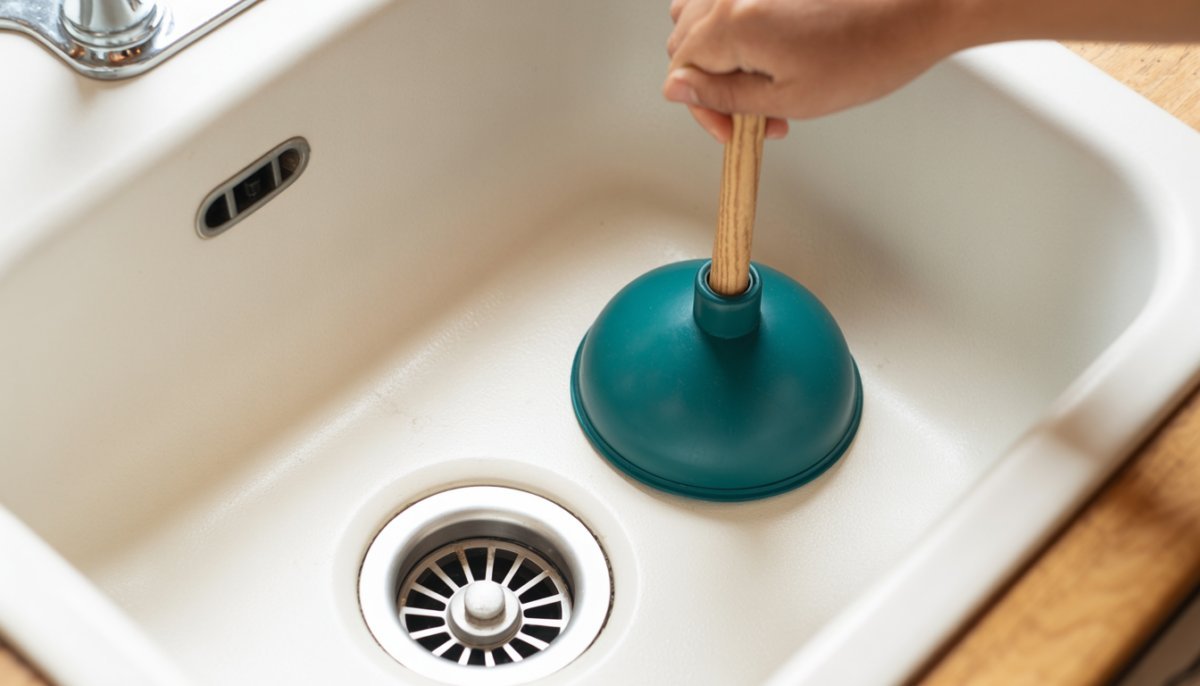
Most people plunge wrong. For sinks and tubs:
- Use a cup plunger (flat bottom), not a flange plunger (that’s for toilets).
- Seal any overflow drain with a wet rag — otherwise you’re just pushing air out the overflow.
- Fill the basin with enough water to cover the plunger cup.
- Plunge vigorously for 20–30 seconds, maintaining the seal.
The plunger is genuinely the most effective chemical-free tool for most clogs. It works by pressure differential, physically dislodging the blockage. Unsexy, cheap, and it works.
The Drain Snake / Hair Removal Tool
For bathroom sinks, tubs, and showers, the culprit is almost always hair — and no chemical dissolves a hairball as well as simply pulling it out. A $5 plastic hair snake (a long strip with barbs) shoved down the drain and pulled back up is disgusting and deeply satisfying. You’ll wonder why you ever bought chemicals.
For deeper clogs, a 25-foot hand-crank drain auger ($25–$35) reaches what the plastic tool can’t. Feed it in slowly, crank when you feel resistance, and retract carefully. This handles 90% of household clogs that plungers can’t.
Clean the P-Trap (The Nuclear Option That’s Actually Easy)
If the clog is past what snakes reach, it’s probably sitting in the P-trap — that U-shaped pipe under the sink. Cleaning it takes 15 minutes:
- Place a bucket under the trap.
- Unscrew the slip nuts by hand (or with channel-lock pliers, gently).
- Dump the trap’s contents into the bucket — brace yourself.
- Clean it out, check the washers, reassemble hand-tight.
Run water and check for leaks at the joints. This fixes clogs that nothing else touches, and you’ll feel like a plumbing wizard. While you’re under there, it’s a good time to check for the slow drips that cause bathroom mold problems later.
Prevent Clogs in the First Place
- Kitchen: Never pour grease down the drain — wipe pans with paper towels first, then wash. Use a sink strainer for food particles.
- Bathroom: A $3 mesh drain cover catches hair before it becomes a clog. Clean it weekly.
- Monthly maintenance: The baking soda + vinegar flush, or just a kettle of hot water, keeps buildup from accumulating.
- Garbage disposals: Run cold water before, during, and after use; avoid fibrous foods (celery, artichokes) and expandable starches (pasta, rice). If yours is on its last legs, check garbage disposal replacement costs.
Dealing With Recurring Clogs (Finding the Root Cause)
If the same drain clogs every few months, you’re treating symptoms. Common root causes: kitchen sinks — grease buildup deep in the line (hot water flushes help, but eventually the line needs snaking); consider whether anyone’s pouring grease despite the rules. Bathroom sinks — the pop-up stopper assembly collects a revolting collar of hair and soap scum; unscrew it every 6 months and clean it directly. Most people never do this, and it’s the cause of half of all “mystery” slow bathroom drains.
Showers/tubs: if snaking pulls up hair but the drain slows again within weeks, the issue may be soap scum + hair combining into a concrete-like mass further down — a longer auger (25 ft) or a professional snaking ($100–$150) clears what hand tools can’t. Multiple fixtures backing up simultaneously means the main sewer line — tree roots, bellies, or breaks. That’s camera-inspection and professional territory ($200–$400 for the diagnosis); no amount of baking soda touches a root intrusion.
The pattern to watch: a drain that was fine for years and suddenly clogs repeatedly has changed — something entered the system (roots, a broken pipe, a lost object). New behavior means new cause, and new causes sometimes need pros.
The Bottom Line
To unclog a drain without harsh chemicals, work the ladder: hot water and soap, then baking soda and vinegar for maintenance, then the plunger (with proper technique), then a drain snake for hair, then the P-trap for stubborn clogs. This progression clears virtually every household clog without a single caustic chemical — saving your pipes, your septic system, and the $12 you would’ve spent on a bottle of false promises. If multiple drains clog simultaneously, though, that’s a main-line issue — call a plumber, since that’s beyond DIY territory.