
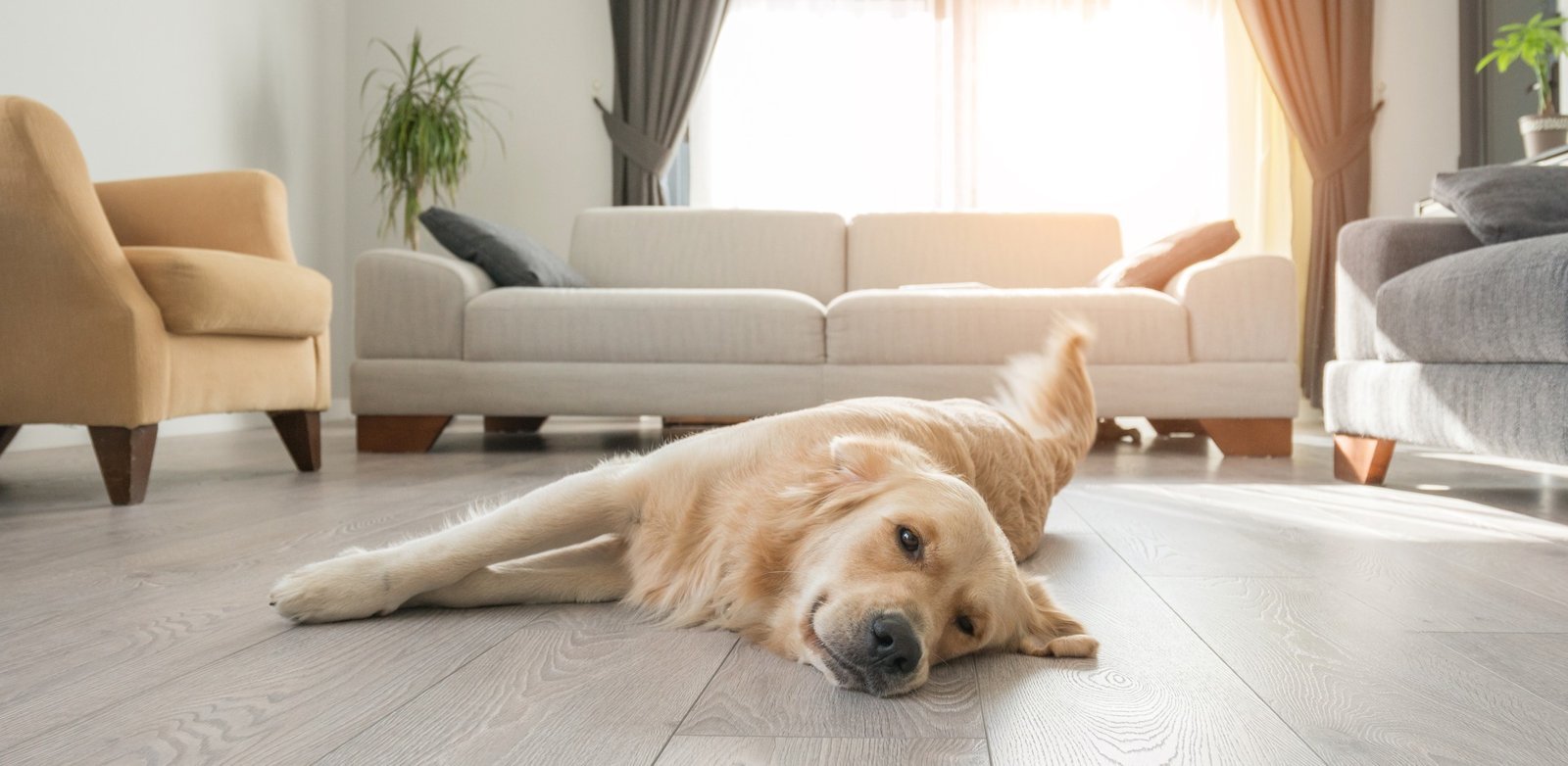
Dogs, cats, and beautiful floors have a complicated relationship. Claws scratch, accidents happen, muddy paws do what muddy paws do — and the wrong flooring shows every bit of it within a year. I’ve lived with two large dogs through three different floors, so I can tell you from experience: the best flooring option for homes with pets isn’t about finding something indestructible. It’s about finding something that handles the reality of animals gracefully and doesn’t make you resent your own pets. Here’s the honest ranking.
The Top Pick: Luxury Vinyl Plank (LVP)
Luxury vinyl plank is the best flooring for pet owners, full stop. It’s waterproof (not just water-resistant — actual standing-waterproof), scratch-resistant enough for dog nails, comfortable underfoot, and convincingly mimics wood. Accidents wipe up without staining or warping. It clicks together for DIY-friendly installation, and at $2–$7 per square foot for materials, it won’t wreck your budget.
The caveats: cheap LVP can look cheap (stick to 12 mil wear layer or thicker — 20 mil for big dogs), and it can dent under very heavy furniture. But for the pet equation — scratches, moisture, accidents, muddy paws — nothing beats it. It’s the floor I recommend to every pet owner who asks, and the one I put in my own house after the dogs destroyed the alternative.
Runner-Up: Tile (Porcelain or Ceramic)
Tile is virtually indestructible: waterproof, scratch-proof, stain-proof, and it doesn’t harbor allergens or odors. If your pets are large, messy, or accident-prone, tile in the main living areas is bulletproof.
The downsides are comfort-related: tile is hard and cold. Older dogs with joint issues struggle on slippery tile — you’ll want area rugs with non-slip pads on their main paths (see our guide to choosing the right rug size). It’s also the most expensive and labor-intensive to install. Best for: warm climates, single-story homes, and households where durability beats coziness.
The Risky Middle: Laminate, Engineered Wood, and Real Hardwood
Laminate handles scratches decently and costs little, but moisture is its kryptonite — one unnoticed accident can swell the planks permanently. Only consider waterproof-rated laminate, and even then, LVP is better for pets.
Engineered hardwood looks gorgeous and resists dents slightly better than solid wood, but pet claws still scratch the finish, and moisture is still a problem. It’s a compromise that satisfies neither the design lover nor the pragmatist.
Solid hardwood with pets is… a choice. It can be refinished (unlike the others), which is its saving grace — scratches sand out every decade or so. But between refinishings, you’ll watch your investment get chewed up daily. If you must: choose a harder species (oak over pine), a matte finish (hides scratches), and a medium tone (hides everything). Our comparison of laminate vs. vinyl flooring digs deeper into these trade-offs.
And if your existing hardwoods are already squeaking under pet traffic, here’s how to fix squeaky hardwood floors.
What About Carpet?
I’ll be blunt: wall-to-wall carpet and pets are a bad combination. It traps odors, stains permanently, harbors allergens, and needs professional cleaning regularly. If you love soft underfoot, do LVP or tile with washable area rugs instead — you get the comfort, and when the rug is toast, you replace a $200 rug, not $3,000 of carpet.
Pet-Proofing Whatever Floor You Choose
Even the best floor lasts longer with these habits:
- Trim nails regularly. This single habit prevents more floor damage than any product. Every 2–3 weeks.
- Wipe paws at the door. A microfiber mat and 10 seconds prevents grit — which is basically sandpaper — from grinding into any floor.
- Clean accidents immediately. Even waterproof floors have seams; don’t let liquids sit.
- Use felt pads on furniture — chairs scooting across LVP cause more scratches than most dogs.
- Place rugs strategically on pets’ favorite running paths and landing zones (in front of the couch they launch off of).
The American Kennel Club’s flooring recommendations align with this: prioritize scratch resistance, waterproofing, and traction.
Installation Considerations for Pet Owners
Choosing the floor is half the battle; installing it right matters too. Acclimate the material — let LVP or laminate sit in the room for 48 hours before installation so it adjusts to your home’s temperature and humidity. Skipping this causes gaps or buckling later, and pet-heavy homes notice floor failures first.
Underlayment matters more with pets: a quality underlayment (not the cheapest foam) adds sound dampening — your downstairs neighbors will thank you — plus moisture protection and a bit of cushioning that’s kinder to older dogs’ joints. For tile, the underlayment question becomes grout choice: use epoxy grout or a high-quality sealed grout, because pet accidents find unsealed grout like a magnet.
Transitions and thresholds: where the new floor meets other rooms, use proper transition strips — not just butted edges. Pet nails catch on uneven transitions, and water migrates through gaps. It’s a $10 detail that prevents real problems.
DIY or pro? LVP click-lock is genuinely DIY-friendly — a weekend for a room, basic tools. Tile is not beginner-friendly; bad tile jobs fail at the grout lines first, exactly where pet moisture attacks. Know which project matches your skills, because a poorly installed great floor underperforms a well-installed good one.
Transitioning Between Flooring Types
Most homes don’t use one flooring everywhere — you’ll transition between the pet-proof choice and other rooms. Use proper transition strips (T-molding for same-height floors, reducers for height differences) rather than butting materials together. Keep thresholds low-profile where pets cross frequently — high lips trip older dogs and catch claws. And plan the layout so the toughest flooring covers the highest-traffic pet zones (entries, hallways, the path to the back door), with softer choices in low-traffic bedrooms.
The Bottom Line
The best flooring option for homes with pets is luxury vinyl plank — waterproof, scratch-resistant, comfortable, and affordable. Tile is the durability king if you can handle the hardness. Think twice about hardwood and laminate unless you’re committed to the maintenance, and skip wall-to-wall carpet entirely. Match the floor to your actual animals, not the animals you wish you had, and you’ll stop thinking about your floors — which is exactly the point.





One Comment