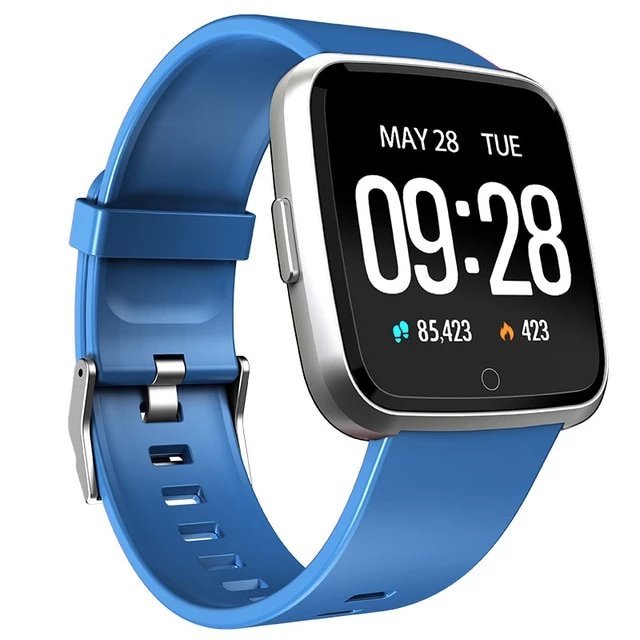
You don’t need a $400 Apple Watch to count steps and track sleep. The best cheap smartwatch for tracking steps and sleep is honestly a three-way race: the Amazfit Bip 5 (~$70) for features, the Xiaomi Smart Band 9 (~$40) for value, and the Fitbit Inspire 3 (~$80) for sleep-tracking accuracy.
I’ve worn budget trackers alongside premium watches, and for the two things most people actually want — steps and sleep — the cheap ones are shockingly close. Here’s the real comparison.
The Top 5 Budget Picks, Honestly Compared
- Xiaomi Smart Band 9 (~$35–$45) — best pure value. Tiny, light, 2-week battery, accurate step counting, solid sleep tracking with stages. No onboard GPS, small screen — but at this price, it’s almost disposable. My top pick for “just want the basics.”
- Amazfit Bip 5 (~$60–$80) — best cheap smartwatch. Big readable display, built-in GPS, Alexa, 10-day battery, heart-rate + SpO2 + sleep stages. Does 80% of what a $300 watch does. The sweet spot.
- Fitbit Inspire 3 (~$70–$100) — best sleep tracking. Fitbit’s sleep algorithms are genuinely the best in the business — Sleep Score, detailed stages, smart wake alarm. Steps are accurate. Downsides: no GPS, and some insights hide behind Fitbit Premium ($10/mo — skip it, the free tier is fine).
- Amazfit GTS 4 Mini (~$80–$100) — best looking. Apple-Watch-style design, GPS, 15-day battery. Great if you want it to look like a “real” smartwatch.
- CMF Watch Pro 2 (~$70) — best display. Nothing’s sub-brand; bright AMOLED, interchangeable bezels, good battery. Fun pick.
What I’d actually buy: the Xiaomi Smart Band 9 if budget is king, the Amazfit Bip 5 for most people. Both are so cheap that “try it for a month” is a reasonable plan.
How Accurate Are Cheap Trackers, Really?
The honest answer: very good at steps and sleep timing, decent at sleep stages, rough at calories.
- Steps: within 5–10% of research-grade counters. All the picks above are solid here — step counting is a solved problem.
- Sleep duration and timing: quite accurate (they know when you fell asleep and woke up). Sleep stage breakdown (REM vs deep) is estimated from heart rate and movement — directionally useful, not medical-grade. Don’t stress about 12 vs 18 minutes of deep sleep.
- Heart rate: good at rest, decent during steady exercise, unreliable during intense intervals or with tattoos/dark skin (a known optical-sensor limitation across all brands).
- Calories burned: take with a mountain of salt — every brand overestimates, sometimes by 20–30%. Don’t eat back “earned” calories.
Bottom line: for trends and habits (am I sleeping more this month? did I hit 8k steps?), cheap trackers are excellent. For medical decisions, see a doctor, not a $40 band. Consistency of measurement matters more than absolute accuracy.
What You Give Up vs. a $300+ Watch
Fair comparison — here’s what the extra $200+ buys:
- ECG and advanced health sensors (Apple Watch, Galaxy Watch, Pixel Watch) — genuinely useful for some, irrelevant for step/sleep trackers
- Cellular connectivity — leave your phone home. Nice, not essential.
- Third-party apps — the app ecosystems on premium watches are real; budget watches run what they ship with
- Build quality and water resistance ratings — budget bands are fine for sweat and rain; don’t swim with most of them
- Smartphone integration polish — notification handling, voice assistants, and auto-workout detection are smoother on premium
- Battery life paradox: budget wins here! 10–21 days vs. 1–2 days for Apple Watch. For sleep tracking, multi-day battery is a killer feature — a watch that dies nightly can’t track sleep.
That last point is underrated: the Apple Watch’s daily charging is its Achilles’ heel for sleep tracking. A $40 band you wear 24/7 for two weeks straight captures better sleep data than a $400 watch sitting on its charger.
Sleep Tracking Tips (Whatever You Buy)
- Wear it snug, one finger above the wrist bone. Loose bands = bad heart-rate data = bad sleep staging. Not painfully tight — just no sliding.
- Give it a week before judging — algorithms calibrate to your patterns, and one weird night means nothing.
- Track trends, not nights. “My deep sleep averaged 55 min this month vs 45 last month” is signal; “last night was bad” is noise.
- Set a consistent sleep schedule goal in the app — regularity matters more for health than total hours, and the tracker makes it visible.
- Charge strategically: with 2-week battery, top up during your morning routine once a week. Never miss a night.
- Don’t obsess. Orthosomnia — anxiety about perfect sleep scores — is real. If the data stresses you, the tracker is hurting more than helping.
And pair the data with actual sleep hygiene: consistent bedtime, cool dark room, no screens 30 min before bed. The tracker measures; habits fix. If snoring data interests you, some apps record audio — the Sleep Foundation’s tracking guide covers what the data can and can’t tell you.
My Actual Recommendation by Person
- “I just want steps and sleep, cheapest possible”: Xiaomi Smart Band 9. $40, two-week battery, done.
- “I want a real smartwatch feel under $100”: Amazfit Bip 5. GPS, big screen, Alexa.
- “Sleep data is my priority”: Fitbit Inspire 3. Best algorithms, skip the Premium upsell.
- “I’m deep in Apple/Samsung and might upgrade later”: still start cheap — confirm you’ll actually wear a tracker 24/7 before spending $300+. Most people who buy premium first wear it for a month.
- “Gift for a parent”: Fitbit Inspire 3 — simplest app, clearest sleep data, and fall/health features they might appreciate.
The meta-advice: start cheap, upgrade only if you outgrow it. A $40 band worn daily beats a $400 watch in a drawer — and most people discover steps + sleep was all they ever wanted.
Keep Reading
If this was useful, you might also like phone battery health and phone maintenance routine.
The Bottom Line
Start with the Xiaomi Smart Band 9 (~$40) for unbeatable value, or the Amazfit Bip 5 (~$70) for a fuller smartwatch experience. Both track steps accurately and sleep well enough for habit-building, with 2-week batteries that premium watches can’t match. Upgrade to premium only if you need ECG, cellular, or apps — for steps and sleep, cheap wins.
Frequently Asked Questions
Are cheap fitness trackers accurate for sleep?
For sleep timing and duration, yes — quite accurate. Sleep stage breakdowns are estimates (good for trends, not medical precision). All brands, cheap and expensive, share these limitations.
Do I need a subscription for Fitbit?
No — the free tier covers steps, sleep tracking, heart rate, and basic insights. Fitbit Premium ($10/month) adds detailed reports and wellness content most people don’t need. Skip it.
Can a cheap smartwatch track workouts with GPS?
Models with built-in GPS (Amazfit Bip 5, GTS 4 Mini) track runs/cycles independently. Cheaper bands without GPS use your phone’s GPS via Bluetooth — fine, just bring the phone along.