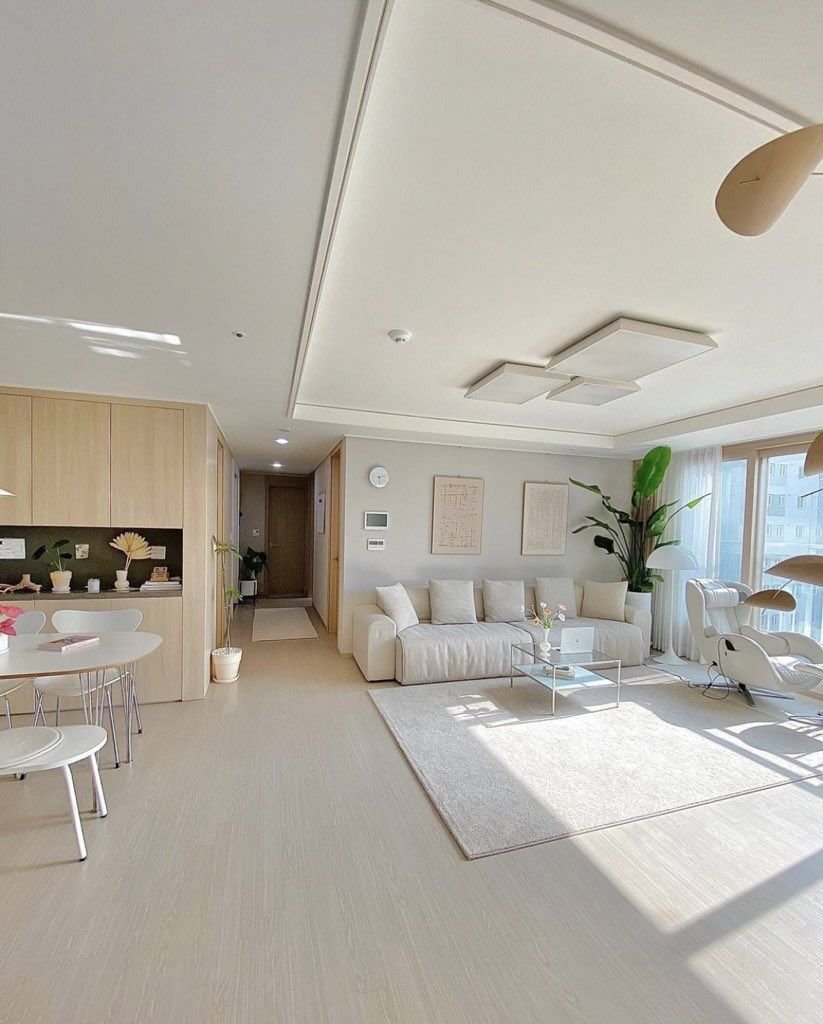
Living in a small apartment doesn’t have to feel like living in a shoebox. Interior designers have a whole playbook of visual tricks that make 400 square feet feel like 700 — and most of them are cheap, renter-friendly, and doable in a weekend. If you’re wondering how can I make my small apartment feel bigger, this guide gives you the straight, no-fluff answer.
It’s not about the actual square footage; it’s about how your brain reads the space. Here’s how to hack that perception.
Light and Color: The Biggest Perception Shifters
Light colors recede; dark colors advance — it’s basic visual perception. Painting walls (or using removable wallpaper) in light, warm whites or pale neutrals makes walls feel farther away. But the real multiplier is light itself: maximize natural light (sheer curtains instead of heavy drapes, mirrors opposite windows to bounce it), and layer artificial light — overhead plus floor lamp plus table lamp eliminates the dark corners that make spaces feel cramped.
One paint trick designers swear by: paint walls, trim, and ceiling the same light color. Eliminating the visual ‘stop’ at the ceiling line makes ceilings feel higher. And keep the palette cohesive across rooms — visual continuity makes separate small rooms read as one larger flowing space. Apartment Therapy small space guides
- Light, warm neutrals: walls that recede make rooms feel larger.
- Same color walls/trim/ceiling: erases the ceiling line; rooms feel taller.
- Mirrors opposite windows: double the natural light and the view.
- Layer your lighting: overhead + floor + table lamps kill cramped dark corners.
- Sheer curtains: privacy without sacrificing daylight.
Furniture: Scale, Legs, and Multipurpose
The #1 small-space furniture mistake is oversized pieces — a giant sectional in a small living room makes the room feel smaller, not cozier. Choose apartment-scale furniture: loveseats over full sofas, round dining tables (no corners jutting into walkways), and armless or slim-arm chairs. Measure your rooms and doorways before buying anything.
Favor furniture with visible legs — sofas, beds, and consoles raised on legs let the eye (and light) travel underneath, making floors feel continuous and rooms bigger. Blocky furniture sitting flat on the floor visually eats square footage. And go multipurpose: storage ottomans, Murphy beds, drop-leaf tables, beds with drawers. Every piece should earn its footprint twice. IKEA small space living ideas
- Right-size everything: loveseat > sectional; measure before buying.
- Legs, not blocks: raised furniture lets light flow underneath — rooms feel bigger.
- Round dining tables: no corners blocking walkways; seat more flexibly.
- Multipurpose pieces: storage ottomans, Murphy beds, drop-leaf tables.
- Glass/acrylic accents: visually disappear — coffee tables, consoles, chairs.
Declutter, Vertical Space, and Layout Tricks
Visual clutter shrinks rooms — every visible object is something your brain processes as ‘stuff in the way.’ Ruthless decluttering is the cheapest space-creator: clear surfaces, contain the rest in closed storage (baskets, cabinets — hidden storage beats open shelving in small spaces). The ‘one in, one out’ rule prevents re-accumulation.
Go vertical: tall bookshelves draw the eye up (making ceilings feel higher), wall-mounted lighting and TVs free floor space, over-door organizers claim dead zones. Layout tricks: float furniture slightly off walls (counterintuitively makes rooms feel larger than pushing everything against walls), define zones with rugs in open plans, and keep pathways clear — blocked walkways make any space feel cramped.
- Declutter ruthlessly: clear surfaces; closed storage hides the rest.
- Go vertical: tall shelves draw eyes up; wall-mount lights and TVs.
- Float furniture off walls: a few inches of breathing room paradoxically enlarges.
- Rugs define zones: separate living/sleeping areas in open plans.
- Clear pathways: blocked walkways make any space feel cramped.
Common Mistakes to Avoid
Knowing what to do is only half the battle — knowing what not to do saves you from the traps that catch most people. These are the mistakes I see over and over, and every one of them is avoidable once you know to watch for it.
- Dark colors everywhere: dark walls advance visually, shrinking rooms. Light, warm neutrals recede — the single biggest perception shift.
- Oversized furniture: a giant sectional in a small room makes it feel smaller, not cozier. Apartment-scale pieces only.
- One overhead light: a single ceiling light creates harsh shadows and dark corners. Layered lighting (floor + table + overhead) opens the space.
- Visual clutter: every visible object shrinks the room perceptually. Clear surfaces, closed storage — hidden beats displayed in small spaces.
- Blocking natural light: heavy drapes eat daylight. Sheers plus mirrors opposite windows double your light for free.
Frequently Asked Questions
What colors make a small room look bigger?
Light, warm neutrals — soft whites, pale grays, light beiges. Painting walls, trim, and ceiling the same light color erases visual boundaries and makes ceilings feel higher. Cohesive palettes across rooms make small apartments read as one flowing space.
Do mirrors really make rooms look bigger?
Yes — it’s the oldest designer trick because it works. A large mirror opposite a window doubles natural light and the view, visually doubling the space. Mirrored closet doors and leaning floor mirrors are renter-friendly options.
How do I arrange furniture in a tiny living room?
Float pieces slightly off walls (counterintuitively enlarges), choose apartment-scale furniture with visible legs, define zones with rugs, and keep pathways clear. Every piece should be multipurpose or it should leave.
What’s the cheapest way to make a small apartment feel bigger?
Declutter ruthlessly — free, and the highest impact. Then: sheer curtains, a large mirror (thrift stores, $20), and rearranging furniture off the walls. Under $50 total for a transformation that feels like a renovation.
Pro tip: Pick one change from this guide and do it today — not tomorrow, today. Momentum beats planning: a single action taken now outperforms a perfect plan started next week.
How can I make my small apartment feel bigger: The Bottom Line
Make a small apartment feel bigger with: light cohesive colors (walls/trim/ceiling matched), maximized natural light plus layered lamps, mirrors opposite windows, right-sized furniture with visible legs, multipurpose pieces, ruthless decluttering with closed storage, vertical everything, and floated furniture with clear pathways. None of this requires renovation or big spending — it’s perception engineering. Your brain reads light, continuity, and order as space; give it those, and 400 square feet feels like plenty.