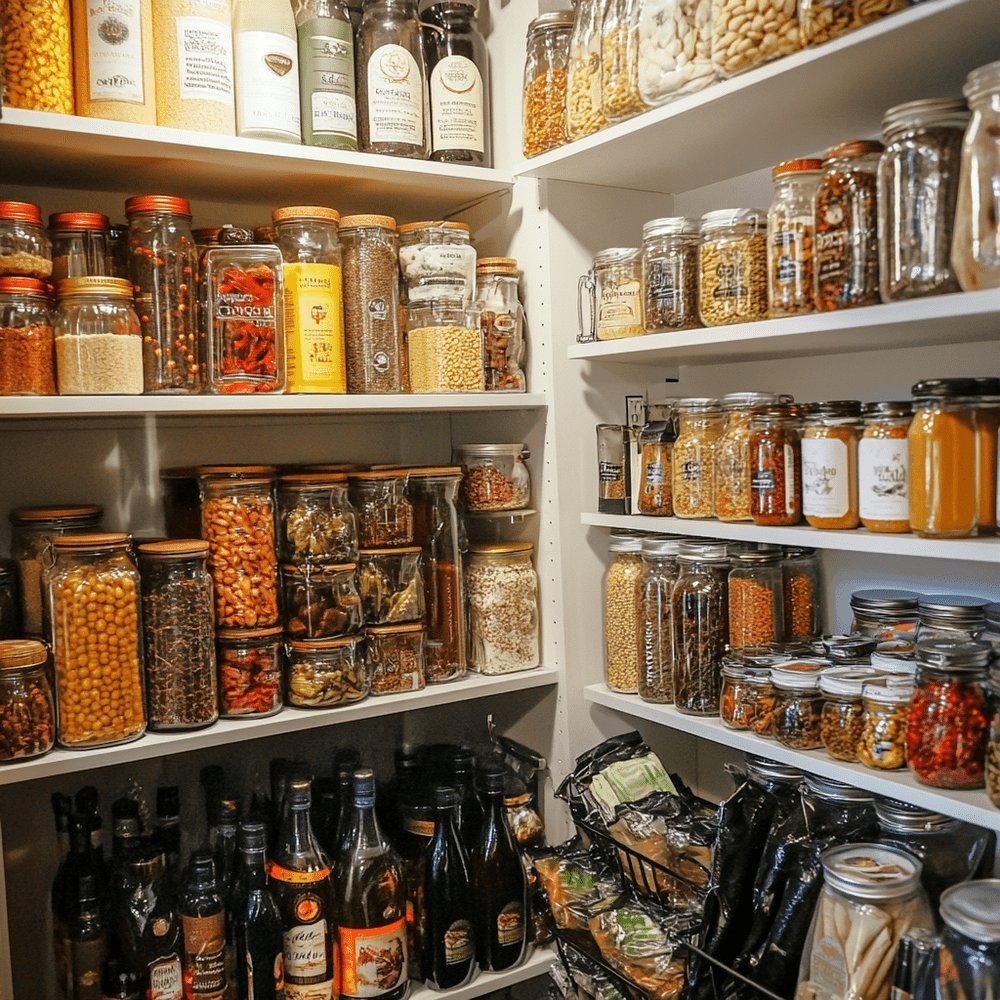
Open your pantry. Really look at it. There’s the soy sauce from 2021, three half-empty bags of flour, a spice collection with no system, and that weird grain you bought for one recipe. Meanwhile, you’re at the store buying duplicates of things you already own. Building a capsule pantry — a curated set of everyday essentials that covers 90% of your cooking — fixes both problems: less waste, faster meal decisions, and a grocery list that practically writes itself.
The capsule wardrobe concept applied to food: fewer, better, versatile staples that combine endlessly. I’ve run a capsule pantry for two years, and weeknight cooking got dramatically easier — not because I learned new recipes, but because the right ingredients were always there.
What Goes in a Capsule Pantry: The Essential Categories
Grains and starches (pick 4–5)
- Long-grain rice or jasmine rice (the workhorse)
- Pasta — 2 shapes (spaghetti + a short shape like penne)
- Oats (breakfast + baking + binding)
- Tortillas or bread (pick your household’s staple)
- One “upgrade” grain: quinoa, couscous, or farro for variety
Proteins, shelf-stable (pick 4–5)
- Canned black beans + canned chickpeas (endlessly versatile)
- Canned tuna or salmon
- Lentils — red (fast, melt into soups) and/or brown
- Peanut butter (the emergency protein)
- Eggs count here too — the most versatile ingredient in any kitchen
Canned/jarred flavor bases (pick 5–6)
- Canned crushed tomatoes + tomato paste (tube paste wastes less)
- Coconut milk
- Chicken or vegetable broth (or bouillon — cheaper, smaller footprint)
- Salsa (instant flavor for everything)
- Olives, capers, or sun-dried tomatoes — pick one briny accent
Oils, vinegars, condiments (the flavor arsenal)
- Olive oil (cooking) + a neutral oil (high-heat)
- Red wine vinegar + rice vinegar (covers most needs)
- Soy sauce, hot sauce, mustard, ketchup, mayo — the core five
- Honey or maple syrup
Spices (the 12 that cover 90% of cooking)
Salt (kosher), black pepper, garlic powder, onion powder, cumin, chili powder, paprika (smoked if you like depth), oregano, basil, cinnamon, red pepper flakes, bay leaves. That’s it. Everything else is situational — buy for specific recipes, not “just in case.” Check dates yearly; ground spices fade after 1–2 years.
Baking basics (if you bake)
Flour, sugar, brown sugar, baking powder, baking soda, vanilla extract, cocoa powder. Skip the specialty flours unless you use them monthly.
How Do I Build a Capsule Pantry With Everyday Essentials? The Method
Step 1: Audit what you have (30 minutes)
Pull everything out. Yes, everything — it’s the only way to see the true inventory. Toss expired items (check dates; spices older than 2 years, oils older than a year opened, anything questionable). Group what’s left by category. You’ll find duplicates — combine them.
Step 2: Define YOUR capsule
The list above is a template, not a prescription. Your capsule should reflect what you actually cook: the 10–15 meals on rotation in your house. List those meals, extract their shared ingredients — that’s your capsule. A household that eats a lot of Asian food needs different staples than one that lives on Italian. Customize ruthlessly.
Step 3: Set par levels and the “one in, one out” rule
For each staple, define your par: “we keep 2 cans of black beans; when we open the second, beans go on the list.” This prevents both stockouts and the 14-can hoard. New specialty ingredient? It replaces something, or it doesn’t come home. The inflow discipline mirrors minimalist principles — the pantry is just minimalism you can eat.
Step 4: Organize for visibility
- Decant into clear containers for the high-use items (flour, rice, oats, sugar) — you see levels at a glance, and uniform containers look calm
- Label everything — masking tape and marker, or a label maker if you’re fancy
- Group by use, not by type: “taco kit” shelf (tortillas, beans, salsa, spices together) beats alphabetical spice arrangements for actual cooking speed
- First in, first out: New items go behind old ones. Simple, prevents the archaeological dig.
Maintain It (5 Minutes Weekly)
The capsule only works if it’s maintained — but maintenance is tiny:
- During weekly meal planning (the routine that sticks), scan the pantry for anything below par and add to the grocery list
- Monthly: 5-minute expiry check on one shelf (rotate shelves)
- Quarterly: reassess — are there staples you never touch? Remove them. New regular meal? Add its ingredients.
Pair with faster, cheaper grocery shopping — a capsule pantry makes the store trip nearly automatic because the list is always 80% the same.
Sample Capsule Pantry Shopping List
Starting from scratch? Here’s the complete first shop — roughly $80–120 depending on your store, and it stocks you for weeks:
- Grains ($15): Rice (5 lb), spaghetti + penne, rolled oats (large canister), tortillas, quinoa (1 bag)
- Proteins ($18): Black beans ×4 cans, chickpeas ×4 cans, tuna ×4 cans, red lentils (1 bag), peanut butter (1 large jar)
- Flavor bases ($15): Crushed tomatoes ×4 cans, tomato paste (tube), coconut milk ×2 cans, broth ×4 cartons (or bouillon jar), salsa (1 large jar)
- Oils/vinegars/condiments ($20): Olive oil, neutral oil, red wine vinegar, soy sauce, hot sauce, mustard, honey
- Spices ($15): The 12-spice core list — buy small quantities; they fade before you finish large ones
- Baking ($12): Flour, sugar, brown sugar, baking powder/soda, vanilla, cocoa
Shop your own pantry first — you likely own half of this already. Then buy what’s missing, decant into clear containers, label everything, and cook one component-prep session. The capsule is live. Restock to par levels weekly, and the pantry runs itself from here.
Spice Storage That Actually Works
Spices are the soul of the capsule pantry, but they’re also where pantries go to die — a chaotic jumble of half-empty jars with faded labels. The fix: decant into small uniform jars (4 oz mason jars are perfect), label with contents AND purchase date, and store away from heat and light (not above the stove — heat kills flavor fast). Alphabetize or group by cuisine; either beats the archaeological dig. Ground spices lose potency after 1–2 years — do an annual sniff test on your birthday or New Year’s: if it smells like nothing, it tastes like nothing, and it’s taking up space. Buy small quantities of the exotics, larger of the workhorses (cumin, chili powder, garlic powder). A well-kept spice collection means every capsule meal tastes intentional, not repetitive.
The Takeaway
Building a capsule pantry means auditing what you have, defining 40–60 versatile staples based on the meals you actually cook, setting par levels, organizing for visibility, and maintaining with a 5-minute weekly scan. The payoff: faster weeknight decisions (“what’s for dinner” becomes “what do we feel like” instead of “what do we have”), less waste, and grocery trips on autopilot. Do the audit this weekend — it’s the highest-ROI 30 minutes in your kitchen. For food safety specifics on pantry storage, FoodSafety.gov has the definitive guidelines.