Quick Answer: Most grass seed germinates in 7–21 days, but timing varies widely by species: perennial ryegrass sprouts in 5–10 days, tall fescue in 7–12 days, and Kentucky bluegrass takes 14–30 days. Expect a thin green haze first, with a full, established lawn taking 6–8 weeks. Soil temperature, consistent moisture, and planting depth are the three factors that matter most.
Staring at bare soil two weeks after seeding, wondering if anything is happening underground, is a rite of passage for every new lawn owner. The short answer is: it depends on what you planted and the conditions you planted it in. This guide gives you exact germination times for every common grass type, explains the factors that speed up or stall sprouting, and walks you through a week-by-week timeline so you know exactly what to expect.
Grass Seed Germination Times by Type
Different species have dramatically different sprouting speeds. Here is what to expect under good conditions:
| Grass type | Germination time | Full establishment |
|---|---|---|
| Perennial ryegrass | 5–10 days | 5–6 weeks |
| Tall fescue | 7–12 days | 6–8 weeks |
| Fine fescue (creeping red, chewings) | 7–14 days | 6–8 weeks |
| Kentucky bluegrass | 14–30 days | 8–10 weeks |
| Bermudagrass | 10–21 days | 8–10 weeks |
| Zoysiagrass | 14–21 days | 10–12 weeks |
| Buffalograss | 14–30 days | 10–12 weeks |
Seed blends are common in stores — a typical northern “sun and shade” mix contains ryegrass, fescue, and bluegrass. You will see the ryegrass pop up first (around day 7), with the bluegrass filling in weeks later. That staggered emergence is normal, not a sign of failure.
5 Factors That Control How Fast Grass Seed Grows
1. Soil temperature
This is the number-one factor. Cool-season grasses (ryegrass, fescue, bluegrass) germinate best when soil temperatures are 50–65°F. Warm-season grasses (bermuda, zoysia, buffalo) need 70–90°F soil. Seed planted into cold soil just sits there — it will not rot immediately, but it will not sprout either. A simple soil thermometer ($10–15) removes all guesswork.
2. Consistent moisture
Grass seed must stay continuously moist to germinate. Even a few hours of drying out during the critical imbibition phase can kill a sprouting seed. That means light watering 2–4 times daily for the first couple of weeks — enough to keep the top half-inch damp, never soggy or puddled.
3. Planting depth
Sow seed 1/8 to 1/4 inch deep. Seed buried deeper than half an inch often lacks the energy reserves to reach the surface. Rake lightly after spreading, or top-dress with a thin layer of compost or peat moss to hold seed in place and retain moisture.
4. Seed-to-soil contact
Seed sitting on top of thatch or hard crust cannot establish roots. Loosen the top 2–3 inches of soil before seeding, and press seed in with a lawn roller or by walking over the area. Good soil prep — similar to what we describe in how to start a vegetable garden step by step guide 2026“>starting a vegetable garden — makes a measurable difference.
5. Seed age and quality
Grass seed loses viability over time. Properly stored seed (cool, dry, dark) stays viable for 2–3 years, but germination rates drop each year. Check the seed tag for the test date and germination percentage — buy seed tested within the last 12 months, and avoid bargain bags with high “other crop” or weed-seed content.
Timeline: What to Expect Week by Week
- Days 1–7: Nothing visible. Underground, seeds are absorbing water and the first root (radicle) is emerging. Keep the soil consistently moist.
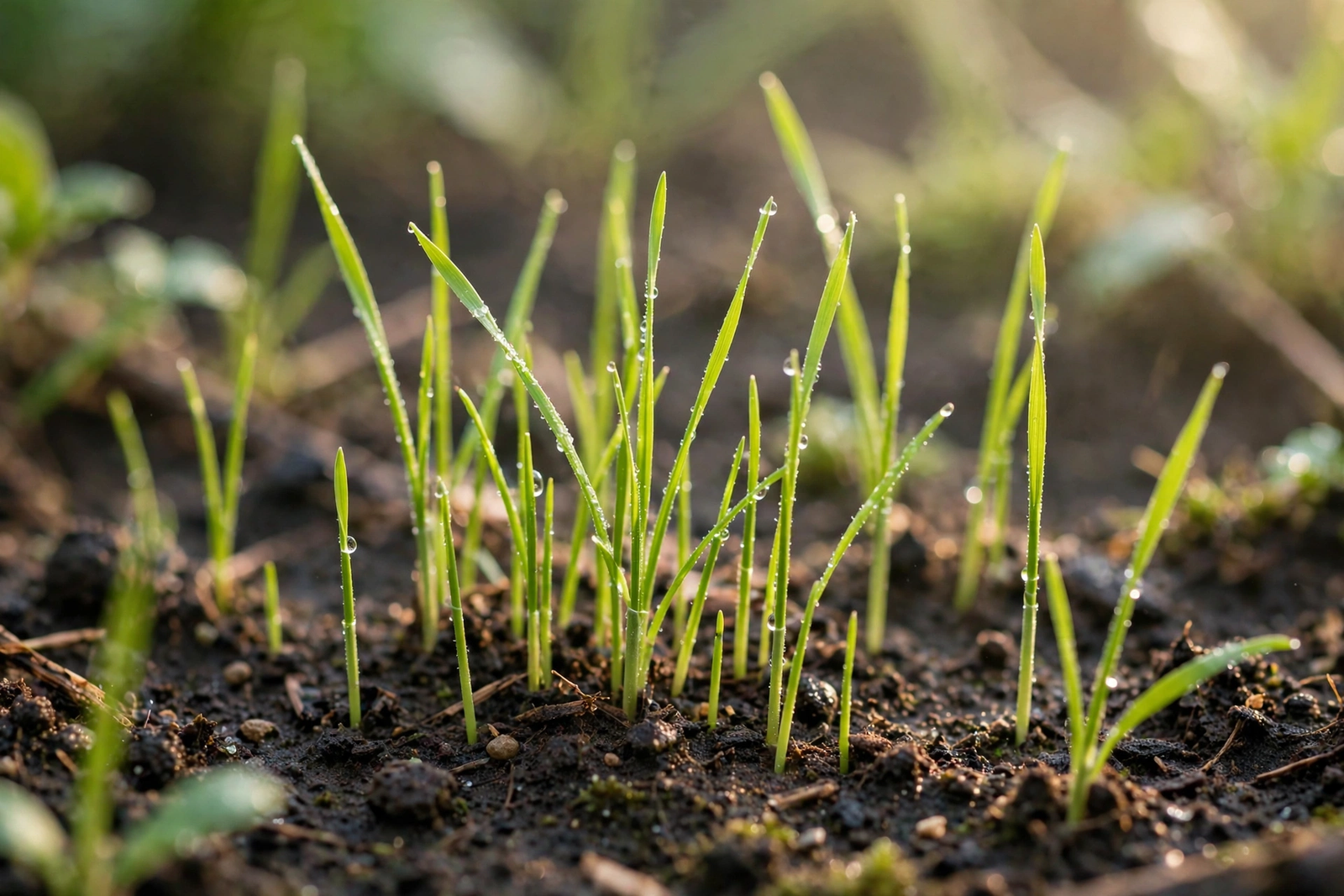
- Days 7–14: A faint green haze appears as the first blades push through — ryegrass and fescue lead the way. Reduce watering frequency slightly but keep the surface damp.
- Days 14–21: Noticeable green coverage from fast species. Bluegrass and warm-season grasses are still mostly underground — be patient.
- Weeks 4–6: The lawn looks thin but real. This is when most people can do the first mow (see below).
- Weeks 6–10: Tillering (sideways spreading) fills in bare spots. The lawn thickens substantially and starts to look like an actual lawn.
How to Make Grass Seed Grow Faster
- Seed at the right time. Early fall (late August–September) is ideal for cool-season grasses: warm soil, cool air, fewer weeds. Late spring is best for warm-season grasses.
- Do a soil test first. Grass struggles in highly acidic or nutrient-poor soil. A $15–20 cooperative extension soil test tells you exactly what to amend. If nitrogen is low, see how to add nitrogen to soil step by step guide 2026“>how to add nitrogen to soil before you seed.
- Use a starter fertilizer at seeding time — one higher in phosphorus supports root development. Do not over-apply; follow the bag rate.
- Cover with straw or germination blanket on slopes or windy sites to hold moisture and prevent seed washout. Use clean, weed-free straw.
- Water correctly: short, frequent sessions (5–10 minutes, 2–4 times daily) until germination, then transition to deeper, less frequent watering to train deep roots.
The University of Minnesota Extension’s lawn care resources and the USDA PLANTS database offer research-backed seeding guidance for your region.
When to Mow, Fertilize, and Walk on New Grass
- First mow: when grass reaches 3–4 inches tall (usually week 4–6). Cut no more than one-third of the blade height, and make sure your mower blade is sharp — dull blades tear tender seedlings.
- Foot traffic: stay off newly seeded areas as much as possible for the first 3–4 weeks. Light traffic is okay after the first mow.
- Fertilizer: starter fertilizer at seeding, then a regular feeding 6–8 weeks after germination.
- Weed control: avoid pre-emergent herbicides when seeding — they prevent grass seed from sprouting too. Most post-emergent weed killers are unsafe until after the third or fourth mow.
Frequently Asked Questions
Why isn’t my grass seed growing after 3 weeks?
The most common causes are soil that is too cold, seed that dried out between waterings, seed buried too deep, or old seed with poor viability. Bluegrass and warm-season grasses legitimately take 3–4 weeks, so check your species’ expected timeline before assuming failure.
Can grass seed go bad?
Yes. Germination rates decline every year in storage. Seed stored cool, dry, and dark lasts 2–3 years, but for best results use seed tested within the past year. If your seed is old, sow at a heavier rate to compensate — or just buy fresh.
How often should I water new grass seed?
Until germination: 2–4 light waterings per day to keep the top half-inch moist. After sprouting: once daily. Once established (6–8 weeks): 1–1.5 inches per week in one or two deep sessions.
Should I overseed a thin lawn or start over?
If at least 50% of the lawn is healthy grass, overseeding in fall is the easier fix. If the area is mostly weeds, bare dirt, or the wrong grass type for your climate, a full renovation (kill, prep, reseed) gives better long-term results.
What is the best month to plant grass seed?
For cool-season grasses: September (or late August) in most northern regions. For warm-season grasses: late spring once soil temperatures hold above 70°F. Seeding in peak summer heat or late fall is the hardest path — avoid it if you can.