Quick Answer: To get rid of squash bugs, hand-pick adults and nymphs into soapy water daily, scrape their bronze egg clusters off the undersides of leaves, and spray nymphs with neem oil or insecticidal soap. Cover young plants with floating row covers to prevent egg-laying, and destroy all crop debris at season’s end. Act fast — a small squash bug problem becomes a plant-killing infestation within weeks.
Squash bugs are among the most destructive pests of pumpkins, zucchini, and cucumbers. They suck sap, inject toxic saliva, and can kill plants just as they start producing — and adults resist most insecticides. A consistent hands-on approach started early genuinely works. Here is the battle plan.
How to Identify Squash Bugs
Correct identification matters because squash bugs are often confused with stink bugs and beneficial assassin bugs.
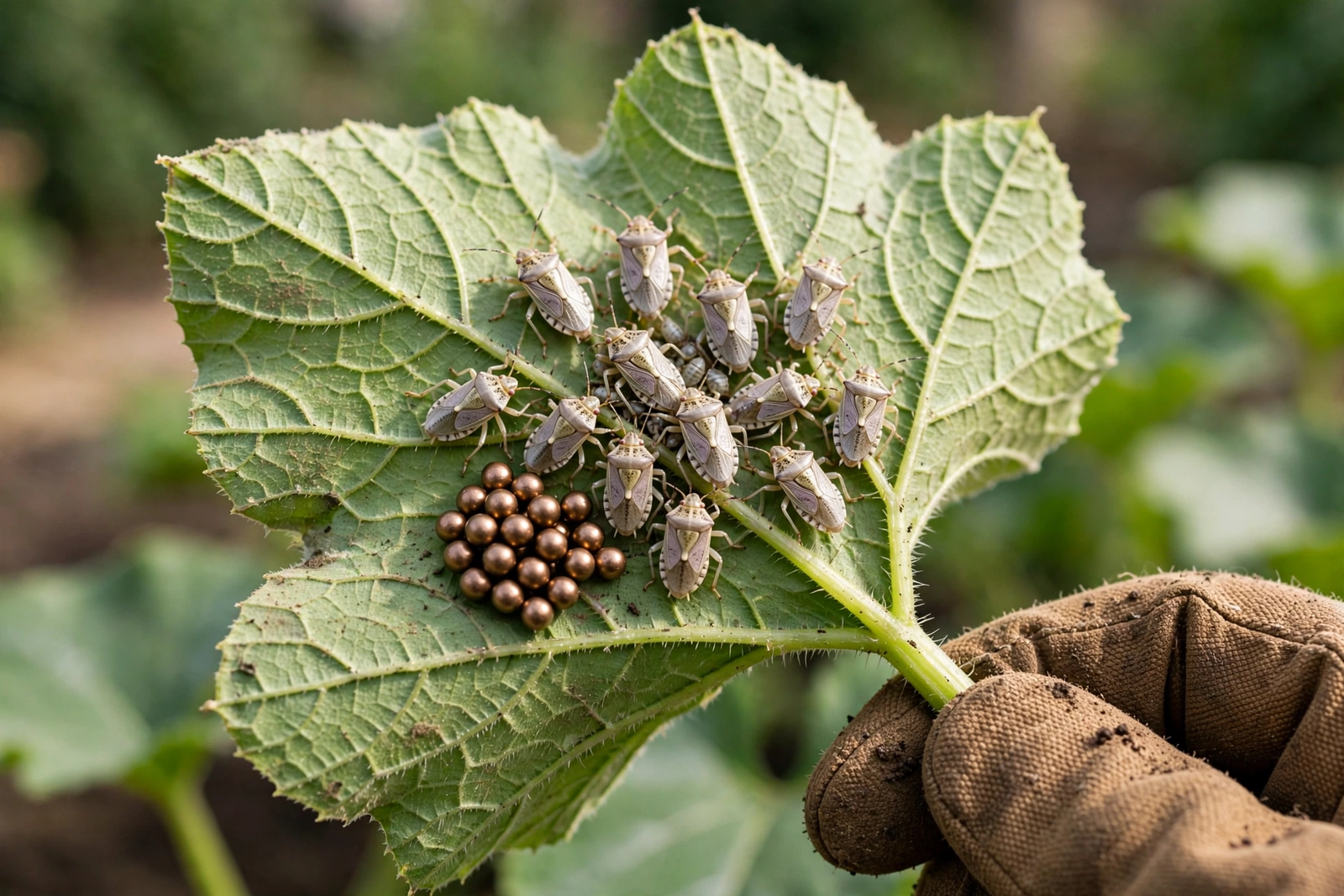
- Adults: flat, grayish-brown or black insects about 5/8 inch long with a shield-shaped body. They hide under leaves and at the base of plants during the day and scatter quickly when disturbed.
- Nymphs: young nymphs are pale green or gray with black legs; older nymphs turn gray with black markings. They cluster together on leaf undersides.
- Eggs: the telltale sign — clusters of small, shiny, bronze or copper-colored oval eggs laid in neat rows on the undersides of leaves, usually near leaf veins.
- Damage: yellow speckling on leaves that progresses to wilting, browning leaf edges, and eventually whole-plant collapse (sometimes called “anasa wilt” after their scientific name, Anasa tristis).
If you are growing squash, cucumbers, or pumpkins this year, our guide on how to start a vegetable garden step by step guide 2026“>starting a vegetable garden covers the soil and spacing fundamentals that keep plants vigorous enough to tolerate light pest pressure.
Why You Must Act Fast
Squash bugs produce one generation per year in the North (two in the South), but one overwintered female lays hundreds of eggs. Both nymphs and adults can transmit cucurbit yellow vine disease, which causes rapid, irreversible wilting. By the time damage is obvious, control is very difficult — early vigilance is everything.
Step 1: Inspect Plants Daily
Begin checking as soon as seedlings emerge or transplants go in — overwintered adults arrive early. Flip leaves over and look at the undersides, check stem bases, and look under mulch and boards near the plants. Morning is the best time; squash bugs are sluggish in cool temperatures and easier to catch. A daily 5-minute inspection of each plant catches problems while they are still manageable.
Step 2: Hand-Pick Adults and Nymphs
Hand-picking is the single most effective squash bug control for home gardens:
- Carry a bucket or jar of soapy water into the garden.
- Knock or pick adults and nymphs directly into the water, where they drown.
- Check hiding spots — under leaves, at stem joints, beneath mulch, and under boards you deliberately place as traps near plants (flip them each morning).
- Wear gloves — squash bugs release a foul odor when crushed.
Removing adults before they lay eggs prevents hundreds of future bugs — hand-picking consistently beats sprays alone.
Step 3: Destroy the Eggs
Eggs are your highest-leverage target — each cluster you remove prevents 15–40 future bugs.
- Scrape egg clusters off with a butter knife, old credit card, or your fingernail, and drop them into soapy water.
- Or use duct tape: press a strip of tape against the egg cluster and lift — eggs stick to the tape. Fold the tape over and discard it.
- Or snip the leaf section carrying eggs if the plant has plenty of foliage to spare.
- Focus on leaf undersides near veins, where females prefer to lay.
No spray reliably kills squash bug eggs — the shells protect them. Physical removal is the only dependable method, which is why daily inspection matters so much.
Step 4: Spray Nymphs With Neem Oil or Insecticidal Soap
While adults shrug off most sprays thanks to their hard shells, soft-bodied nymphs are vulnerable:
- Neem oil disrupts nymph feeding and development. Spray in the evening to avoid harming pollinators, coating leaf undersides thoroughly.
- Insecticidal soap kills nymphs on direct contact by breaking down their outer coating. It has no residual effect, so coverage must be thorough and repeat applications are needed every 5–7 days.
- Target young nymphs — the small, pale-green clustered stage is the most susceptible. Older gray nymphs and adults are much harder to kill with sprays.
Review the EPA’s pesticide safety guidance before using any pest control product.
Step 5: Use Row Covers and Trap Crops
- Floating row covers draped over young plants physically exclude egg-laying females. This is the most reliable preventive method available. Remove covers when female flowers appear so pollinators can reach the blossoms — or hand-pollinate and keep covers on longer.
- Trap cropping: plant Blue Hubbard squash at the garden’s edge 1–2 weeks before your main crop. Bugs flock to it — then destroy them there.
- Board traps: lay boards or shingles near plants overnight. Squash bugs shelter under them; flip and destroy the bugs each morning.
Row covers also protect against other garden pests — see how to repel carpenter bees step by step guide 2026“>how to repel carpenter bees for another exclusion-based pest strategy.
Step 6: Clean Up at Season’s End
Squash bugs overwinter as adults in debris, mulch, and woodpiles. Fall sanitation cuts next year’s population:
- Pull up and destroy (do not compost) all squash and pumpkin vines immediately after harvest.
- Remove mulch and debris from around the garden beds.
- Till or turn the soil lightly to expose overwintering adults to cold and predators.
- Rotate crops: do not plant squash-family crops in the same spot two years running.
For region-specific timing, check your local cooperative extension’s vegetable pest guides.
Frequently Asked Questions
Do squash bugs bite humans?
No. Squash bugs feed exclusively on plants — primarily squash, pumpkins, cucumbers, and melons. They do not bite people or pets, though they may land on you in the garden.
What is the difference between squash bugs and stink bugs?
They are related (both are true bugs), but squash bugs are narrower, darker, and found almost exclusively on cucurbit plants, while stink bugs are broader, shield-shaped, and feed on many crops including tomatoes and fruit. Squash bug nymphs cluster together; stink bug nymphs are often more colorful.
Will neem oil kill squash bug eggs?
No — the egg shells protect the developing insects inside. Neem oil and insecticidal soap work on nymphs (especially young ones) but not eggs or hard-shelled adults. Eggs must be physically scraped off or removed with tape.
Can a squash plant recover from squash bug damage?
Lightly damaged plants often recover once bugs are removed. Severely wilted or collapsed plants — especially with yellow vine disease — rarely recover; pull and destroy them to protect neighbors.
Does diatomaceous earth work on squash bugs?
Food-grade diatomaceous earth can kill nymphs that crawl across it, but it washes away with rain or irrigation, is ineffective when wet, and does little against adults or eggs. It is a minor supplement at best — not a standalone solution.