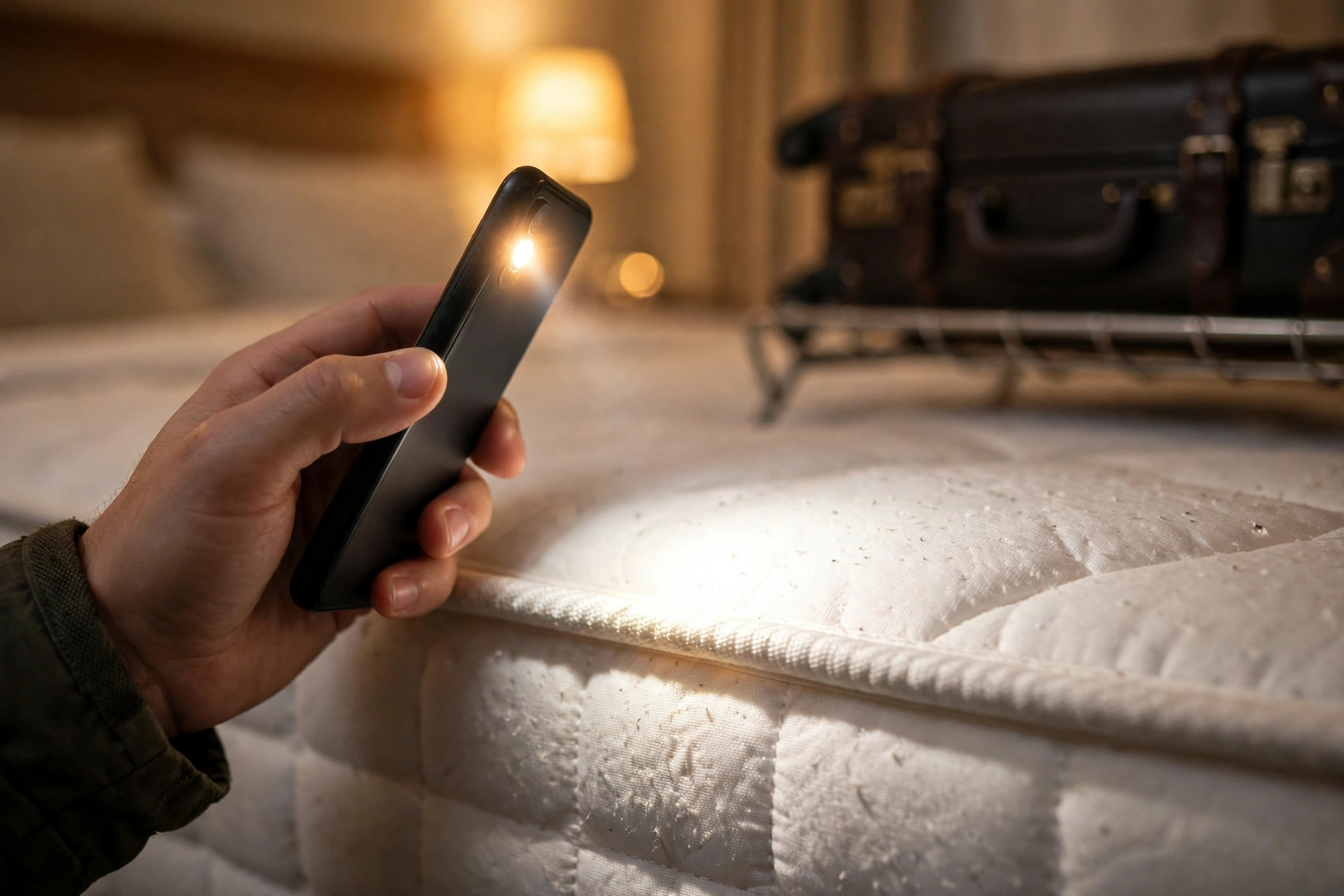
Quick Answer: To check for bed bugs at a hotel, inspect the mattress seams, box spring, headboard, and nightstands with your phone flashlight before unpacking. Put your luggage on the metal rack (never on the bed or floor). Look for rusty-red bugs the size of an apple seed, shed skins, and tiny black fecal spots. If you find any, request a different room on another floor.
Bed bugs do not care how nice the hotel is. They show up in budget motels and five-star resorts alike, hitching rides in luggage and settling into mattress seams and headboards. A two-minute inspection when you walk in can save you from bringing them home — where an infestation can cost hundreds or thousands of dollars to eliminate. You do not need special equipment: your phone’s flashlight and a little know-how are enough.
What Do Bed Bugs Look Like?
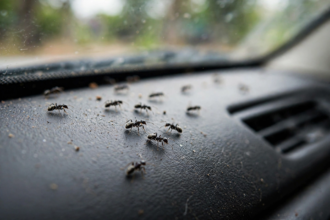
Adult bed bugs are about the size of an apple seed (4–5 mm), oval, flat, and rusty-red or mahogany brown. After feeding they swell and turn a darker red. Nymphs (young bed bugs) are smaller and nearly translucent. Their eggs are tiny, pearly white, and about the size of a pinhead — hard to spot but usually clustered in cracks.
Just as important as the bugs themselves are the signs they leave behind:
- Fecal spots: Tiny black or dark brown dots, like a marker bled through fabric. These are the most common sign and often the easiest to find.
- Shed skins: Translucent, empty exoskeletons in mattress seams and crevices.
- Blood smears: Rusty or reddish smears on sheets from bugs crushed during the night.
- Live bugs: Check seams and folds closely — they hide in the tightest crevices during the day.
According to the CDC’s bed bug information, bed bugs are not known to spread disease, but their bites cause itchy welts. The EPA’s bed bug guidance also publishes guidance on identifying and managing bed bugs safely.
Before You Start Inspecting
When you enter the room, do not flop onto the bed or set your suitcase on the floor — your luggage is their favorite taxi.
- Park your luggage in the bathroom or hallway while you inspect. Tile floors give bed bugs nowhere to hide.
- Turn on all the lights and pull out your phone flashlight. Bed bugs hide in dark crevices, so brightness matters.
- Check the bed area first, then the headboard, nightstands, and nearby upholstered furniture. About 70% of bed bugs in a room are found within a few feet of where people sleep.
Step-by-Step Hotel Room Inspection
1. Strip back the bedding
Pull back the sheets and run your flashlight slowly along every mattress seam, piping, and tuft — prime bed bug territory. Flip the mattress corners up, check the underside edges, then lift the mattress to inspect the box spring, especially its seams and corners.
2. Check the headboard
The headboard is the second most common hiding spot. Shine your light into the gap between a wall-mounted headboard and the wall; for a freestanding one, pull it slightly away and inspect the back, brackets, and any screw holes or cracks.
3. Inspect nightstands and furniture
Open nightstand drawers and check the joints, corners, and undersides, plus behind and under the unit. Do the same for any upholstered chair or sofa near the bed — check seams, cushions, and the underside.
4. Look at the luggage rack and closet
Before using the luggage rack, inspect its straps and joints. In the closet, check baseboards and nearby wall cracks. Keep your suitcase closed and zipped when not actively using it.
5. Quick curtain and baseboard check
In heavily infested rooms, bed bugs spread to curtain folds and baseboards. A quick flashlight sweep of the baseboards behind the bed and the lower curtain hems completes the inspection — the whole process takes under five minutes.
What to Do If You Find Bed Bugs
Do not try to sleep in the room “just for one night.” Even one night of exposure is enough for bugs to climb into your luggage.
- Do not move your luggage into the room. Leave it in the hallway or bathroom.
- Photograph the evidence. Clear photos of bugs or fecal spots support your case with management.
- Go to the front desk and report it calmly. Ask for a room change — specifically on a different floor, since infestations can spread to adjacent rooms.
- Inspect the new room the same way before unpacking.
- Consider switching hotels if the staff is dismissive or the problem seems building-wide.
If you suspect bugs got into your belongings anyway, run all fabric items through a hot dryer for at least 30 minutes when you get home — heat above 120°F (49°C) kills bed bugs at every life stage. For a full home-treatment plan, see our guide on how to get rid of fleas on humans step by step guide 2026“>eliminating biting pests from your home, and compare notes with our how to get rid of german cockroaches step by step guide 2026“>German cockroach removal guide.
Prevention Tips for Every Trip
- Use hard-shell luggage or pack clothes in sealed zip bags inside your suitcase — fewer entry points for hitchhikers.
- Keep the luggage rack away from the bed and wall. The metal rack in the middle of the room is the safest spot.
- Never put your suitcase on the bed, even in a room you have already inspected.
- Store dirty laundry in a sealed bag, separate from clean clothes.
- When you get home, unpack in the garage or laundry room, not the bedroom. Wash everything on hot and dry on high heat immediately.
- Vacuum your suitcase thoroughly, including seams and pockets, before storing it.
Frequently Asked Questions
Can you see bed bugs with the naked eye?
Yes. Adults are apple-seed sized and visible, though nymphs and eggs are much harder to spot. The black fecal spots they leave behind are often the first visible clue and are easier to find than the bugs themselves.
Do expensive hotels have bed bugs?
Yes. Bed bugs are carried in by guests, so any hotel with high turnover can get them regardless of price or star rating. Cleanliness of the room does not prevent bed bugs — they feed on blood, not dirt.
What should I do if I get bitten at a hotel?
Wash the bites with soap and water, avoid scratching, and use an anti-itch cream. Document the bites with photos and report the issue to hotel management in writing. If you develop a severe reaction, see a doctor.
Can bed bugs live in my luggage?
Absolutely — luggage is their main mode of transport between locations. They hide in seams, zippers, and pockets. Heat-treating your suitcase contents in a hot dryer and vacuuming the bag itself are the best defenses after a trip.
How long does a hotel room inspection take?
A thorough check of the mattress, headboard, nightstands, and luggage rack takes about five minutes. It is the highest-value five minutes of any hotel stay.
Should I use a bed bug spray in the hotel room?
No. Spraying pesticides in a hotel room is ineffective against hidden bugs, may violate hotel policy, and can scatter bed bugs deeper into hiding. Inspection and avoidance are far more effective than DIY spraying while traveling.