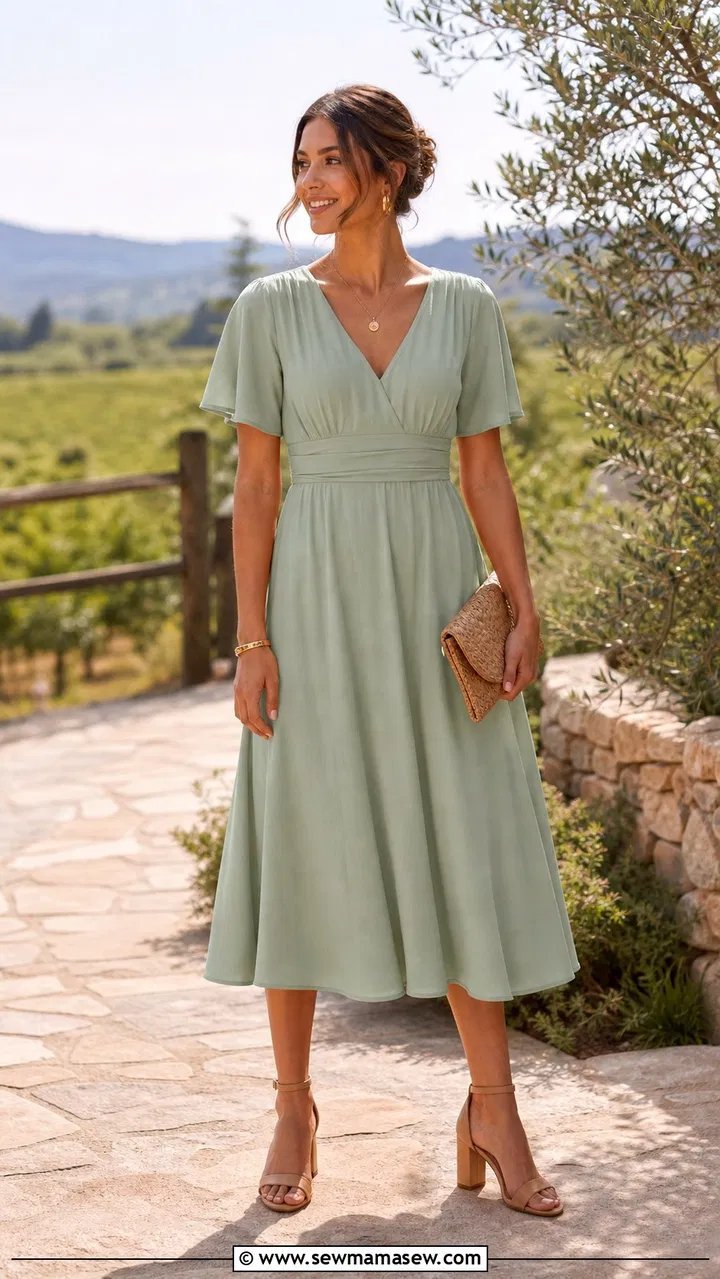
The midi dress is the wedding-guest sweet spot — elegant without upstaging anyone, comfortable enough to actually enjoy the day. But it creates a specific shoe challenge: the hem hits mid-calf, which means your shoes are fully on display and they make or break the leg line. If you’re wondering what shoes should I wear with a midi dress for a wedding, this guide gives you the straight, no-fluff answer.
The right shoe depends on three things: the venue (grass vs. ballroom changes everything), the season, and the dress’s vibe. Here’s how to nail it.
The Safest Choices: Heels That Always Work
A nude or metallic strappy heel is the universal answer — it elongates the leg (critical with a midi hem), matches everything, and reads ‘wedding’ instantly. Nude-for-you tones (match your skin, not a generic ‘nude’) create an unbroken leg line that makes the midi length look intentional and elegant. Block heels are the smart version: same polish, far more stability, and grass-friendly.
Heel height guidance: 2-3 inches is the sweet spot for comfort through ceremony, photos, dinner, and dancing. Higher is fine if you’re practiced, but weddings are marathons — I’ve seen too many guests barefoot by 9 p.m. because they chose drama over endurance. Your feet will thank you for the block heel. The Knot wedding guest attire guides
- Nude strappy heels: the universal answer — elongates legs, matches everything.
- Metallic sandals: gold or silver reads festive and pairs with any dress color.
- Block heels (2-3″): wedding-marathon comfort with full polish; grass-safe.
- Match nude to YOUR skin: the leg-lengthening trick only works with your tone.
- Break them in: wear new shoes twice before the wedding. Blisters ruin receptions.
Flats and Low Options (Yes, They’re Fine)
Let’s kill the myth that weddings require heels: elegant flats are completely appropriate, and for outdoor, beach, or long-day weddings they’re often smarter. Pointed-toe flats in metallic, nude, or black look refined with a midi — the pointed toe preserves the leg-lengthening effect that round toes lose. Ballet flats, pointed mules, and dressy loafers all work.
Wedges are the outdoor wedding hero: they give height without sinking into grass, and espadrille wedges suit beach and garden weddings perfectly. For winter weddings, a heeled ankle boot in suede or leather with a midi dress is chic and practical. The rule: the shoe should look deliberate and dressy, not like you gave up. Brides wedding guest shoe guides
- Pointed flats: metallic or nude — elegant, comfortable, fully wedding-appropriate.
- Wedges for outdoors: height without sinking into grass; espadrilles for beach/garden.
- Dressy mules: pointed mules bridge flats and heels elegantly.
- Heeled ankle boots: the chic winter-wedding solution with midi lengths.
- Avoid: flip-flops, athletic shoes, and anything scuffed — deliberate dressiness is the bar.
Match Shoes to Venue and Season
Venue dictates practicality. Beach wedding: flat sandals or dressy flip-flops (embellished, not pool slides) — heels sink in sand, full stop. Garden/outdoor: block heels, wedges, or flats — stilettos and grass are enemies. Ballroom/church: anything goes, this is where your best heels shine. Barn/rustic: block heels or boots suit the terrain and the vibe.
Season matters too: open toes for spring/summer, closed toes or boots for fall/winter. And coordinate with the dress’s formality — a sequined midi wants a sleeker shoe than a cotton sundress midi. When in doubt, ask the couple or wedding party about terrain; ‘what are people wearing on their feet?’ is a completely normal question.
- Beach: flat dressy sandals — heels sink in sand, no exceptions.
- Garden/outdoor: block heels, wedges, or flats — stilettos vs. grass loses.
- Ballroom/formal: your best heels — this is their moment.
- Match dress formality: sleek shoes for dressy fabrics, relaxed for casual.
- Ask about terrain: totally normal question; saves you from grass-stuck stilettos.
Common Mistakes to Avoid
Knowing what to do is only half the battle — knowing what not to do saves you from the traps that catch most people. These are the mistakes I see over and over, and every one of them is avoidable once you know to watch for it.
- Stilettos on grass: physics wins — heels sink, you wobble, the shoes are ruined. Block heels, wedges, or flats for outdoor venues.
- New shoes on wedding day: unbroken-in shoes + a 10-hour celebration = blisters by dinner. Wear them twice beforehand, minimum.
- Ignoring the venue terrain: beach, garden, and ballroom demand different shoes. Ask about terrain — it’s a normal question.
- White or bridal-adjacent: the one hard rule of weddings. When in doubt about a pale dress, choose something else.
- Forgetting the leg line: midi hems put shoes on full display. Nude-for-you tones elongate; ankle straps shorten — choose accordingly.
Frequently Asked Questions
Can I wear flats to a wedding?
Absolutely — elegant pointed flats in metallic, nude, or black are fully wedding-appropriate. Comfort through a 10-hour celebration beats heel height. The ‘must wear heels’ rule is outdated; deliberate dressiness is what matters.
What heel height is best for a wedding?
2-3 inches is the sweet spot — polished through ceremony, photos, dinner, and dancing. Higher works if you’re practiced, but weddings are marathons. Block heels give the look with far more endurance than stilettos.
Are white shoes okay for a wedding?
White shoes are generally fine (the ‘no white’ rule is about dresses, not shoes) — but nude, metallic, or color-coordinated shoes are safer choices that avoid any side-eye. When in doubt, metallics please everyone.
What should I do if it rains?
Have a backup plan: wedges or block heels handle damp grass better than stilettos, and a small umbrella in the car covers surprises. Check the forecast and the couple’s rain plan — outdoor weddings in rain season usually have one.
Pro tip: Pick one change from this guide and do it today — not tomorrow, today. Momentum beats planning: a single action taken now outperforms a perfect plan started next week.
What shoes should I wear with a midi dress for a wedding: The Bottom Line
For a midi dress at a wedding: nude strappy heels or metallic sandals are the universal safe choice (block heels for comfort and grass), pointed flats or wedges are fully appropriate alternatives, and venue dictates the practical pick — flats for beach, wedges for garden, best heels for ballroom. Match nude to your skin tone, break shoes in beforehand, and remember the goal: shoes that look deliberate, survive the whole celebration, and let you dance. Comfort isn’t the enemy of elegance here; it’s the prerequisite.