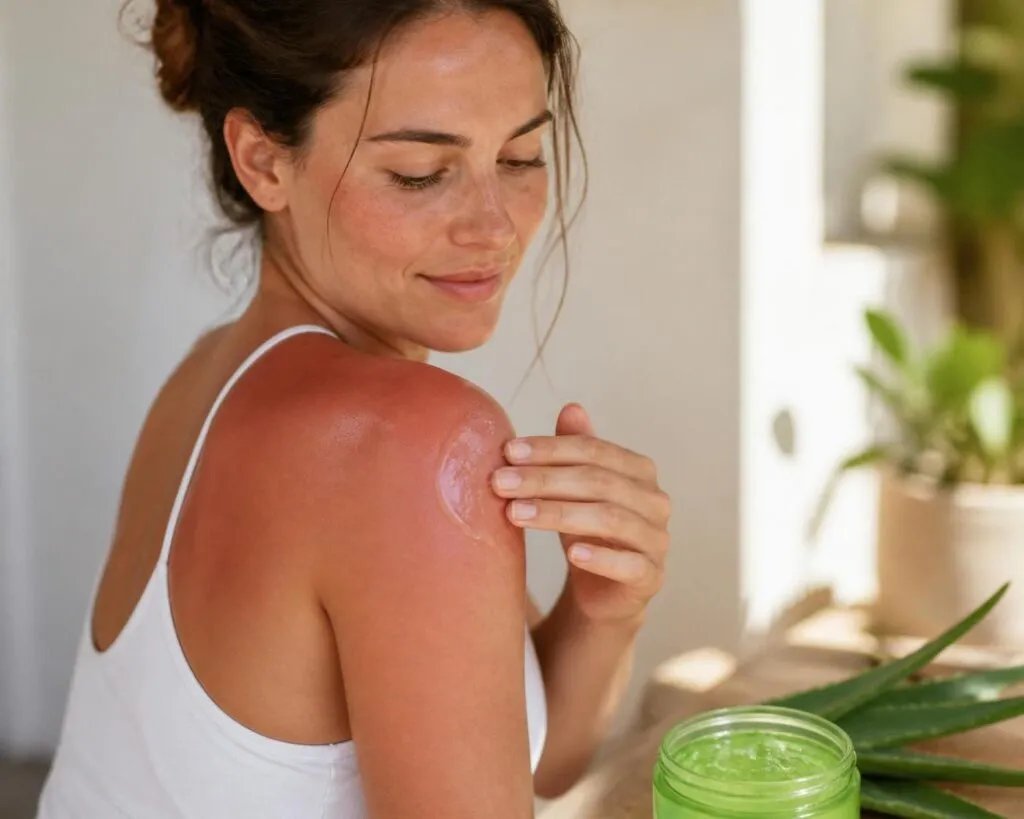
You fell asleep by the pool, skipped reapplying sunscreen, or just underestimated a cloudy day — and now your shoulders look like a lobster and feel like they’re on fire. Sunburn is miserable, but the good news is that most cases can be handled at home with simple, cheap remedies. That’s why so many people ask what is the best way to treat a sunburn at home — and why you deserve a real answer, not clichés.
The goal of sunburn treatment is straightforward: cool the skin, calm the inflammation, keep it hydrated, and don’t do anything that makes it worse (there are a few classic mistakes). Here’s exactly what to do, in order.
First Steps: Cool It Down Immediately
Act fast — the sooner you cool the burn, the better. Get out of the sun immediately (obvious, but people linger), then cool the skin with damp towels, a cool shower, or a cool bath. Not ice-cold: freezing water on burned skin is too harsh and can cause more damage. Think cool and gentle. dermatologist guidance on sunburn care
If you have aloe vera gel, this is its moment. Pure aloe (or a gel that’s mostly aloe without added alcohol or fragrance) soothes burned skin genuinely well. Keep it in the fridge for extra cooling power. No aloe? A fragrance-free moisturizer with ceramides works as a backup. Apply generously and reapply as it absorbs.
- Cool shower or damp towels: 10-15 minutes of gentle cooling as soon as possible.
- Refrigerated aloe vera gel: the gold standard for sunburn relief. Check it’s alcohol-free.
- Drink extra water: sunburn pulls fluid to the skin’s surface — you’re more dehydrated than you feel.
- Wear loose, soft clothing: tight fabrics rubbing on a burn is its own special misery.
- Don’t pick at peeling skin: let it shed naturally; picking risks infection and scarring.
Calm the Inflammation and Pain
Sunburn is inflammation — your immune system responding to UV-damaged skin cells. An over-the-counter anti-inflammatory like ibuprofen, taken early, genuinely reduces redness, swelling, and pain. Take it as directed on the package, ideally within the first few hours. Acetaminophen helps pain but doesn’t fight inflammation, so ibuprofen is the better pick here.
For the itch and tightness that arrive on day two or three, a fragrance-free moisturizer applied to damp skin locks in moisture. Some people swear by cool oatmeal baths for widespread burns, and there’s decent logic to it — oatmeal is anti-inflammatory for skin. Avoid anything with ‘numbing’ ingredients like benzocaine, which can irritate burned skin further.
- Ibuprofen early: reduces inflammation, not just pain. Follow package directions.
- Moisturize damp skin: apply fragrance-free lotion right after cooling to seal in moisture.
- Cool oatmeal bath: a cup of colloidal oatmeal in a cool bath soothes large-area burns.
- Skip benzocaine products: ‘numbing’ sprays can irritate damaged skin — avoid them.
- Hydrocortisone cream (1%): can help with itching on small areas, used sparingly.
Mistakes That Make Sunburn Worse
A few well-meaning remedies actually backfire. Ice directly on skin can damage already-injured tissue. Butter, coconut oil, or petroleum jelly trap heat in the skin during the first day — moisturize later, not immediately. And please don’t pop blisters: they’re nature’s sterile bandage, protecting the healing skin underneath. CDC guidance on sun safety and UV exposure
The biggest mistake, though, is going back in the sun while you’re still burned. Damaged skin burns faster and deeper the second time. Stay covered or indoors until the redness and tenderness fully resolve — usually 3 to 5 days for a moderate burn. Your skin is literally asking for a break.
- No ice directly on skin: too harsh for burned tissue. Cool, not freezing.
- No oils or butter on fresh burns: they trap heat. Wait until the burn has cooled (day 2+).
- Don’t pop blisters: leave them intact; they’re protecting healing skin underneath.
- Stay out of the sun until healed: re-burning damaged skin compounds the injury.
- See a doctor if: blistering is severe, you have fever/chills, or the burn covers a large area.
Common Mistakes to Avoid
Most people don’t fail for lack of effort — they fail because of a handful of predictable mistakes. Sidestep these five and you’re already ahead of the vast majority of people tackling this.
- Applying ice directly: freezing temperatures damage already-injured skin. Cool — not ice-cold — is the rule.
- Smearing on butter or coconut oil immediately: oils trap heat in fresh burns. Cool first, moisturize later (day 2+).
- Popping blisters: they’re sterile natural bandages. Popping invites infection and scarring — leave them alone.
- Going back in the sun too soon: burned skin re-burns faster and deeper. Stay covered until fully healed, usually 3-5 days.
- Using benzocaine ‘numbing’ sprays: they can irritate damaged skin further. Aloe and ibuprofen are safer bets.
Frequently Asked Questions
How long does sunburn last?
Mild sunburn: 3-5 days. Moderate with blistering: up to a week or more. Peeling typically starts around day 3. If pain is severe, blisters cover large areas, or you have fever/chills, see a doctor — that’s beyond home treatment.
Does aloe vera actually help sunburn?
Yes — it’s one of the few home remedies with real evidence. Aloe cools, moisturizes, and has mild anti-inflammatory properties. Pure aloe gel (no added alcohol or fragrance) works best; keep it refrigerated for extra relief.
Should I put sunscreen on a sunburn?
Once the initial heat has calmed (after day 1), yes — protecting healing skin from further UV is important if you must go outside. Better: cover the burn with clothing and stay in shade until healed.
Why do I get chills with sunburn?
Severe sunburn triggers a whole-body inflammatory response — essentially your immune system reacting to widespread skin damage. Chills, fever, and nausea with sunburn warrant medical attention, not just aloe.
Pro tip: Put a recurring monthly reminder on your phone to revisit the key habits in this guide. Most good practices fade not from failure but from forgetting — a simple nudge keeps them alive.
What is the best way to treat a sunburn at home: The Bottom Line
Treat sunburn by cooling the skin quickly, applying refrigerated aloe vera, taking ibuprofen early for inflammation, staying hydrated, and moisturizing as it heals. Avoid ice, butter, popping blisters, and — critically — more sun until you’re fully healed. Most sunburns improve in 3-5 days. And the best treatment is prevention: the burn you don’t get is the one that never hurts. Sunscreen, reapplied, every time.