The average American eats about 17 teaspoons of added sugar a day — more than double what health authorities recommend. And most of it isn’t from desserts; it’s hiding in yogurt, bread, pasta sauce, and drinks. No wonder cutting sugar feels impossible: you’re fighting an opponent you can’t even see. The question of what are simple ways to reduce sugar intake without feeling deprived comes up constantly — here’s what actually works.
Here’s my honest take: going cold turkey on sugar works for almost nobody. The approach that actually sticks is stealth reduction — small swaps that cut grams without triggering the deprivation mindset that leads to 11 p.m. ice cream binges. These are the swaps I recommend to anyone starting out.
Start With Drinks: The Biggest Win
If you change one thing, change your drinks. A single 20-ounce soda has about 65 grams of sugar — more than an entire day’s recommended limit in one bottle. And liquid sugar is uniquely bad because it doesn’t fill you up; your body barely registers those calories, so you eat just as much on top of them. American Heart Association guidance on added sugars
You don’t have to switch to plain water overnight (though that’s the goal). Step down gradually: soda to flavored sparkling water, sweetened iced tea to half-sweet, sugary coffee drinks to coffee with a splash of real milk and cinnamon. Each step cuts 10-20 grams without you feeling punished. Within a month, the old drinks will taste shockingly sweet.
- Soda → sparkling water: the fizz satisfies the soda habit; add lemon or lime for flavor.
- Sweet tea → half-sweet: cut the sugar in half for two weeks, then cut again.
- Fancy coffee → coffee + milk + cinnamon: saves 30-50g of sugar and a few dollars.
- Juice → whole fruit: juice is basically soda with vitamins. Eat the orange instead.
- Keep water visible: a water bottle on your desk beats a soda run to the vending machine.
Stealth Swaps in Food That You’ll Barely Notice
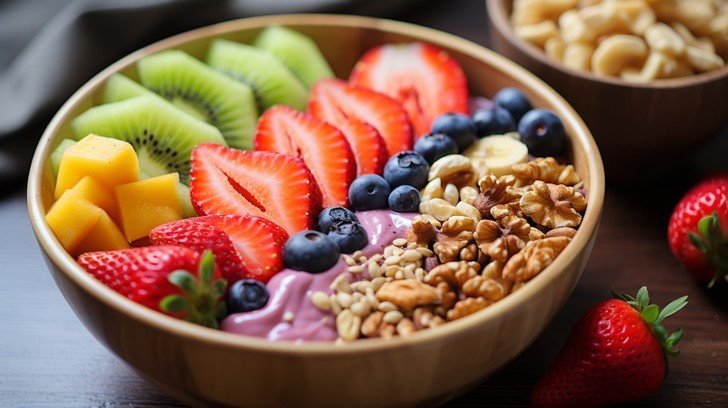
Food swaps work best when they’re invisible. Plain yogurt with fresh berries instead of flavored yogurt (which can pack 20+ grams of added sugar). Oatmeal with cinnamon and banana instead of instant flavored packets. These aren’t sacrifices — after a week, most people genuinely prefer the less-sweet version because their taste buds recalibrate. That’s the real secret: your palate adapts faster than you think.
Learn to spot sugar’s aliases on labels: anything ending in ‘-ose’ (sucrose, fructose, dextrose), plus syrup, nectar, and juice concentrate. And check the usual suspects — pasta sauce, ketchup, bread, granola bars, salad dressing. You don’t need to eliminate these; just pick the lower-sugar version next grocery trip. CDC resources on healthy eating and nutrition
- Flavored yogurt → plain + fruit: cuts 15-20g of sugar per serving, tastes better.
- Sugary cereal → oatmeal: top with berries and cinnamon instead of buying the frosted kind.
- Read pasta sauce labels: some brands have 12g of sugar per serving; others have 4g.
- Dark chocolate over milk: 70%+ dark satisfies with a square or two instead of a whole bar.
- Fruit for dessert: berries with a little whipped cream beats cake most nights — really.
Handle Cravings Without Caving
Cravings will come, especially in the first two weeks. The mistake is treating them as emergencies that require either total resistance or total surrender. There’s a middle path: the 10-minute rule. When a craving hits, drink a glass of water, wait 10 minutes, and do something else. Most cravings are waves — they peak and fade whether you feed them or not.
Also, don’t let yourself get ravenous. Skipping meals is the number one trigger for sugar binges because your brain screams for fast energy. Eat enough protein and fiber at meals, keep nuts or cheese handy for the 4 p.m. slump, and sleep enough — one bad night of sleep measurably increases sugar cravings the next day.
- Use the 10-minute rule: water, wait, distract. Most cravings fade on their own.
- Never get ravenous: regular meals with protein prevent the desperate 9 p.m. sugar hunt.
- Keep emergency snacks: nuts, cheese, or an apple handle the afternoon slump without a candy bar.
- Sleep 7+ hours: poor sleep spikes the hunger hormone ghrelin and specifically drives sugar cravings.
- Allow planned treats: a scheduled dessert twice a week prevents the deprivation-binge cycle.
Common Mistakes to Avoid
A quick word on what not to do — because the fastest way to succeed at anything is to stop doing the things that guarantee failure. These five mistakes are more common than the right moves.
- Going cold turkey on all sugar: extreme restriction triggers binges. Gradual reduction sticks; prohibition backfires.
- Replacing sugar with artificial sweeteners entirely: they keep your sweet tooth calibrated high. The goal is recalibrating your palate, not swapping the source.
- Only checking desserts: the biggest sugar sources are drinks, sauces, yogurt, and bread — not cake. Audit the savory stuff.
- Skipping meals to ‘save calories’: ravenous hunger drives sugar binges. Regular protein-rich meals prevent the 9 p.m. raid.
- Trusting ‘healthy’ labels: granola bars, flavored yogurt, and smoothie bowls often pack more sugar than candy. Read the panel, not the marketing.
Frequently Asked Questions
How much added sugar per day is okay?
The American Heart Association recommends under 36g daily for men and 25g for women; the general guideline caps at under 10% of calories. The average American eats ~77g — roughly triple the recommendation. You don’t need zero; you need less.
Is fruit sugar as bad as added sugar?
No — whole fruit comes with fiber, water, and nutrients that slow absorption and increase fullness. The problem is added sugars and juice (fiber removed). Eat the orange; skip the orange juice.
Will cutting sugar help me lose weight?
Often yes, mainly because sugary foods and drinks are calorie-dense and unsatisfying — cutting them reduces intake without hunger. But sugar isn’t uniquely fattening; total calories still rule. Cut sugar as part of better eating, not as magic.
How long do sugar cravings last?
Intense cravings typically fade within 1-2 weeks of reduced intake as your palate recalibrates. The first 3-4 days are hardest. After two weeks, formerly-normal sweetness levels often taste too sweet — that’s your taste buds resetting.
Pro tip: Track the one metric that matters most for your goal (not five metrics — one) for 30 days. What gets measured gets managed, and a single number keeps you honest without overwhelming you.
What are simple ways to reduce sugar intake without feeling deprived: The Bottom Line
Cutting sugar without misery is about stealth, not suffering: fix drinks first (the biggest source), make invisible food swaps, and manage cravings with the 10-minute rule instead of white-knuckling. Your taste buds will recalibrate within a couple of weeks — foods you love now will start tasting too sweet. And keep planned treats in the picture. A sustainable 50% cut beats a miserable 100% cut that lasts four days.