Credit cards are one of the most powerful — and most misunderstood — financial tools available. Used well, they build credit, earn rewards, and protect your purchases. Used poorly, they become very expensive debt. Here’s everything you need to know, in plain English.
The Basics: What’s Actually Happening
When you swipe a credit card, you’re not spending your own money — you’re borrowing from the card issuer (usually a bank), which pays the merchant on your behalf. You then owe the issuer that amount, and you repay it on your monthly billing cycle.
Four parties are involved in every transaction:
- You (the cardholder) — borrow and repay
- The merchant — receives payment (minus a small processing fee)
- The issuer (your bank) — lends you the money, bills you monthly
- The network (Visa, Mastercard, Amex, Discover) — routes the transaction between issuer and merchant’s bank
Key Terms Explained
Credit Limit
The maximum you can borrow — say, $5,000. Your available credit is the limit minus your current balance. Limits are set based on your income, credit history, and the issuer’s policies.
Billing Cycle & Statement
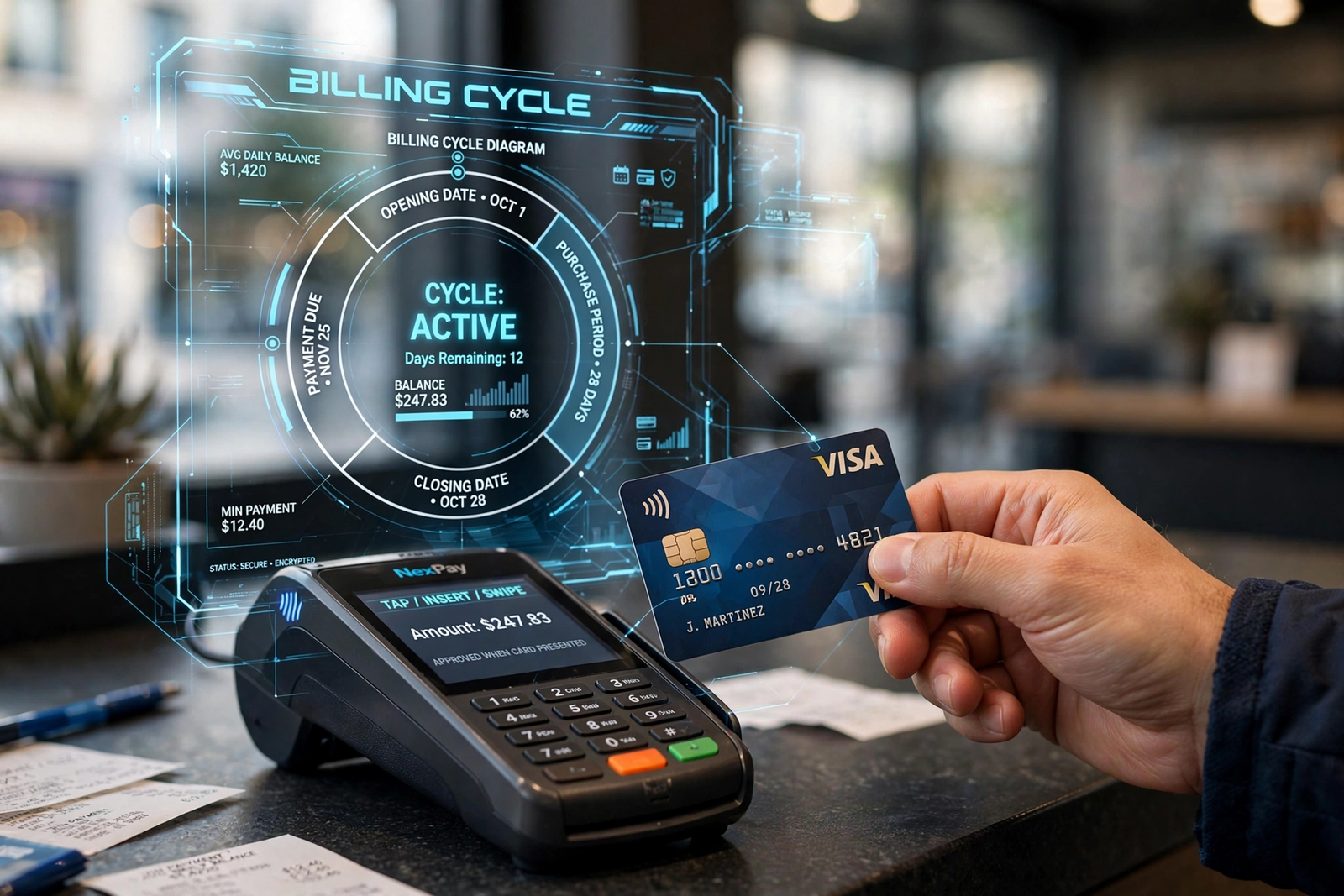
Your billing cycle (usually ~30 days) ends on the statement closing date. Everything you charged during the cycle appears on that statement, with a payment due date about 21–25 days later.
Grace Period
The time between the statement date and due date. If you paid your previous balance in full, new purchases accrue no interest during the grace period. This is the key to using credit cards for free.
Minimum Payment
The smallest amount you must pay to stay in good standing (usually 1–2% of the balance or $25, whichever is higher). Paying only the minimum keeps the account current but lets interest pile up — a $3,000 balance at 24% APR takes over a decade to repay with minimum payments alone.
APR (Annual Percentage Rate)
The yearly interest rate on carried balances. The average credit card APR in 2026 hovers around 22–24%. Cash advances usually carry even higher APRs with no grace period — avoid them.
How Interest Actually Works
Interest accrues daily on any balance past the due date. The issuer divides your APR by 365 to get a daily rate, applies it to your average daily balance, and adds it monthly. This compounding is why credit card debt grows so fast: you’re paying interest on last month’s interest.
The golden rule: pay your statement balance in full every month and you will never pay a cent of interest. The card becomes a free short-term loan plus rewards.
How Credit Cards Build Your Credit Score
Issuers report to the three bureaus (Equifax, Experian, TransUnion) monthly. What matters most:
- Payment history (35% of score): Pay on time, every time. One 30-day late payment can drop your score 60–100+ points.
- Credit utilization (30%): Keep balances below 30% of your limit — below 10% is ideal. A $500 balance on a $5,000 limit = 10% utilization.
- Length of history, new credit, and mix make up the rest.
Rewards, Fees, and Fine Print
- Rewards: Cash back (1–5%), travel points, or miles. Worth it only if you pay in full monthly — no reward outweighs 24% interest.
- Annual fees: $0–$550+. Premium cards can be worth it for heavy travelers; most people should start with no-annual-fee cards.
- Foreign transaction fees: Typically 3% — get a no-foreign-fee card if you travel.
- Late fees: Up to $30–$41 per occurrence, plus penalty APRs.
Smart Credit Card Habits
- Pay the full statement balance every month — automate it
- Keep utilization low; ask for limit increases over time (without hard inquiries when possible)
- Never use cards for cash advances
- Review statements monthly for fraud
- Keep your oldest card open (length of history matters)
- Don’t open many cards at once — each application is a hard inquiry
Building credit is also essential for major purchases — see how long is a mortgage pre approval good for and how can i get a personal loan.
The CFPB’s credit card explainer and Experian’s guide are excellent further reading.
Frequently Asked Questions
Do I need a credit card to build credit?
It’s the easiest way, but not the only way. Credit-builder loans, secured cards, and being an authorized user also build history. What matters is on-time payments reported to the bureaus.
Is it bad to have a $0 balance on my credit card?
No — paying in full is ideal. A common myth says you must carry a balance to build credit; you don’t. Paid-in-full accounts build excellent history.
How many credit cards should I have?
There’s no magic number. Two to three cards used responsibly is plenty for most people — enough for utilization flexibility and backup, without complexity.
What’s the difference between a credit card and a debit card?
A debit card spends money directly from your checking account. A credit card borrows from the issuer. Credit cards offer stronger fraud protection and build credit; debit cards can’t put you in debt.
What happens if I only pay the minimum?
You stay in good standing, but interest compounds on the rest. Minimum-only payments on a typical balance can cost thousands in interest and take 10+ years. Always pay more than the minimum when possible.