
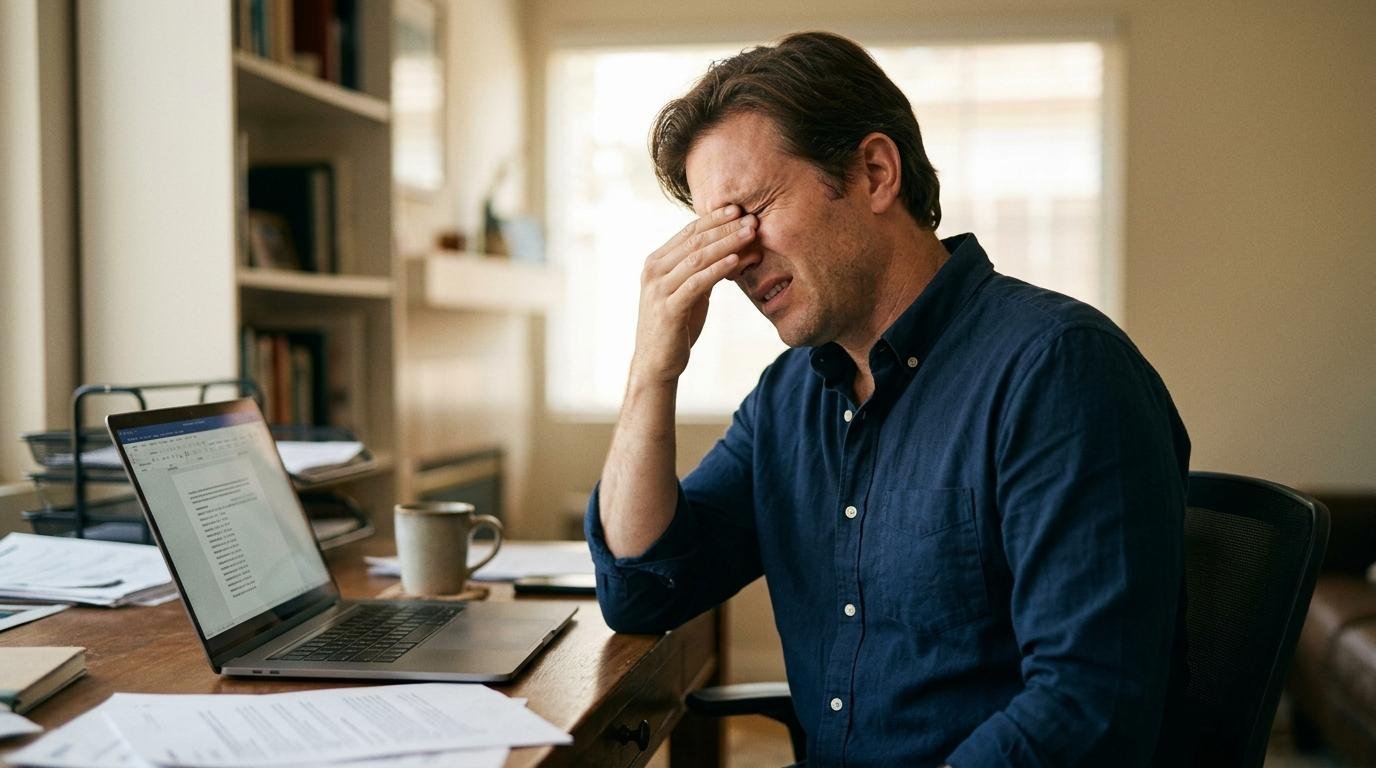
Your eyes feel tired, you’re squinting at your screen, and by evening you have a headache brewing behind your eyes. Is your vision actually getting worse, or are you just exhausted? It’s a genuinely tricky question because tiredness and vision problems share almost all the same symptoms. So let’s take how do I know if I need glasses or just need more rest seriously and answer it properly.
Here’s how to sort it out: sleep deprivation causes eye symptoms that vanish after real rest, while vision problems cause symptoms with a pattern — same time of day, same distances, same activities. Let me walk you through the differences so you know whether to book an eye exam or just go to bed earlier.
Signs It Might Actually Be Your Vision
Vision problems have a signature: they’re consistent and distance-specific. If you always squint at road signs but read your phone fine, that’s distance vision (likely nearsightedness). If small print is the struggle but driving is fine, that’s near vision. Tiredness doesn’t care about distance — it makes everything feel equally awful. American Optometric Association eye exam guidance
Headaches are another clue. Vision-related headaches typically build through the day as your eyes strain, often centered in the forehead or temples, and they improve on days you don’t do much close-up work. If your headaches follow your screen time like clockwork, your eyes are telling you something. Also watch for holding things at arm’s length to read, sitting closer to the TV, or one eye doing all the work.
- Distance-specific blur: trouble far away but fine up close (or vice versa) points to vision, not fatigue.
- Headaches that track screen time: building through workdays, better on weekends — classic eye strain pattern.
- Squinting to see clearly: if squinting sharpens things up, your eyes are compensating for a refractive error.
- Holding things farther away: the ‘longer arms’ phenomenon is a hallmark of presbyopia after 40.
- Symptoms persist after good sleep: two solid nights of rest and still blurry? That’s not tiredness.
Signs You’re Probably Just Exhausted
Sleep-deprived eyes have their own signature too: burning, dryness, twitching eyelids, and trouble focusing that comes and goes. If your vision is fine in the morning and falls apart by 9 p.m., that’s fatigue, not a prescription problem. Eyelid twitches (myokymia) are almost always tiredness, caffeine, or stress — annoying but harmless and unrelated to needing glasses.
Dry, gritty eyes that improve with blinking or eye drops also point to fatigue and screen overuse rather than refractive error. When you stare at screens, your blink rate drops by more than half, and tired eyes dry out faster. If a good night’s sleep plus the 20-20-20 rule (every 20 minutes, look 20 feet away for 20 seconds) clears things up, you have your answer.
- Worse at night, fine in the morning: fatigue fades with rest; vision problems don’t.
- Burning or gritty feeling: dryness from low blink rate and tiredness, not a prescription issue.
- Eyelid twitching: classic sign of fatigue, caffeine, or stress — not vision loss.
- Comes and goes: fluctuating symptoms that vanish after rest point to exhaustion.
- Improves with the 20-20-20 rule: if breaks fix it, it was strain, not eyesight.
When to Book the Eye Exam
Here’s my rule: if symptoms persist after two weeks of genuinely good sleep (7-8 hours, consistent schedule), book an exam. Eye exams are quick, usually affordable, and they catch more than vision issues — they can spot early signs of diabetes, high blood pressure, and glaucoma. There’s no prize for toughing out blurry vision. National Eye Institute vision health resources
And if you’re over 40 and reading is getting harder, that’s almost certainly presbyopia — the lens in your eye stiffening with age. It happens to everyone, it’s not a disease, and readers or progressive lenses fix it completely. Don’t squint through it for years like I did; the headaches aren’t worth the stubbornness.
- Two-week test: fix your sleep for two weeks; persistent symptoms mean it’s time for an exam.
- Sudden vision changes: sudden blurriness, flashes, or vision loss need prompt medical attention — don’t wait.
- Over 40 and struggling to read: likely presbyopia. Normal, universal, and easily corrected.
- Kids squinting or struggling in school: get children’s eyes checked — they often don’t mention vision problems.
- Yearly exams after 60: glaucoma and macular degeneration are catchable early with regular checks.
Common Mistakes to Avoid
Success here is as much about avoidance as action. These are the pitfalls that quietly sabotage good intentions — run through them once and you’ll recognize (and dodge) every one.
- Assuming it’s just tiredness for months: the two-week test exists for a reason. Persistent symptoms after real rest need an exam, not more excuses.
- Buying readers without an exam: cheap readers help presbyopia but mask other issues. Get checked before self-prescribing — especially with headaches.
- Ignoring sudden changes: gradual blur is one thing; sudden vision changes, flashes, or vision loss need prompt medical care, not waiting.
- Skipping exams because vision ‘seems fine’: glaucoma and diabetic eye changes are silent early. Exams catch what you can’t feel.
- Blaming the screen for everything: screens cause strain, not refractive errors. If distance vision is worsening, that’s not the monitor’s fault.
Frequently Asked Questions
How often should adults get eye exams?
Every 1-2 years for most adults; annually after 60 or with diabetes, glaucoma risk, or existing vision correction. Your eye doctor will set the right interval for your situation.
Can tiredness actually blur your vision?
Temporarily, yes — fatigue reduces focusing stamina and tear quality, causing fluctuating blur, dryness, and difficulty concentrating visually. The key difference: it resolves with real rest, while refractive problems don’t.
Do screens damage eyesight permanently?
No evidence that screens cause permanent vision damage or refractive errors. They cause digital eye strain (dryness, fatigue, headaches) from reduced blinking and sustained focus — uncomfortable but reversible with breaks and good habits.
At what age do most people need reading glasses?
Presbyopia typically starts in the early-to-mid 40s — the lens stiffens and near focus weakens. It’s universal, not a disease. If you’re over 40 and holding menus at arm’s length, welcome to the club; readers or progressives fix it completely.
Pro tip: Schedule the maintenance, not just the start. Whatever habit or purchase this guide inspired, put its upkeep on your calendar now — future you is busy and will skip it otherwise.
How do I know if I need glasses or just need more rest: The Bottom Line
Tell them apart by the pattern: vision problems are consistent and distance-specific and survive good sleep; tiredness fluctuates, feels like burning or dryness, and clears up with rest. Try two weeks of real sleep plus screen breaks first. If symptoms persist — or if anything changes suddenly — book the eye exam. It’s 30 minutes that can save you years of headaches, literally.






One Comment