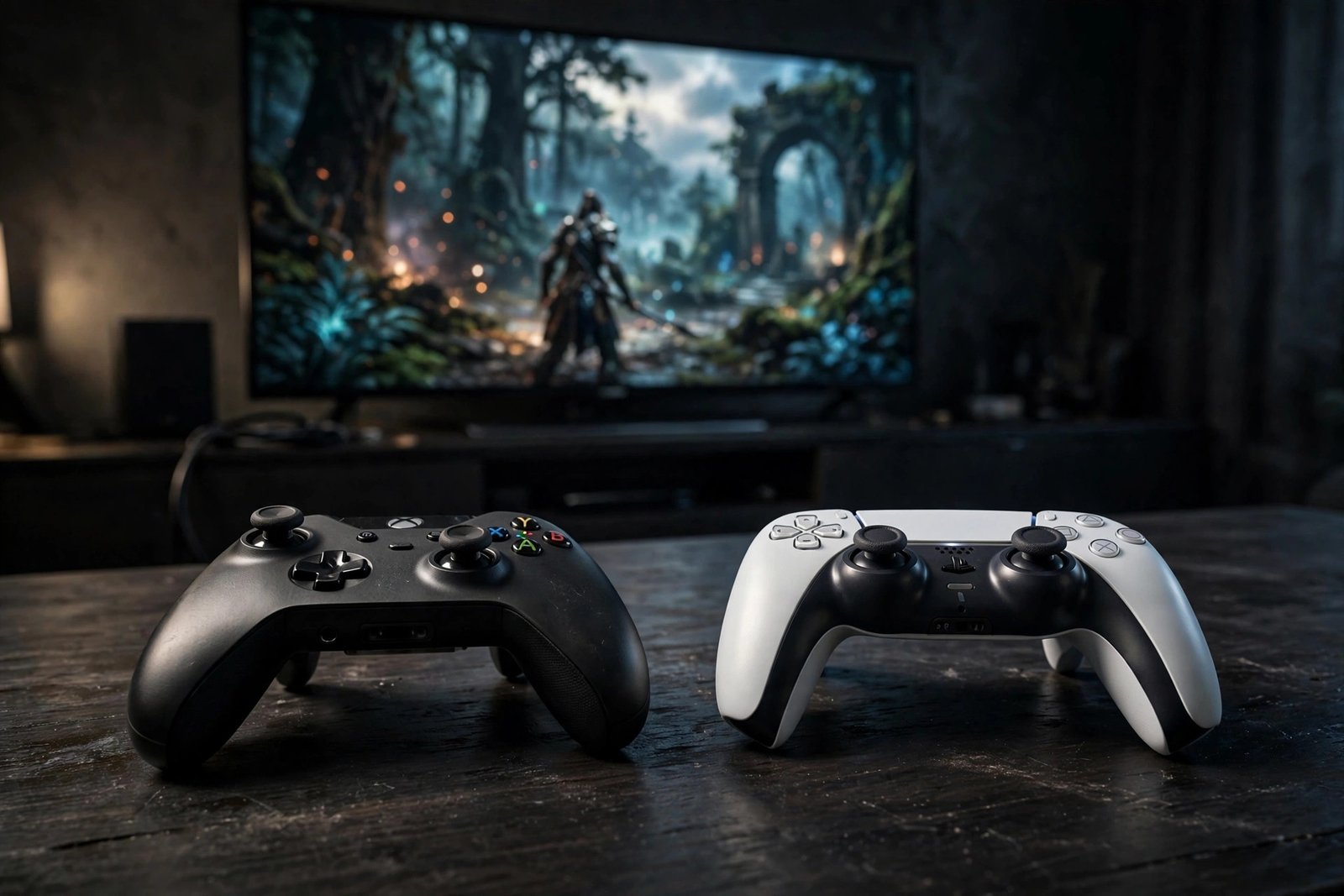
The console war of this generation was supposed to be over by now — but in 2026, the PlayStation 5 vs. Xbox Series X debate is livelier than ever, and the answer has genuinely shifted since launch. Mid-generation refreshes, game library shake-ups, subscription service evolutions, and price changes have moved the goalposts. Whether you’re buying your first current-gen console or switching sides, here’s the honest, up-to-date comparison.
The Hardware: Closer Than Ever
Let’s get the specs out of the way: both consoles play the same third-party games at effectively identical quality. The Series X has a slight raw power edge on paper; the PS5 has a faster SSD that virtually eliminates loading times. In practice, Digital Foundry-style pixel-counting reveals differences only in edge cases — no human buying a console in 2026 should decide on teraflops.
What actually differs: the PS5’s DualSense controller remains the generation’s standout hardware feature, with haptic feedback and adaptive triggers that genuinely change how games feel — raindrops pattering differently from gunfire, bowstrings tightening under your finger. The Series X counters with Quick Resume — suspending multiple games and hopping between them instantly — which sounds minor until you live with it. Both support 4K, 120fps modes, ray tracing, and fast loading. Call hardware a tie with different strengths.
The Real 2026 Hardware Question: Which SKU?
Both consoles now come in multiple configurations — disc and digital editions, plus the more powerful PS5 Pro and refreshed Xbox options. The digital editions save $50–$100 upfront but lock you out of used games, disc sharing, and retailer discounts on physical copies. Over a console’s 6–7 year lifespan, disc owners who buy used or trade games typically save far more than the upfront difference. Unless you never buy physical media, the disc drive pays for itself.
Games: The Deciding Factor
This is where the war is actually fought, and 2026’s landscape favors different buyers differently. PlayStation’s first-party studios (Naughty Dog, Santa Monica, Insomniac, Guerrilla) continue producing the generation’s most acclaimed single-player epics — the prestige-TV equivalent of gaming. If cinematic story-driven games are your thing, PlayStation’s library is unmatched.
Xbox’s play is Game Pass — and it’s a compelling one. For a monthly fee roughly equal to one game’s cost per quarter, you get a rotating library of hundreds of games including day-one Microsoft-published titles. The value math is undeniable for players who bounce between games: two years of Game Pass Ultimate costs less than four full-price games. The trade-off is that you own nothing and the library rotates — games leave the service, and if you cancel, your access ends. For players who replay favorites for years, ownership still wins; for explorers, the subscription is the better deal.
Third-party games — Call of Duty, EA Sports titles, Fortnite, the big Ubisoft releases — play essentially identically on both. Your decision should hinge on exclusives and services, not multiplatform titles. Check age-appropriateness for family buyers at the ESRB’s official database at esrb.org, which rates virtually every commercial release.
Ecosystem and Backward Compatibility
Your existing library matters more than most buyers admit. If you own dozens of PS4 games, the PS5 plays nearly all of them (often with performance boosts) — switching to Xbox abandons that investment. Xbox counters with the industry’s best backward compatibility, running games from all four Xbox generations, many with auto-HDR and framerate boosts. If you’re starting fresh, this is neutral; if you’re upgrading within an ecosystem, staying put has real monetary value.
Controllers, headsets, and accessories also lock you in — a $180 elite controller doesn’t cross platforms. Add up your existing accessories before switching sides; the “switching tax” is often $300+ in abandoned gear. Storage expansion is another hidden cost to compare: both consoles support add-on SSDs, but Sony’s off-the-shelf M.2 slot accepts widely available drives (often cheaper), while Xbox uses proprietary expansion cards that cost more per gigabyte. If you install dozens of games, factor a terabyte of extra storage into the true cost of either platform.
Online Services Compared
Both require paid subscriptions for online multiplayer (PlayStation Plus, Xbox Game Pass Core/Ultimate tiers). Sony’s revamped Plus tiers now bundle a game catalog competing with Game Pass’s offering, narrowing what was once Xbox’s biggest advantage. Compare the current tier lineups at playstation.com and xbox.com — the value proposition shifts with each service update, so check the month you buy, not last year’s reviews.
The Verdict: Who Should Buy Which in 2026
Buy the PS5 if: you love story-driven single-player games, you already own PS4 games or accessories, the DualSense’s immersion appeals to you, or PlayStation exclusives dominate your wishlist.
Buy the Xbox Series X if: you play a wide variety of games and Game Pass’s all-you-can-eat value excites you, you value backward compatibility across generations, or Quick Resume-style convenience features matter to your play habits.
Buy based on your friends if: you’re primarily a multiplayer gamer — cross-play has improved, but party chat and co-op are still smoothest within one ecosystem. The console your friends own is worth more than any spec sheet.
For households choosing a first console for family play rather than hardcore gaming, the calculus differs — this guide to the best console for casual family gaming covers the family-friendly angle. And if your gaming nights are social events, planning a game night that everyone enjoys makes any console more fun.
Conclusion
In 2026, there’s no wrong answer between the PS5 and Xbox Series X — only the wrong answer for you. The PS5 wins on prestige exclusives and controller innovation; the Xbox wins on Game Pass value and backward compatibility; your existing library and your friends’ choices should break most ties. Whichever you choose, buy the disc edition if you ever buy physical games, budget for extra storage, and check current subscription lineups before committing. Pick the ecosystem, not the spec sheet, and you’ll be happy for the next six years.
Frequently Asked Questions
Which is better, PS5 or Xbox Series X in 2026?
Neither dominates outright. The PS5 leads on exclusive single-player games and the DualSense controller; the Xbox Series X leads on Game Pass subscription value and backward compatibility. Multiplatform games perform nearly identically on both.
Is Game Pass worth it in 2026?
For players who try many games, absolutely — a year costs less than 3–4 full-price games while offering hundreds. For players who buy 2–3 specific games a year and replay them, buying outright is cheaper.
Should I get the disc or digital edition?
The disc edition costs more upfront but saves money long-term through used games, trade-ins, and retailer discounts. Digital-only makes sense only if you exclusively buy digital and never share or resell games.
Can PS5 and Xbox play together online?
Many popular multiplayer games now support cross-play between PlayStation and Xbox, but party systems and some titles remain ecosystem-locked. If you mainly play with specific friends, matching their console is still the safest bet.
Is it worth switching from PlayStation to Xbox or vice versa?
Rarely, unless your gaming tastes fundamentally changed. The switching tax — abandoned game libraries, accessories, and subscriptions — typically runs $300+, which buys a lot of games on your current platform. The exception is a genuine lifestyle shift, like moving from solo story games to Game Pass-style variety, where the new ecosystem’s strengths justify the cost.