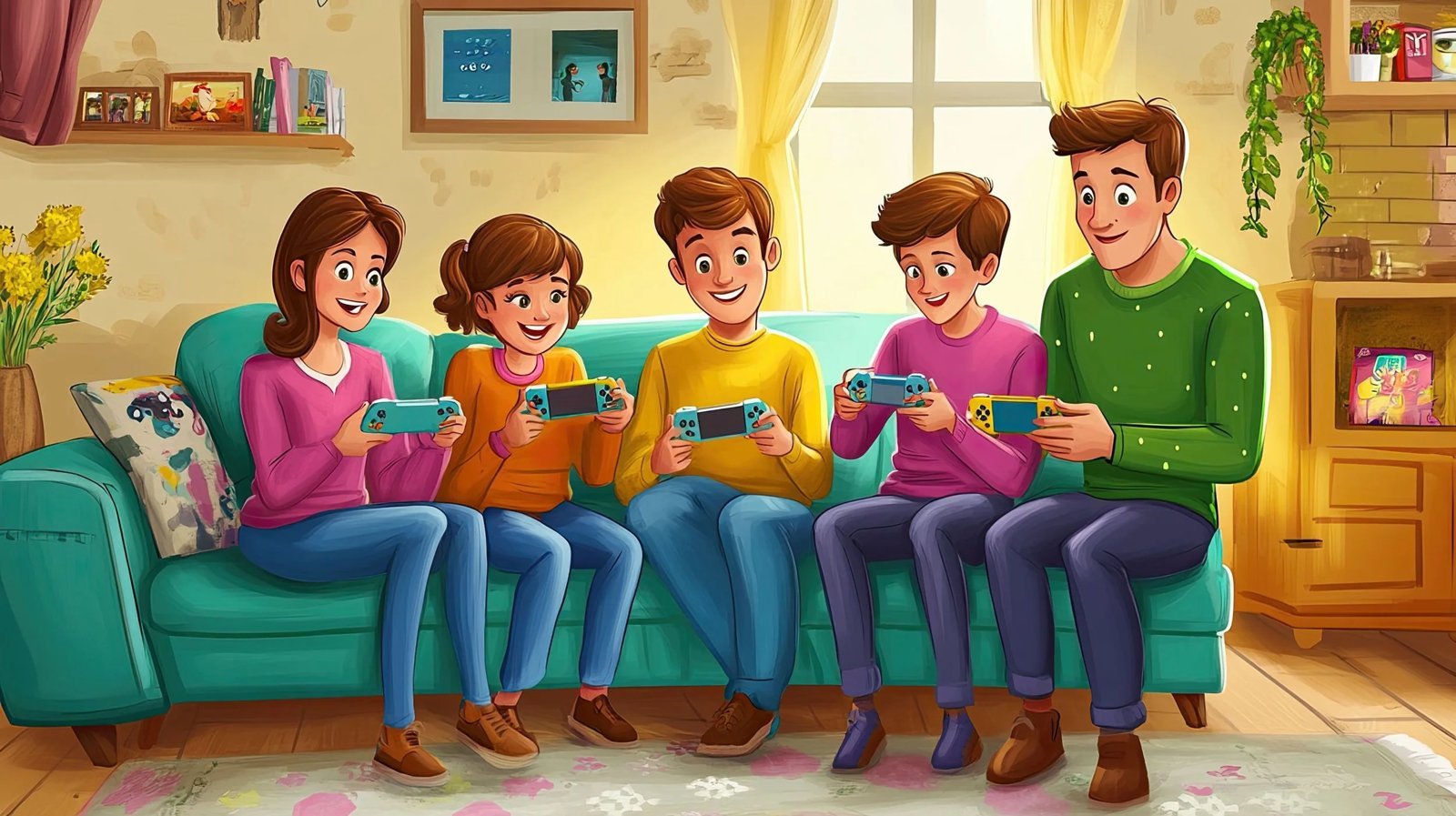
Buying a game console for casual family gaming is different from buying for a hardcore gamer. You don’t need the most powerful hardware — you need something easy to pick up, fun for mixed ages, with games everyone can enjoy together in the living room. Here’s the honest breakdown of the best video game console for casual family gaming in 2026.
What Casual Family Gaming Actually Needs
- Easy to learn: if it takes 30 minutes to explain the controls, the kids (and grandparents) check out.
- Local multiplayer: everyone on the couch together, not headsets in separate rooms. This is the heart of family gaming.
- Age-appropriate library: plenty of E/E10+ games that are genuinely fun, not just “kids’ games” adults tolerate.
- Affordable: console + a few games shouldn’t require a payment plan.
- Durable and simple: intuitive interface, sturdy controllers that survive drops.
The Winner: Nintendo Switch
For casual family gaming, the Nintendo Switch wins and it isn’t close. Here’s why:
- The game library is unmatched for families: Mario Kart 8 (the ultimate family game), Super Mario Party, Animal Crossing, Luigi’s Mansion, Mario Wonder — all excellent, all approachable, all fun for ages 5 to 75.
- Local multiplayer is the focus: Joy-Cons split into two controllers instantly. Four-player Mario Kart with one console, no extra purchases needed to start.
- Portable + docked: play on the TV together, or handheld separately. The flexibility is genuinely useful for families.
- Price: the standard Switch is the most affordable current console, and the game library has years of budget-friendly titles.
- Simple interface: kids navigate it easily; parental controls are excellent and granular.
The main weakness: less powerful hardware means some third-party blockbusters skip it or run poorly. For casual family gaming, this barely matters — Nintendo’s first-party games are the draw, and they’re superb.
The Runners-Up
PlayStation 5
The best hardware and the best single-player epics (Spider-Man, Ratchet & Clank) — but it’s built for serious gamers. Local multiplayer family games are thinner on the ground, it’s the priciest option, and much of the library is T/M-rated. Better as a second console or for families with teens. If your kids are 13+, the calculus changes.
Xbox Series S/X
Game Pass is the best deal in gaming — hundreds of games for a monthly fee, including family-friendly titles. But the exclusive family-friendly library is weaker than Nintendo’s, and the interface is busier. Great value for mixed-age families who also want sports and shooters for the teens/adults.
What About Last-Gen or Budget Options?
- Nintendo Switch Lite: cheaper, but handheld-only — no TV multiplayer. Skip it for family gaming; the dockable Switch is worth the difference.
- Used previous-gen consoles: a used Switch, PS4, or Xbox One costs very little and has a massive cheap game library. Totally viable for casual play — the games didn’t get worse with age.
- Retro mini consoles: the NES/SNES Classic (if you can find one) are nostalgia machines — 20-30 classic games, simple controllers, instant fun for parents reliving childhood with their kids.
Essential Family Games (Whatever You Choose)
- Mario Kart 8 Deluxe (Switch): the single best family game ever made. Auto-steer and auto-accelerate options let 5-year-olds compete with adults.
- Overcooked 2 (all platforms): cooperative cooking chaos. Hilarious, frantic, and it teaches teamwork (or destroys it — either way, memorable).
- Minecraft (all platforms): creative mode for young kids, survival for older ones. Infinite, ageless, and genuinely good.
- Just Dance (all platforms): gets everyone moving. Grandparents included. Surprisingly great exercise.
- It Takes Two: the best co-op game ever made — designed for two players, won Game of the Year. Wonderful for parent + kid or couples.
For dedicated couples’ gaming beyond the family room, couples’ game night ideas include video game picks too.
Family Gaming FAQ
What’s the best console for young kids (under 8)? Nintendo Switch, no contest — the games are age-appropriate, controls are simple, and parental controls are the best in the business.
How much should I budget? Console ($200-300 for Switch) + 2-3 games ($40-60 each, or buy used/digital on sale) + maybe extra controllers ($50-70/pair). Under $500 total for years of entertainment is realistic.
Are video games bad for kids? Like everything, it’s about balance and content. Cooperative, creative games (Minecraft, Mario) played together as a family are a genuinely positive activity. Set time limits, choose age-appropriate games, and play with them — that’s the key difference.
Should I get the OLED Switch or standard? For mostly TV play, the standard is fine. For lots of handheld use, the OLED’s screen is noticeably nicer. For family/couch gaming, save the money.
The Takeaway
The best video game console for casual family gaming is the Nintendo Switch: unbeatable family game library, instant local multiplayer, affordable, and simple enough for grandparents. Buy it, get Mario Kart 8, and prepare for the most fun your living room has had in years. For families with teens wanting blockbuster epics, add a PlayStation or Xbox later — but start with Nintendo.
Setting Up for Success: Day-One Checklist
- Parental controls first: set up PINs and age filters before the kids touch it. On Switch, the parental control app lets you set play-time limits and get activity reports — genuinely useful.
- Create separate profiles: everyone gets their own save files and the system tracks play time per user. No more “who deleted my Minecraft world” wars.
- Buy a case and screen protector if kids will use handheld mode. The $15 investment prevents the $300 accident.
- Start with one multiplayer game: don’t overwhelm with ten games. Master Mario Kart together first; the shared learning curve is bonding.
- Set the gaming space: good lighting, comfortable seating at the right distance, controllers charged. The home theater basics (decent sound especially) make gaming better too.
Screen Time Without the Guilt
The research consensus: it’s not screen time, it’s what and how. Cooperative family gaming — talking, laughing, strategizing together — is active social time that happens to involve a screen. That’s categorically different from solo passive scrolling. Set reasonable limits (the American Academy of Pediatrics suggests consistent boundaries, not specific hours for older kids), prioritize the together-gaming over solo-gaming, and play with them. The parent on the couch next to the kid, both laughing at a blue shell, is doing family time right.
The Switch’s Winning Formula
The Nintendo Switch became one of the best-selling consoles ever by zigging where others zagged — prioritizing fun and flexibility over raw power. It’s a case study in understanding your audience: Nintendo bet on families and casual players, and won. For your living room, that bet pays off too.