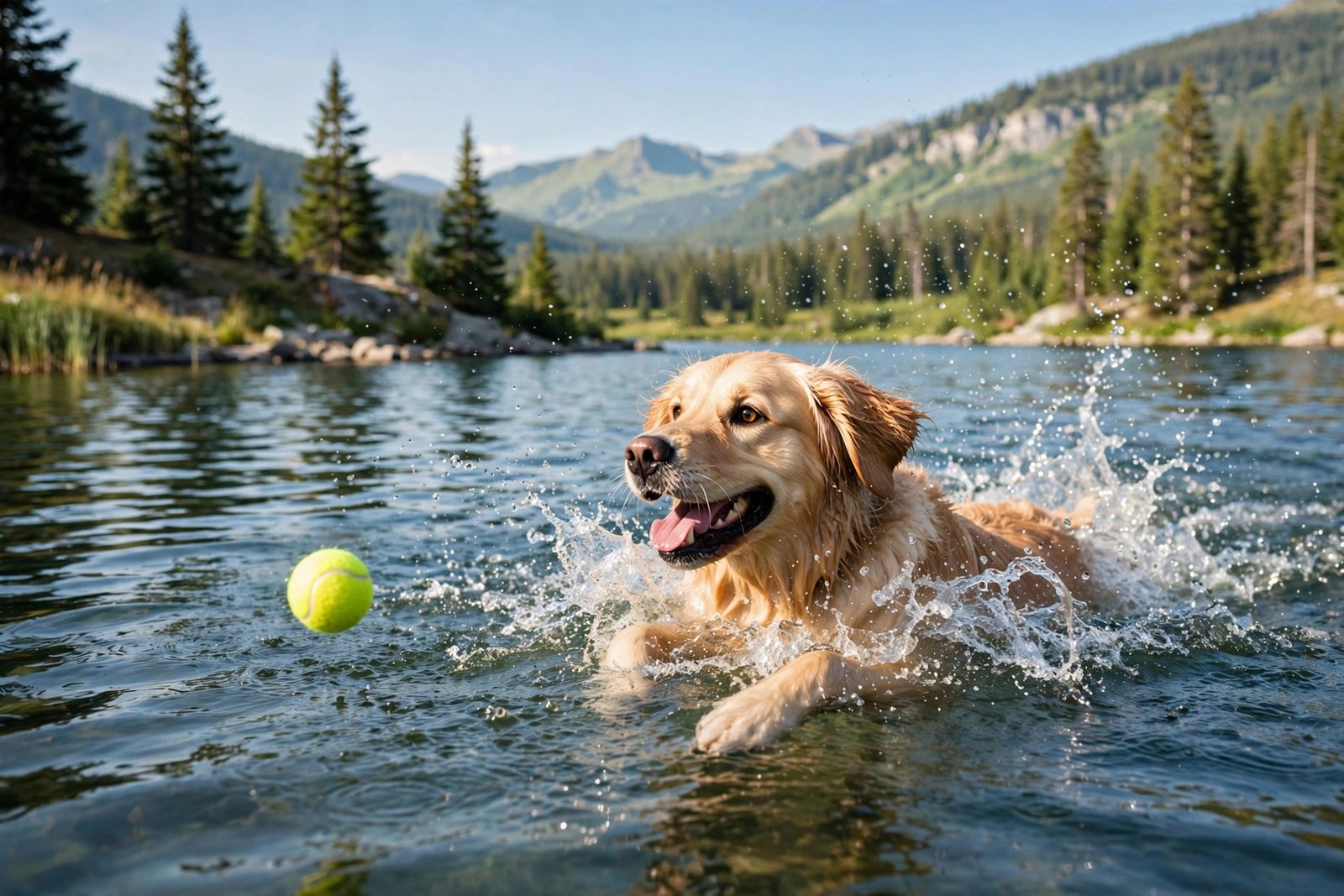
The golden retriever is America’s sweetheart — friendly, goofy, endlessly enthusiastic. It is also a sporting breed designed to retrieve waterfowl all day in Scottish marshes, which means the cute puppy on your couch is a high-performance athlete in disguise. Under-exercised goldens do not just get chubby; they get destructive, anxious, and miserable. Here is exactly how much exercise a golden retriever needs at every life stage.
The Short Answer: 1–2 Hours Daily for Adults
A healthy adult golden retriever needs 60 to 120 minutes of exercise every day — a combination of physical activity and mental stimulation. The classic formula: a 45–60 minute morning walk or run, plus a 30–45 minute evening session of fetch, swimming, hiking, or play, plus training or puzzle work woven through the day. Goldens that get this are the calm, happy dogs of the breed’s reputation; goldens that get a 15-minute leash walk are the counter-surfing, shoe-destroying menaces of owner forums.
“Exercise” for a golden means more than strolling. These are retrieving athletes: they need to run, swim, fetch, and think. A leisurely walk around the block barely registers. The AKC’s golden retriever breed guide classifies them firmly as high-energy dogs needing vigorous daily activity — the breed standard describes an eager, athletic worker, not a couch ornament.
Exercise by Life Stage
Puppies (8 weeks–6 months): the 5-minute rule — 5 minutes of structured exercise per month of age, twice daily (a 4-month-old gets 20 minutes, twice a day). Puppy joints are soft and developing; over-exercising puppies risks growth-plate injuries with lifelong consequences. Free play on soft surfaces is fine; forced running, long hikes, and repetitive fetch on hard ground are not. Mental exercise (training, socialization, puzzle toys) tires puppies safely and matters more than mileage.
Adolescents (6–18 months): the land shark phase. Energy skyrockets while judgment stays puppy-level. Gradually increase structured exercise, introduce swimming (the ideal golden exercise — full-body, low-impact), and channel the mania into training and dog sports foundations. This is the age when under-exercised goldens destroy homes; it is also the age when proper exercise builds the athletic adult.
Adults (18 months–7 years): full throttle — 1–2 hours daily, including vigorous activity. This is the retrieving prime: fetch, swimming, hiking, running, dock diving, agility, field work. A golden doing a job is a golden at peace. Seniors (8+): scale back to 30–60 minutes of gentler activity — shorter walks, swimming (joint-friendly), sniff-heavy strolls. Arthritis is common; watch for stiffness, reluctance on stairs, and lagging on walks, and adjust rather than retiring the dog to the couch — movement keeps arthritic joints functional.
Mental Exercise: The Other Half
A tired body with a bored brain is still a destructive dog. Goldens are smart working dogs that need mental work daily: 10–15 minutes of training (new tricks, obedience drills, retrieve games with rules), puzzle feeders and frozen Kongs for meals (a golden that works for its food is a calmer golden), nose work (hiding treats around the house or yard — scent work exhausts dogs astonishingly fast), and rotating novel experiences (new walking routes, new parks, supervised playdates).
The magic ratio experienced owners swear by: physical exercise sets the baseline, mental exercise provides the finish. A 45-minute run plus 15 minutes of training produces a calmer dog than a 90-minute run alone. Boredom is the root of most golden behavior problems — chewing, digging, barking, counter-surfing are all symptoms of an under-employed retriever brain. Many owners discover that dog sports become their own favorite pastime too — training for agility or dock diving ranks among the best stress-relieving hobbies, benefiting owner and dog equally. The ASPCA’s exercise guidance reinforces that mental work counts as much as mileage. A busy golden is a good golden.
Swimming: The Golden Superpower
Goldens were literally bred for water retrieving — webbed feet, water-resistant double coat, otter tail. Swimming is the perfect golden exercise: full-body workout, zero joint impact, natural cooling, and most goldens take to it ecstatically. A 20-minute swim tires most goldens more than an hour-long walk. If you have access to safe water (clean lakes, pools with exit ramps, the ocean with caution), swimming 2–3 times weekly transforms the exercise equation.
Water safety still applies: introduce gradually (not all goldens swim instinctively — some need coaxing), ensure easy exits from pools (dogs drown in pools every year, usually from exhaustion without an exit), rinse off chlorinated or salt water afterward, dry ears to prevent infections (goldens are prone to ear infections, and moisture compounds it), and never let dogs swim in stagnant water with blue-green algae — it is lethal. Supervise always; athletic does not mean invincible.
Signs Your Golden Needs More (or Less)
More exercise needed: destructive chewing, excessive barking, hyperactivity indoors (the “zoomies” at 10 p.m.), digging, jumping on people, weight gain, restlessness and pacing, attention-seeking misbehavior. These are not character flaws; they are an athlete’s resume submitted to the wrong job. Less exercise needed (or vet check): lagging on walks, stiffness after rest, reluctance to play, heavy panting disproportionate to effort, limping — especially in seniors, where these signal arthritis or other issues needing treatment, not just aging.
Weight is the objective metric: you should feel ribs easily with light pressure and see a visible waist from above and the side. Goldens are notoriously food-motivated and obesity-prone — an overweight golden needs more exercise and less food, and the vet should rule out thyroid issues if weight resists management. An exercised golden maintains weight effortlessly; a sedentary one balloons. Keeping the exercise consistent is easier when the routine is built into your day — and the costs of an active dog life reward the same everyday budgeting discipline that keeps the rest of pet ownership affordable.
Conclusion
Adult golden retrievers need 1–2 hours of daily exercise — vigorous physical activity plus mental work — with puppies following the 5-minute rule and seniors scaling back gracefully. Swimming is the breed’s superpower; mental stimulation is the secret ingredient; and most “bad behavior” is just under-exercise wearing a costume. Meet the athlete’s needs and you get the dog of the breed’s legend: joyful, calm, and gloriously goofy.
Frequently Asked Questions
Can you over-exercise a golden retriever puppy?
Yes, easily — and it matters. Follow the 5-minute rule (5 minutes per month of age, twice daily) for structured exercise until growth plates close around 12–18 months. Free play is fine; forced running and long hikes are not.
Is swimming enough exercise for a golden?
As the vigorous component, absolutely — 20–30 minutes of swimming equals an hour+ of walking for most goldens. Combine with daily walks for sniffing and routine, plus mental work, for the complete program.
How do I exercise my golden in bad weather?
Indoor options: stair fetch (if joints allow), hallway retrieve games, tug with rules, nose work, puzzle feeders, training sessions, and treadmill training (introduced properly). A rainy day is a training day, not a rest day.
Why is my golden still hyper after long walks?
Because leash walks alone under-stimulate athletic dogs — they need vigorous off-leash-style exertion (fetch, swimming, running) plus mental work. Add intensity and brain games before adding more slow miles.
At what age do golden retrievers calm down?
Noticeably around 2–3 years, significantly by 4–5 — provided they get adequate exercise throughout. An under-exercised 6-year-old golden can be as wild as an adolescent. Calmness is trained and exercised into them, not aged into them.